Dávka - Your daily dose of Slovak news
Last refreshed: 27/07/2026 17:42 · 75 articles added
Stories are refreshed at 05:30, 10:30, 15:30, and 21:30 UTC.

International Politics

View all3270 stories
International Politics

European Prosecutors Raid Multiple EU Countries Over Alleged Financial Misconduct Linked to Far-Right Parliamentary Group

The European Public Prosecutor's Office (EPPO) carried out coordinated raids across multiple European Union member states in connection with an investigation into alleged financial misconduct linked to a now-defunct Eurosceptic group in the European Parliament. The raids took place in France, Spain, Italy, and Belgium, confirming a report first published by the French daily newspaper Le Monde. The investigation centers on the Identity and Democracy (ID) group, a far-right, Eurosceptic political faction that previously held seats in the European Parliament but has since been dissolved. The EPPO, an independent EU body established to investigate and prosecute crimes against the EU's financial interests — including fraud, corruption, and misuse of EU funds — confirmed the operations were part of an active inquiry into how the group's finances were managed. The case highlights ongoing scrutiny of how EU parliamentary funds are allocated and overseen, particularly within political groups that have challenged the EU's institutional framework from within.

|
International Politics

Slovakia Takes Over Visegrad Group Presidency, Aims to Boost EU Competitiveness

Slovakia has assumed the rotating presidency of the Visegrad Four (V4), a regional alliance comprising Slovakia, the Czech Republic, Hungary, and Poland that coordinates on EU policy and regional issues. Prime Minister Robert Fico has outlined plans to use the presidency to push for lower electricity prices at the European Union level, framing the initiative as part of a broader effort to strengthen the competitiveness of the EU economy. The V4 presidency rotates among its four member states and gives the presiding country an opportunity to set the group's agenda and amplify its priorities within wider European discussions. For Slovakia, which has faced energy cost pressures in recent years, reducing electricity prices represents both an economic priority and a political message ahead of ongoing debates about EU energy and industrial policy.

|
International Politics

Slovak Rescue Teams Search Collapsed Buildings in Venezuela

Slovak rescue workers deployed to Venezuela to search through collapsed buildings for survivors. The teams focused their efforts on sites where local residents believed people might still be alive, working alongside local communities to locate potential survivors in the rubble.

|
International Politics

Slovak Agriculture Minister Calls for Unified V4 Approach to EU Farm Policy Reform

Slovak Agriculture Minister Richard Takáč has urged his counterparts from the Visegrád Four group to coordinate a joint position on reforming the European Union's agricultural policy beyond 2027. The ministers met in the Hungarian city of Balatonfüred, where they agreed to push for a stronger regional voice in shaping the future direction of EU farm policy. Takáč argued that recent crises — including outbreaks of foot-and-mouth disease and extreme drought — highlight the urgent need for more flexible emergency mechanisms within EU agricultural frameworks. The Visegrád Four, or V4, is a political and cultural alliance of four Central European countries — Slovakia, the Czech Republic, Poland, and Hungary — that frequently coordinates positions on European Union policy. The Common Agricultural Policy, the EU's main framework governing farm subsidies and rural development, is due for a major overhaul after its current programming period ends in 2027. By aligning their positions ahead of negotiations, the V4 countries aim to ensure that the specific needs and vulnerabilities of Central European agriculture are reflected in the reformed policy.

|
International Politics

Ukraine Urban Support Hub Opens in Prešov to Help Rebuild War-Damaged Ukrainian Cities

A new international coordination center aimed at supporting the reconstruction of Ukrainian cities has opened in Prešov, a city in eastern Slovakia near the Ukrainian border. The Ukraine Urban Support Hub is designed to bring together urban planning and reconstruction experts from Slovakia, Ukraine, and the European Union to coordinate efforts in rebuilding towns and cities damaged or destroyed by Russia's ongoing war against Ukraine. Prešov's proximity to Ukraine — the two countries share a border roughly 80 kilometers from the city — makes it a strategic location for such an initiative. The hub reflects Slovakia's role as a key transit and support corridor for Ukraine, and forms part of broader EU-backed efforts to prepare for the eventual large-scale reconstruction of Ukraine, estimated to be one of the most costly rebuilding projects in modern European history.

|
International Politics

Hungary Questions Dismissed Slovak Intelligence Chief Over Ukrainian Convoy Case

Hungarian authorities have questioned Michal Hajdu, the recently dismissed head of Slovakia's domestic intelligence agency (SIS), in connection with a case involving a Ukrainian state bank convoy detained on Hungarian territory. Hungarian counterterrorism unit TEK arrested employees of the Ukrainian state bank on March 5 on Hungarian soil. Hajdu, who led Slovakia's Security Intelligence Service before his dismissal, was summoned for questioning as part of the ongoing investigation into the incident. The case has drawn attention across the region, involving personnel from a neighboring country's state financial institution being apprehended by Hungarian special forces, raising questions about the circumstances of the convoy's activities and potential intelligence dimensions of the affair.

|
International Politics

EU Emissions Trading System Faces Reform Battle as Energy Prices Feel Heat Pressure

A significant political fight is brewing in Europe over the future of the EU Emissions Trading System (ETS), the bloc's primary tool for reducing greenhouse gas emissions, as policymakers consider reforms to the mechanism. The ETS works by setting a cap on total emissions and requiring companies to hold permits — known as emissions allowances — for each tonne of carbon dioxide they produce, with the price of those permits influencing industrial and energy costs across member states including Slovakia. The debate over reforming the system comes alongside discussions about simplifying tax regulations and growing concerns about the impact of heat waves on electricity prices. Extreme summer temperatures drive up demand for cooling, which in turn pushes up electricity consumption and can cause sharp spikes in energy costs for consumers and businesses. The ETS has been a cornerstone of the European Union's climate policy for two decades, but critics argue it places a disproportionate burden on energy-intensive industries and lower-income households. Any changes to how allowances are allocated or priced could have substantial economic consequences for Slovakia, where industry and energy production remain significant contributors to national emissions.

|
International Politics

Commentary: The V4 Group Unites Central Europe Around Failures, Not Successes

The Visegrád Group, the regional alliance of Slovakia, Hungary, Poland, and the Czech Republic, is held together more by shared failures than achievements, according to a commentary by Slovak political analyst Boris Zala. The grouping, often characterized by its resistance to European Union policies and a broadly "anti-Brussels" posture, has failed to deliver meaningful economic benefits or improvements in living standards for its member states, Zala argues. The V4, founded in 1991 to coordinate the post-communist transition of Central European nations toward European integration, has in recent years become more associated with political friction with EU institutions than with constructive regional cooperation. Zala contends that positioning the bloc as a counterweight to Brussels is not a success story, but a fundamental strategic error that has left member countries with little to show in terms of concrete economic or social gains.

|
International Politics

Czech President Pavel Criticizes Slovak Government Over Summit Decision, Calls for Dialogue

Czech President Petr Pavel publicly criticized the Slovak government over an unspecified decision related to a summit, and called on Slovak Prime Minister Robert Fico to engage in dialogue. The nature of the summit and the specific decision in question were not detailed in available reporting. Pavel directed his appeal toward Robert Fico, Slovakia's prime minister and leader of Smer-SD, the ruling left-nationalist party, which has taken a number of positions at odds with its EU and NATO partners, particularly regarding the war in Ukraine. Relations between the Czech Republic and Slovakia — two neighboring countries that once formed a single state, Czechoslovakia, before a peaceful split in 1993 — have at times been strained under Fico's current government. Pavel's public call for dialogue suggests tensions have reached a level warranting direct diplomatic engagement between the two countries' leaders.

|
International Politics

Russian Hackers Behind Cyberattack That Shut Down Jaguar Land Rover, Including Slovak Plant

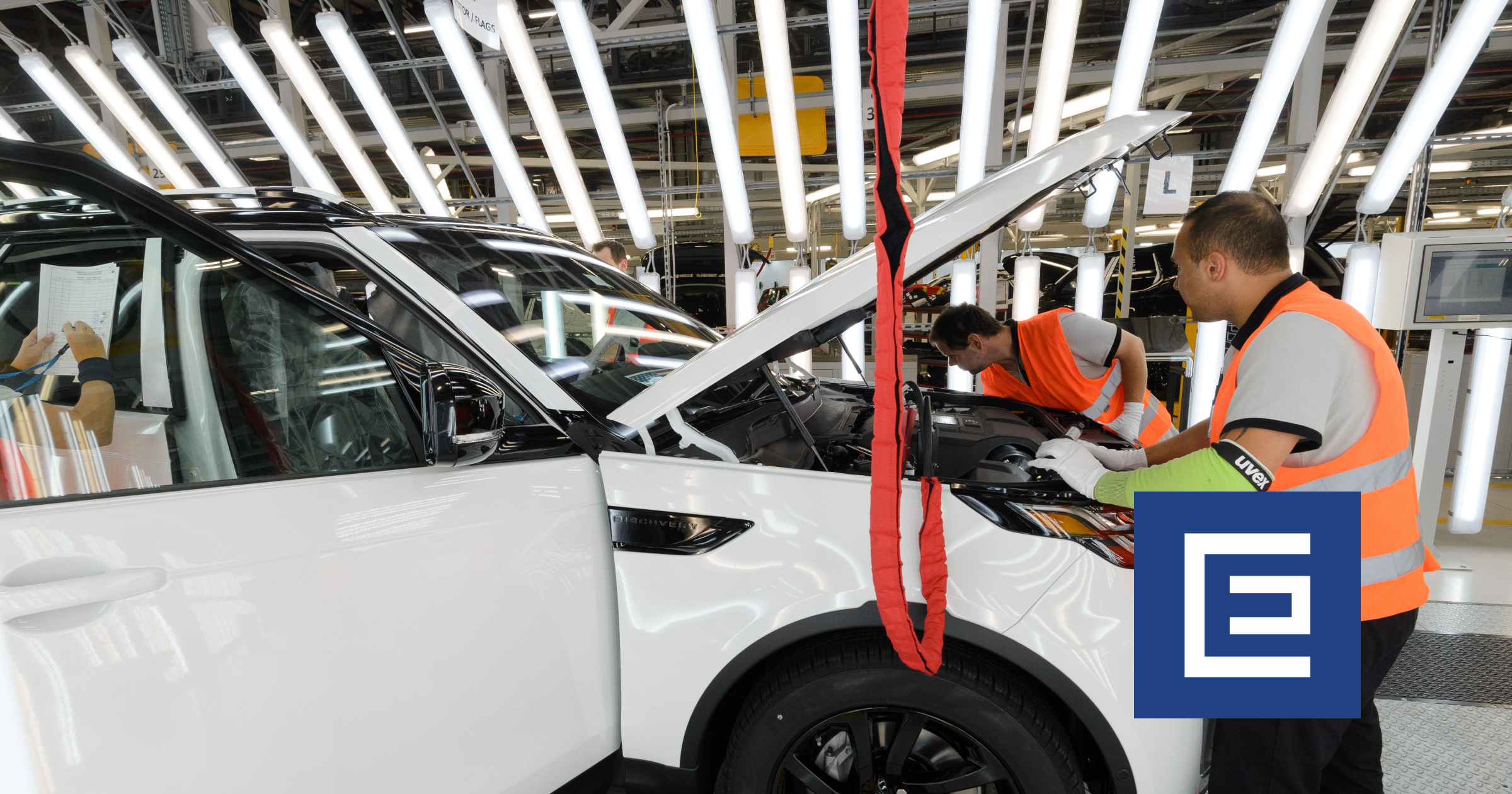
Russian hackers were responsible for a devastating cyberattack on British automaker Jaguar Land Rover last August that halted production for five weeks, including at the company's plant in Slovakia, according to a report by an American newspaper. The attack, which struck in late August, paralyzed the entire Jaguar Land Rover group and prevented the resumption of production for five weeks. It has been identified as the costliest cyberattack in British economic history, costing the UK more than two billion euros in 2025 alone. The automaker itself incurred direct costs exceeding 300 million euros as a result of the incident. The majority of the company's roughly 5,000 Slovak employees were affected by the production shutdown. Jaguar Land Rover operates a significant manufacturing facility in Slovakia, making the country directly vulnerable to disruptions at the British parent company. The attribution of the attack to Russian state-linked hackers places the incident within a broader pattern of cyberwarfare targeting Western industrial and economic infrastructure, a concern that has grown sharply across Europe since Russia's full-scale invasion of Ukraine in 2022. The scale of the financial damage underscores the increasing threat that state-sponsored cyberattacks pose to major manufacturers and the national economies dependent on them.

|
International Politics

Czech Government Accredits President Pavel for NATO Summit After Political Standoff

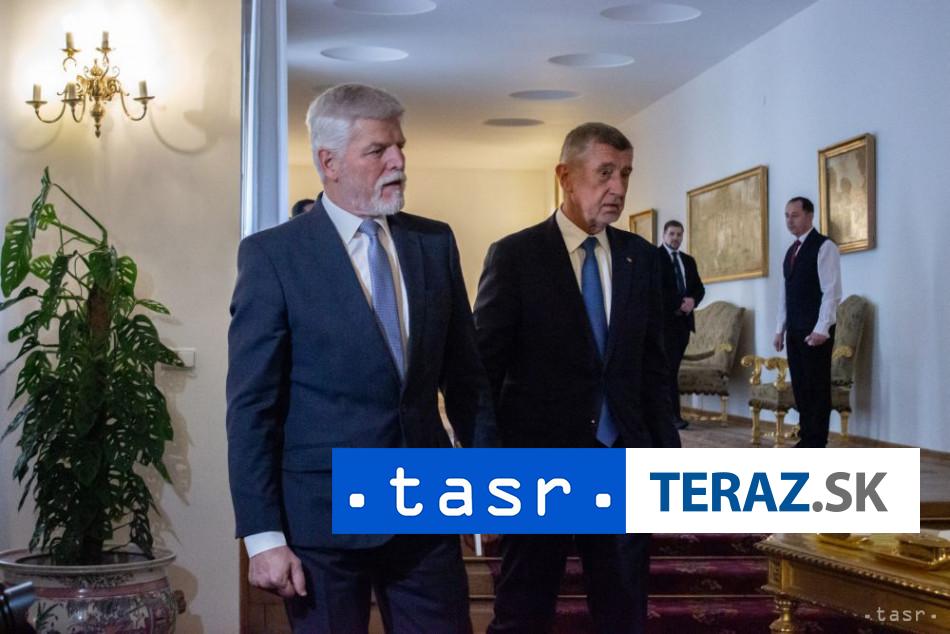
The Czech government has formally accredited President Petr Pavel to attend the upcoming NATO summit, ending a domestic dispute over who would represent the country at the alliance's top-level meeting. Prime Minister Andrej Babiš, whose ANO party leads the Czech government, described the standoff with the president as unnecessary and damaging, while expressing hope that Pavel might reconsider his planned attendance. The government ultimately submitted the late accreditation and is now awaiting the president's final decision on whether he will participate. The dispute reflects a broader tension between the Czech presidency and the current government. In the Czech Republic's semi-presidential system, the president and prime minister can hold different political views, sometimes leading to conflict over foreign policy representation. Pavel, a former NATO general and pro-Western president, and Babiš, a populist former prime minister who returned to power after the 2025 elections, have clashed over the country's international orientation. NATO summits are typically attended by heads of state or government, making the question of who represents the Czech Republic a matter of both protocol and political significance.

|
International Politics

Slovak Rescue Team Deployed to Venezuela Following Deadly Earthquake

A Slovak rescue team is on the ground in Venezuela assisting relief efforts following a powerful earthquake that has killed more than 1,450 people. Slovakia, a Central European EU and NATO member state, has dispatched emergency responders as part of the international humanitarian response to one of the deadliest seismic disasters to hit the South American country in recent memory. The death toll continues to rise as search and rescue operations press on in affected areas.

|
International Politics

Slovak Rescue Team Deploys to Venezuela After Major Earthquakes

A Slovak search-and-rescue team has departed for Venezuela following two powerful earthquakes that struck the country in the early hours of Thursday, June 25. The back-to-back quakes registered magnitudes of 7.2 and 7.5, causing significant destruction and leaving people missing beneath the rubble. The Slovak team's mission is to locate and recover survivors trapped in the debris. For Slovak rescue services, the deployment represents the most distant international mission they have ever undertaken. Venezuela, located in northern South America, is rarely the destination of Slovak emergency deployments, making this operation historically significant for the country's disaster-response capabilities.

|
International Politics

Slovak Parliament Speaker to Attend NATO Parliamentary Summit in Istanbul

Richard Raši, the Speaker of Slovakia's National Council (the country's parliament), will travel to Istanbul on Sunday to participate in a NATO Parliamentary Assembly summit. Raši is scheduled to deliver a speech at the event, which brings together legislators from NATO member states to discuss alliance affairs and coordinate parliamentary oversight of the military bloc's activities.

|
International Politics

V4 Group Revived as Platform for Central European Opposition to Brussels

The Visegrád Four grouping — a regional alliance of Slovakia, Hungary, Poland, and the Czech Republic — is being repositioned as a semi-official institutional voice of Central European resistance to European Union policy. The bloc, originally founded in 1991 to coordinate the four countries' integration into Western structures, has in recent years been marked by internal divisions, particularly after Poland and the Czech Republic shifted toward more pro-EU governments. However, populist and euroskeptic forces in the region are now seeking to revive V4 as a counterweight to Brussels, using it as a forum to challenge EU directives on issues such as migration, the green transition, and rule-of-law conditionality. Slovakia, under Prime Minister Robert Fico's government — a coalition led by his Smer-SD party, which has taken increasingly euroskeptic and pro-sovereignty positions — is seen as a key driver of this effort alongside Hungary under Viktor Orbán. The rebranding of V4 as an opposition bloc within the EU carries significant implications for the cohesion of the union, as it formalizes a divide between Central European governments skeptical of deeper integration and the Brussels-led mainstream, potentially complicating EU decision-making on major policy issues.

|
International Politics

Slovak PM Fico Refuses to Join NATO Summit's Financial Aid Package for Ukraine

Slovak Prime Minister Robert Fico has announced that Slovakia will not participate in a NATO financial aid mechanism for Ukraine at the upcoming NATO summit. Fico, who leads Smer-SD, a left-nationalist ruling party known for its skeptical stance toward Western military support for Ukraine, has consistently opposed channeling Slovak resources to Kyiv since returning to power in 2023. The NATO summit is expected to discuss a coordinated long-term financial commitment among member states to support Ukraine's defense against Russia's ongoing invasion. Fico also indicated he would disregard any referendum that might be organized on the issue, signaling he views the decision as a matter of government prerogative rather than direct public input. Slovakia, as a NATO and EU member state, has been an outlier among its Central European neighbors — particularly Poland and the Czech Republic — in resisting military and financial support packages for Ukraine. Fico's position further strains Slovakia's relations with its Western allies and raises questions about the country's reliability as a partner within the alliance at a critical moment in the war.

|
International Politics

Polish Opposition Politicians Return Ukrainian Decorations in Solidarity with President Nawrocki

A dispute over the legacy of the Ukrainian Insurgent Army, known by its Ukrainian acronym UPA and historically called 'Banderivtsi' in Polish discourse, has escalated as several Polish opposition politicians announced they are returning Ukrainian state decorations they had previously received. The gesture is intended as a show of support for Polish President Karol Nawrocki amid ongoing tensions between Poland and Ukraine over the historical memory of wartime violence. The UPA, a Ukrainian nationalist armed movement active during World War II, is a deeply sensitive issue in Polish-Ukrainian relations. The organization is held responsible in Poland for the mass killing of tens of thousands of ethnic Poles in the Volhynia region in 1943–1945, an event Poles refer to as the Volhynia Massacre. While Ukraine officially honors UPA fighters as national heroes and independence fighters, Poland regards them as perpetrators of ethnic cleansing. This historical disagreement has periodically strained relations between the two neighboring countries, even as both are allied in supporting Ukraine's defense against Russia's ongoing invasion. The decision by opposition figures to return Ukrainian honors signals that the historical dispute remains politically charged in Poland, with domestic actors using the controversy to demonstrate national solidarity and score political points, complicating the broader diplomatic relationship between Warsaw and Kyiv.

|
International Politics

Slovakia Dispatches Search-and-Rescue Team to Earthquake-Hit Venezuela

Slovakia is sending a search-and-rescue team to Venezuela following a destructive earthquake. The team consists of 15 firefighters, four dog handlers, and two search dogs trained to locate survivors in disaster zones. The deployment reflects Slovakia's participation in international humanitarian relief efforts, with specialized rescue personnel and canine units forming a standard component of such missions abroad.

|
International Politics

EU Reaches Trilateral Agreement on Energy Storage

The European Commission has announced a trilateral agreement at the EU level on energy storage, marking a significant step in the bloc's effort to stabilize energy markets. The deal, reached between the Commission, the European Parliament, and the Council of the EU — the three main institutions involved in EU lawmaking — establishes a framework for how energy storage will be regulated and developed across member states. Energy storage, which includes technologies such as batteries and pumped hydro facilities, allows excess electricity to be saved and released when demand is high, helping to smooth out price spikes. The Commission said storage could play a key role in stabilizing energy prices across the European Union, an issue that has taken on heightened urgency since the energy crisis triggered by Russia's invasion of Ukraine drove electricity and gas prices to record highs in 2022. The agreement is expected to support the EU's broader push to expand renewable energy, which by nature produces power intermittently and relies on storage infrastructure to ensure consistent supply.

|
International Politics

EU Proposes Ending Temporary Protection for Ukrainian Men of Conscription Age

The European Commission has proposed ending temporary protection status for newly arriving Ukrainian men of military conscription age in European Union member states, while extending protections for other groups beyond 2027. Under the proposal from Brussels, women and other categories of Ukrainian refugees would continue to receive temporary protection after 2027, but men of fighting age who are newly seeking protection in EU countries would no longer qualify. The temporary protection directive, which the EU activated in 2022 following Russia's full-scale invasion of Ukraine, grants Ukrainian refugees the right to live and work across EU member states without going through individual asylum procedures — a measure that has benefited millions of displaced Ukrainians. The proposal reflects growing debate within the EU about the status of Ukrainian men abroad at a time when Ukraine faces acute manpower shortages on the battlefield. Ukraine has tightened its own mobilization laws, and some EU governments have faced domestic political pressure over Ukrainian men of fighting age remaining in Europe while their country is at war. The Commission's proposal would need to be agreed upon by EU member states before taking effect, and is expected to generate significant political debate both within the bloc and in Kyiv.

|