Dávka - Your daily dose of Slovak news
Last refreshed: 20/06/2026 10:38 · 48 articles added
Stories are refreshed at 05:30, 10:30, 15:30, and 21:30 UTC.

Culture

View all1580 stories
Culture

From War Heroes to City Pigeons: The Forgotten Story of Military Messenger Birds

They parachuted alongside soldiers, flew on with shattered chests, and earned the highest military honors for their courage. Carrier pigeons saved thousands of human lives during the two World Wars, serving as critical communication links when all other means of contact failed on the battlefield. These birds were parachuted into enemy territory with troops, carried vital messages through enemy fire, and were awarded top military medals for their service. Yet the descendants of these decorated war heroes now roam the streets and rooftops of cities like Bratislava, largely unrecognized and often unwelcome. The story of the carrier pigeon traces a remarkable arc — from celebrated military asset to overlooked urban bird — raising questions about how societies remember and honor the animal contributors to wartime history.

|
Culture

Pixar's Hidden History: From Horror Child to Toy Story 5

A new episode of Vertigo, a Slovak film and culture podcast, explores the lesser-known history of Pixar Animation Studios, tracing the studio's origins from an unlikely early concept involving a frightening child character to its upcoming release of Toy Story 5. The podcast offers listeners recommendations on new film releases alongside the deep dive into Pixar's backstory.

|
Culture

Slovak Author Warns: Stop Reading and We Stop Thinking

Slovak writer Lucia Lackovičová is sounding the alarm about declining reading habits in an age dominated by social media, short-form videos, and artificial intelligence. Lackovičová argues that reading is fundamentally a form of mental exercise, strengthening imagination, vocabulary, concentration, and the ability to think in broader contexts. In her view, the shift away of books toward rapid digital content poses a serious threat to critical thinking skills, particularly among younger generations. Her comments come as educators and cultural advocates across Europe grapple with how to sustain literacy and deep reading in an increasingly fragmented media environment.

|
Culture

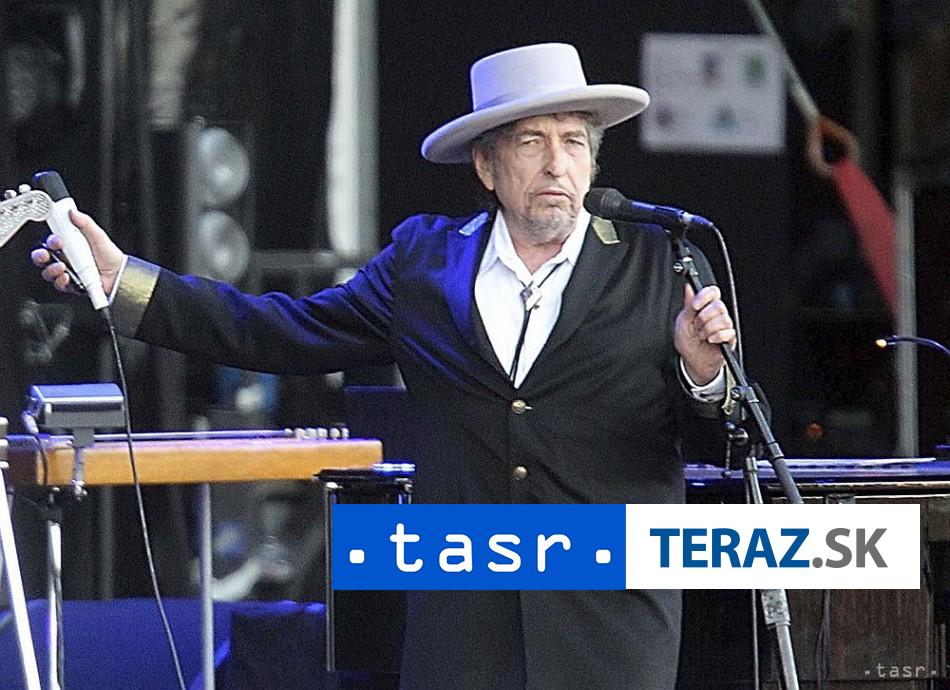
Bob Dylan's Landmark Album 'Blonde on Blonde' Turns 60

Bob Dylan's groundbreaking double album 'Blonde on Blonde' marks its 60th anniversary this week. Released on June 20, 1966, under Columbia Records, the album was Dylan's seventh studio recording and was produced by Bob Johnston. Widely regarded as one of the most influential albums in rock and folk history, 'Blonde on Blonde' helped cement Dylan's status as a defining voice of 20th-century popular music. Dylan, who was awarded the Nobel Prize in Literature in 2016, remains one of the most celebrated singer-songwriters in history.

|
Culture

Weekend Reading: Jodie Foster Once Thought Her Acting Career Would End at 18

Slovak news outlet SME has published its regular weekend reading selection, featuring a profile of Hollywood actress Jodie Foster, who once believed her acting career would last only until she turned 18. The two-time Academy Award winner, who began her career as a child actress, went on to become one of Hollywood's most acclaimed performers, starring in films such as 'The Silence of the Lambs' and 'Taxi Driver.' The weekend feature explores how Foster defied her own expectations to build a decades-long career in film.

|
Culture

Hungarian Historian Offers Fresh Perspective on Slovak National Icon Ľudovít Štúr

Hungarian historian József Demmel has drawn significant attention in Slovakia with his work on Ľudovít Štúr, one of the most revered figures in Slovak history, describing him as a genius while offering a perspective that Slovaks have found both novel and refreshing. Štúr, who lived from 1815 to 1856, was a linguist, philosopher, and political leader who codified the modern Slovak literary language — a foundational achievement that cemented his status as a central figure of Slovak national identity. Demmel's book on Štúr generated considerable interest upon its first publication, and the historian continues to pursue further research on the subject. The work is notable in part because it comes from a Hungarian scholar — a detail of symbolic significance given the complex and often fraught historical relationship between Slovaks and Hungarians, rooted in centuries of Slovak life under Hungarian rule within the Habsburg Empire. That a Hungarian academic approaches Štúr with admiration rather than skepticism has made the work particularly meaningful to Slovak readers.

|
Culture

Slovak Singer Katarzia Opens Up About Fear of Rejection and the Role of Therapy in Her Life

Slovak singer Katarzia has spoken candidly about her long-standing fear of rejection and how it shaped her personal and professional life. In an interview, the artist reflected on how her deep need to prove her worth to those close to her created a self-fulfilling cycle — her fear of rejection ultimately contributed to it happening. Katarzia credited therapy with helping her work through these emotional patterns and gain a healthier sense of self. The singer, known for her introspective style of music, is regarded as one of Slovakia's distinctive voices in the alternative and indie music scene.

|
Culture

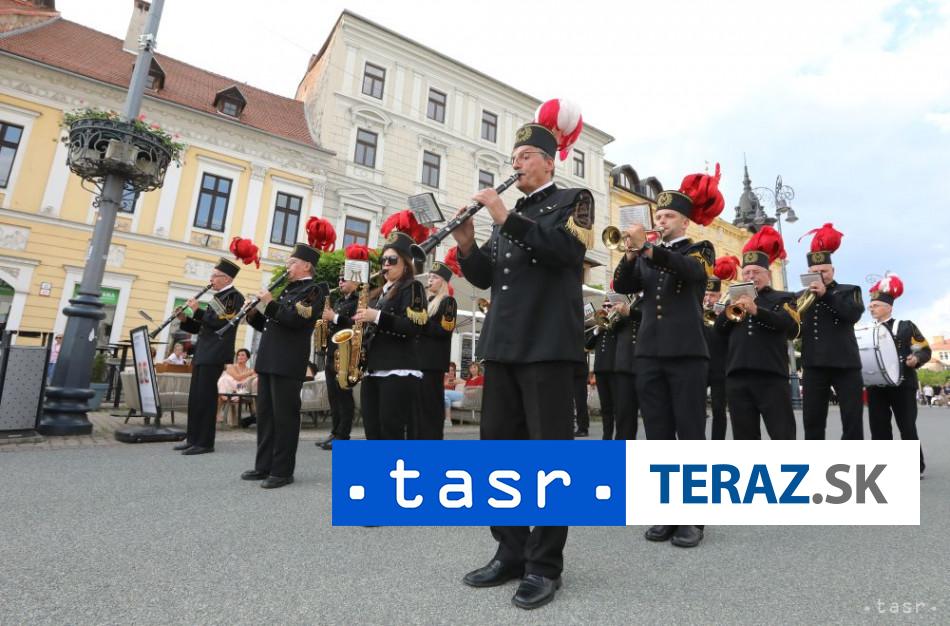
Banská Bystrica Culture Days Mark Anniversary of Historic Miners' Uprising

The central Slovak city of Banská Bystrica is hosting its annual Culture Days festival, commemorating the historic miners' uprising that once shaped the region. Visitors can look forward to a rich program of cultural events, including a Friday evening concert by Hex, one of Slovakia's well-known rock bands. Banská Bystrica has deep historical ties to mining, having been a major center of copper and silver extraction in medieval and early modern Europe, making the uprising a significant part of the city's heritage and identity.

|
Culture

Olivia Rodrigo's New Music Explores Heartbreak and the Emotional Highs and Lows of Young Love

American pop singer Olivia Rodrigo, 23, is releasing new music that takes listeners through the full emotional arc of a modern romance — from the giddy excitement of a first date to the pain of a difficult breakup. When Rodrigo released the music video for her song 'Drop Dead' in April, it appeared her third album would focus on the joy of a happy relationship. The track captures the feelings many young women experience after a promising first date, with lyrics describing the impulse to look up a new crush across social media and imagining intimate moments together. However, the album's broader scope appears to delve into darker emotional territory as well, addressing the heartbreak and sadness that can follow even the most hopeful beginnings — a contrast captured in the observation that someone can look remarkably sad for a person so deeply in love. Rodrigo first rose to global prominence with her 2021 debut album 'SOUR,' which similarly explored themes of teenage heartbreak and became a cultural phenomenon among younger audiences.

|
Culture

Slovak Philosopher Pens Open Letter to Public Figure Kristína Tormová

A Slovak philosopher and former politician has published an open letter addressed to Kristína Tormová, reflecting on themes of public conscience, personal character, and civic responsibility. The letter, published in Denník N, engages with Tormová's public speeches, which the author describes as acts of moral self-examination and living testimony to the tension between private life and public duty. Drawing on philosophical tradition, the author frames conscience as a chorus that confronts individuals with the conflict between their own character and their obligations to the wider community — a permanent confrontation between the self and the outside world.

|
Culture

Slovak-Austrian Film 'Perla' Dominates 2026 Austrian Film Awards With Eight Prizes

The film 'Perla' swept the 2026 Austrian Film Awards, winning eight prizes. The production had previously made its world premiere in the Tiger Competition — a prestigious section for debut and second films — at the International Film Festival Rotterdam, one of Europe's leading independent film festivals. The strong showing at the Austrian Film Awards marks a significant achievement for the production and signals growing recognition for the film on the European festival circuit.

|
Culture

Slovak Radio Festival Honours Best Children's Programming

The Zázračný oriešok (Magic Nutshell) festival, dedicated to radio productions for children, concluded in Piešťany with awards recognising the best works in the genre. The four-day event was organised by STVR — the Slovak public broadcaster — in partnership with the Trnava Self-Governing Region, the city of Piešťany, and the Piešťany Municipal Library. The festival serves as a showcase and competition for radio content aimed at young audiences, highlighting the role of public broadcasting in cultivating cultural and educational programming for children.

|
Culture

Bratislava's Drama Theatre Premieres New Production Combining Shakespeare and Banned Müller Play

The Drama Theatre of the Bratislava National Theatre is staging a new production that weaves together a Shakespeare classic and Heiner Müller's Mauser — a play that was once banned under communist censorship. Director Paška adapted and combined texts from both authors into a single work, with lead roles performed by actors A. Bárta and R. Roth. Müller's Mauser, written in 1970, was suppressed in several Eastern Bloc countries due to its provocative treatment of political violence and ideology, making its inclusion in this production a notable artistic and historical choice.

|
Culture

Czech President Pavel and Former Slovak Leader Čaputová to Appear Together at Pohoda Festival 2026

Czech President Petr Pavel and former Slovak President Zuzana Čaputová will appear together at the 30th anniversary edition of Slovakia's Pohoda music and arts festival in 2026. The two will participate in a joint discussion titled "Identity at the Heart of Europe," exploring questions of national and personal identity amid growing social polarization and a shifting geopolitical landscape. Pohoda, held annually near the western Slovak city of Trenčín, is one of the largest and most prominent cultural festivals in Central Europe. Čaputová, who served as Slovakia's president from 2019 to 2024 and was widely regarded as a pro-European liberal voice, left office last year and has remained a respected public figure internationally. Her appearance alongside the Czech head of state signals continued cross-border dialogue on democratic values at a time when both Slovakia and the broader Central European region face significant political tensions.

|
Culture

Weekend Viewing Guide: Nicolas Cage, Retired Superheroes, and Comedian Gardeners

Slovak news outlet Denník N has published its editorial team's curated picks from current online streaming offerings, highlighting a film featuring Nicolas Cage in a role described as a retired Spider-Man figure, alongside a comedy series starring a well-known comedian as a gardener. The selections represent the publication's recommended viewing choices from platforms currently available to Slovak audiences.

|
Culture

Slovakia's Oldest Classical Music Festival Marks 80th Anniversary

Hudobné leto Trenčianske Teplice, regarded as the oldest classical music festival in Central Europe, is celebrating its 80th edition this summer in the Slovak spa town of Trenčianske Teplice. The anniversary festival opens on June 25 with a large orchestral concert featuring Georges Bizet's opera Carmen, performed by the Bohuslav Martinů Philharmonic from Zlín, a Czech ensemble named after the renowned Czech composer. The festival, which has endured for eight decades while countless other cultural events have come and gone, has long served as a multigenerational gathering point for lovers of classical music in the region.

|
Culture

Slovakia Marks 75 Years Since Communist President Gottwald Took Power in Czechoslovakia

A historical retrospective examines the circumstances surrounding Klement Gottwald's rise to the presidency of Czechoslovakia in mid-June 1948, marking the consolidation of communist rule over the country. Gottwald, celebrated in official propaganda as the 'first worker of the republic,' assumed office amid mandatory public celebrations orchestrated by the communist state, which had seized power in a coup earlier that February. Despite beginning his presidency with a ceremonial Catholic mass — a notable gesture in a country with strong religious traditions — Gottwald's regime subsequently moved to suppress and marginalize the Church, reflecting the broader anti-religious policies of Soviet-aligned communist governments across Eastern Europe. The five years of Gottwald's presidency, until his death in 1953, were marked by political purges, show trials, and the forced transformation of Czechoslovak society along Stalinist lines. The period remains a significant and painful chapter in Slovak and Czech collective memory, representing the end of democratic governance that would not be restored until the Velvet Revolution of 1989.

|
Culture

Museum of Ukrainian Culture in Svidník Marks 70th Anniversary with Exhibition

The Museum of Ukrainian Culture in Svidník, a town in northeastern Slovakia, is marking its 70th anniversary with a special exhibition tracing its history, development, and activities over seven decades. The museum, dedicated to preserving the cultural heritage of the Ukrainian minority in Slovakia, is one of the key institutions serving the country's Rusyn-Ukrainian community, which has historically been concentrated in the northeastern regions of the country.

|
Culture

Slovakia's 'The Bachelor' Winner Opens Up About Jealousy and Trust

Sabina Lipková, the winner of the Slovak reality television show 'Ruža pre nevestu' — the local version of the popular dating format 'The Bachelor' — has spoken candidly about the emotional challenges of watching her partner, Adrián, kiss other contestants during filming. Appearing as a guest on the online talk show 'Closer Talks,' Lipková admitted it was difficult to watch those moments, but said she now fully trusts him.

|
Culture

Book Review: 'Cynical Beast' Chronicles Russian Wealth

A Slovak commentary piece titled 'Cynical Beast: Proof of Russian Wealth' offers a brief, sardonic observation on the displays of Russian affluence, summed up in the phrase: 'Well, when they can afford it.' The piece appears to be a short opinion column or caption rather than a full news report, providing little substantive detail beyond the ironic remark.

|