Dávka - Your daily dose of Slovak news
Last refreshed: 27/07/2026 17:42 · 75 articles added
Stories are refreshed at 05:30, 10:30, 15:30, and 21:30 UTC.

International Politics

View all3270 stories
International Politics

Slovak EU Commissioner Šefčovič Awarded Spanish Royal Order of Merit

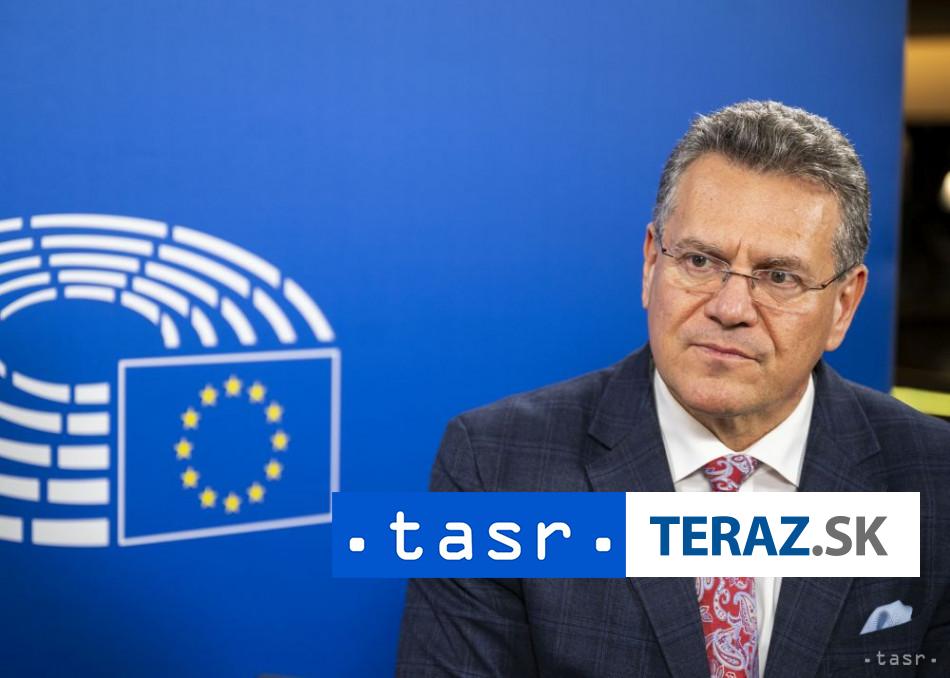
Maroš Šefčovič, Slovakia's European Commissioner, has been awarded a royal decoration by the King of Spain in recognition of his services. Šefčovič, one of the European Union's most senior officials, has held several high-profile roles within the European Commission, including Vice-President responsible for trade and interinstitutional relations. On the occasion, Šefčovič noted that a recent agreement he has been involved in will have a clear economic impact on a region of 300,000 people, though further details of the specific deal were not disclosed in available reports. The honor reflects the diplomatic and professional standing Šefčovič has built over years of European-level service, representing both Slovakia and the broader EU on the international stage.

|
International Politics

Germany Warns of Growing Russian Threat in the Arctic, Calls for Stronger NATO Northern Flank

Germany's Foreign Minister Johann Wadephul has warned of increasing Russian hybrid threats in the Arctic region and is calling for reinforced deterrence along NATO's northern flank. Wadephul urged alliance members to strengthen both defensive capabilities and deterrence measures in response to what he described as Russia's expanding military and hybrid activities in the High North. The Arctic has become an increasingly contested strategic zone, with Russia maintaining significant military infrastructure along its northern coastline. NATO's northern flank — stretching from Norway through Finland and Sweden, both of which recently joined the alliance — has taken on heightened importance since Russia's full-scale invasion of Ukraine in 2022. Hybrid threats typically refer to a combination of conventional military pressure, cyberattacks, disinformation campaigns, and sabotage operations, all of which Western governments have accused Russia of deploying across Europe. Germany, as one of NATO's largest member states and a key contributor to alliance defense spending, carries considerable weight in shaping alliance strategy, making Wadephul's warning a significant signal of Berlin's growing concern about security in the region.

|
International Politics

Europe Must Help Unblock Key Waterway, Commentary Argues

A blocked canal is at the center of a debate over whether Europe should intervene to restore passage, with critics describing the situation as a form of economic extortion. The commentary, published in Slovak daily SME, argues that European nations have a collective interest in resolving the blockade, which is being compared to a toll-extraction scheme imposed on those wishing to use the waterway. The piece calls for coordinated European action to reopen the route and resist what it characterizes as coercive demands.

|
International Politics

European Parliament Proposes Special Youth Regime and Targeted Ad Ban on Social Media

The European Parliament is pushing for sweeping new restrictions on social media platforms to better protect children and teenagers online. The proposed measures would establish a special regulatory regime for young users, limiting addictive features commonly built into social media platforms — such as infinite scrolling, autoplay, and engagement-driven notifications — that are designed to maximize time spent on apps. The proposals would also ban targeted advertising directed at minors, preventing platforms from using personal data to serve customized ads to young users. The initiative represents a significant escalation in the EU's ongoing effort to regulate major technology companies, which have already faced scrutiny under the Digital Services Act — a landmark EU law that requires large platforms to assess and mitigate risks to users, particularly vulnerable groups such as children. The European Parliament, one of the EU's main legislative bodies, must negotiate any final legislation with EU member state governments before it becomes binding law across the bloc. For Slovakia, as an EU member state, any regulation adopted at the European level would automatically apply, affecting how platforms like TikTok, Instagram, and YouTube operate for Slovak users under the age of 18. Child safety advocates across Europe have long argued that existing voluntary measures by tech companies are insufficient, and that binding legal standards are needed to curb the documented mental health and behavioral effects of social media on young people.

|
International Politics

Slovak President Lays Foundation Stone for Štefánik-Named School in Karabakh During Azerbaijan Visit

Slovak President Peter Pellegrini and Azerbaijani President Ilham Aliyev jointly laid the foundation stone for a new school in the Karabakh region, to be named after Milan Rastislav Štefánik, a revered Slovak national hero and co-founder of Czechoslovakia. The ceremony took place during Pellegrini's official visit to Azerbaijan and forms part of a broader 'smart village' development project in the region. Karabakh, a territory long disputed between Armenia and Azerbaijan, came under full Azerbaijani control in 2023 following a military offensive that ended decades of conflict. Štefánik, a general, diplomat, and astronomer who helped establish Czechoslovakia in 1918, is one of Slovakia's most celebrated historical figures, making the naming of the school a symbolic gesture of Slovak-Azerbaijani friendship. The visit signals Slovakia's interest in strengthening bilateral ties with Azerbaijan, a country that has become an increasingly important energy supplier to European nations seeking alternatives to Russian gas.

|
International Politics

EU and UK Strike Landmark Deal to Remove Gibraltar-Spain Border Controls

The European Union and the United Kingdom have reached a landmark agreement to eliminate border controls between Spain and Gibraltar, ending years of dispute over the strategically located British Overseas Territory at the southern tip of the Iberian Peninsula. The deal was sealed in Brussels by Maroš Šefčovič, the EU's lead negotiator and a Slovak commissioner, alongside British representatives. The agreement is expected to allow the freer movement of people and goods across the Gibraltar-Spain border, which has long been a source of friction between the two sides. Gibraltar, a British territory bordering Spain, has been a particularly contentious issue since the UK left the European Union in 2020 — a process known as Brexit — which ended Gibraltar's automatic access to the EU's single market and created new complications at its land border with Spain. The breakthrough marks a significant step in normalizing post-Brexit relations between London and Brussels in one of the most sensitive territorial disputes left unresolved by the UK's departure from the bloc.

|
International Politics

Slovakia Backs Accelerated Implementation of UN 2030 Agenda and UN Reform

Slovak Foreign Minister Juraj Blanár has expressed Slovakia's support for accelerating the implementation of the United Nations' Agenda 2030 — the global framework of Sustainable Development Goals aimed at addressing poverty, inequality, and climate change by the year 2030 — as well as broader reform of the UN itself. Blanár identified the thoughtful and responsible use of new technologies, including artificial intelligence, as a key opportunity to speed up progress toward these international development targets. Slovakia, as a UN member state, reaffirmed its commitment to the multilateral process at a time when global progress on the 2030 goals has been widely seen as lagging behind schedule.

|
International Politics

Slovakia's Foreign Minister Calls for International Framework to Prevent Resource-Driven Conflicts

Slovakia's Foreign Minister Juraj Blanár has argued that natural resources should serve as a foundation for peace rather than a driver of armed conflict. Speaking on the issue, Blanár called for a strengthened international framework focused on conflict prevention tied to competition over natural resources. Blanár, a senior figure in Smer-SD — the ruling left-nationalist party led by Prime Minister Robert Fico — has been a vocal advocate for diplomatic solutions to international disputes. The call reflects broader concerns within international institutions about how competition for critical raw materials, energy resources, and land can fuel geopolitical tensions and armed conflicts around the world. A robust multilateral framework, Blanár argued, would help reduce the risk of such disputes escalating into violence.

|
International Politics

Slovak President Pellegrini Visits Azerbaijan to Meet Aliyev, Discuss Energy and Trade

Slovak President Peter Pellegrini has departed for an official state visit to Azerbaijan, where he is scheduled to meet President Ilham Aliyev in the Karabakh region. Pellegrini is traveling with a delegation of ministers and aims to address several key topics, including energy cooperation and expanding business opportunities for Slovak companies in Azerbaijan. The visit is notable for its diplomatic symbolism: the meeting is set to take place in Karabakh, the disputed territory that Azerbaijan recaptured from Armenian forces in 2023 after decades of conflict. By holding talks there, the visit implicitly acknowledges Azerbaijani sovereignty over the region, which remains a sensitive geopolitical issue in Europe. Azerbaijan is a significant energy supplier to Europe, including Slovakia, particularly for natural gas delivered via the Southern Gas Corridor pipeline. For Slovakia, which has been navigating a shift away from Russian energy dependence since Russia's invasion of Ukraine, strengthening ties with Azerbaijani energy producers carries clear strategic and economic importance. Pellegrini's trip signals Bratislava's interest in deepening this relationship while also opening doors for Slovak businesses to access Azerbaijani markets.

|
International Politics

German MEP Calls Slovakia's Uhrík a 'Classic Fascist,' Slams Fico for Following Orbán's Playbook

A German member of the European Parliament has launched a sharp attack on two of Slovakia's most prominent political figures, describing far-right politician Milan Uhrík as a 'classic fascist' and accusing Prime Minister Robert Fico of copying the authoritarian political style of Hungarian leader Viktor Orbán. Lukas Sieper, a German MEP, made the remarks in an interview with Slovak news outlet Aktuality, amid an ongoing review by the European Parliament into the political grouping associated with Uhrík's party, Republika. The European Parliament is examining the political family to which Republika belongs, a process that could have institutional and financial consequences for the party's standing in Brussels. Milan Uhrík leads Republika, a Slovak far-right nationalist party that has gained a foothold in both Slovak and European politics. Robert Fico, Slovakia's prime minister and leader of the left-nationalist Smer-SD party, has drawn repeated criticism from Western European politicians and EU officials for his pro-Russian stance, his attacks on independent institutions, and his increasingly close ideological alignment with Hungarian Prime Minister Viktor Orbán, who has long been accused of undermining democratic norms within the EU. Sieper's comments reflect growing concern among mainstream European lawmakers about the direction of Slovak politics under the current government.

|
International Politics

Poland to Build Memorial for Victims of Volhynia Massacre

Polish Prime Minister Donald Tusk announced that Poland will construct a memorial to honor the victims of the Volhynia massacre, with the announcement coming on the eve of the anniversary of what Poles call 'Bloody Sunday' of 1943. The Volhynia massacre refers to a series of mass killings carried out by the Ukrainian Insurgent Army (UPA) against Polish civilians in the Volhynia region — then under German occupation, now part of western Ukraine — during World War II. Historians estimate that tens of thousands of ethnic Poles were killed. The events remain one of the most painful and contested chapters in Polish-Ukrainian relations, with Poland classifying the killings as genocide while Ukraine's position has historically been more ambiguous. The announcement comes amid renewed tensions between Warsaw and Kyiv over the issue. Relations on this historical question soured further after Ukrainian President Volodymyr Zelensky granted the honorary title 'Heroes of the UPA' to one of Ukraine's military units — a move that drew sharp criticism in Poland, where the UPA is widely associated with wartime atrocities against Polish civilians. Despite the two countries being close allies in the context of Russia's ongoing war against Ukraine, the Volhynia issue continues to be a significant source of friction between them.

|
International Politics

Slovakia Joins EU Partners to Discuss Accelerating Western Balkans Enlargement

Foreign ministers from a group of European Union member states known as the 'Friends of the Western Balkans' met to discuss ways to speed up the accession of Western Balkan countries into the EU. Slovakia's Foreign Minister Juraj Blanár attended the ministerial meeting as one of the group's founding members. On the sidelines of the gathering, Blanár also held separate talks with Italian Deputy Prime Minister and Foreign Minister Antonio Tajani. The Western Balkans region — encompassing countries such as Serbia, Montenegro, North Macedonia, Albania, Bosnia and Herzegovina, and Kosovo — has been pursuing EU membership for years, but progress has been slow due to reform requirements and political complications on both sides. The 'Friends of the Western Balkans' is an informal grouping of EU member states that advocates for a clearer and faster path to membership for these countries, reflecting concerns that prolonged delays could destabilize the region and create openings for Russian and Chinese influence.

|
International Politics

EU Finance Ministers Unanimously Approve Hungary's Recovery Plan

European Union finance ministers have unanimously approved Hungary's recovery and resilience plan, unlocking billions of euros in EU funds for Budapest after years of disputes with Brussels over rule-of-law concerns. The unanimous vote by EU finance ministers clears the way for Hungary to access funding under the EU's Recovery and Resilience Facility, a major post-pandemic investment program designed to help member states rebuild and modernize their economies. Hungary had been blocked from receiving the funds due to prolonged disagreements with EU institutions over issues including judicial independence, anti-corruption measures, and democratic standards. The approval marks a significant shift in relations between Budapest and Brussels. Hungary, led by Prime Minister Viktor Orbán's government, has faced repeated clashes with EU institutions over what critics described as democratic backsliding. The release of the funds had been contingent on Budapest implementing a series of reforms demanded by the European Commission, the EU's executive body. The green light from finance ministers signals that sufficient progress was deemed to have been made to justify unblocking the aid.

|
International Politics

European Parliament Approves EU-Mexico Trade Deal, Slovak MEPs Divided on Impact

The European Parliament has approved a new trade agreement between the European Union and Mexico, opening the door to expanded economic ties and new export opportunities. The deal is expected to reduce trade barriers and increase market access for European goods and services in Mexico, one of Latin America's largest economies. Slovak members of the European Parliament are divided over the agreement's effects on Slovakia. Supporters argue the deal will create new jobs by boosting Slovak exports to the Mexican market, while critics warn it could expose Slovak industries to cheap competition from Mexican imports, potentially harming domestic producers. The EU-Mexico trade agreement is part of a broader European strategy to diversify trade partnerships and reduce dependence on single markets. For Slovakia, a small, export-driven economy heavily integrated into European supply chains — particularly in the automotive sector — new trade deals can carry significant economic weight. The agreement must still complete formal ratification procedures before it takes full legal effect.

|
International Politics

Erdoğan Surprises NATO Leaders with Live-Ammunition Revolvers as Farewell Gift

Turkish President Recep Tayyip Erdoğan raised eyebrows at a NATO summit by presenting fellow alliance leaders with an unusual parting gift: a historic revolver loaded with live ammunition. Slovak President Peter Pellegrini, who received one of the weapons, said he intends to bring the revolver back to Slovakia and even plans to test-fire it. The unconventional diplomatic gesture stood out at what are typically formal multilateral gatherings, where gift exchanges tend to be symbolic and ceremonial rather than functional. Pellegrini's lighthearted response to the gift drew additional attention to the episode.

|
International Politics

NATO Summit Seen as Success for Europe as Trump Focused More on Iran Than Ukraine

European leaders left the NATO summit with a sense of relief after the meeting passed without major disruptions, with U.S. President Donald Trump appearing more preoccupied with Iran than with pressing allies on Ukraine. Ukrainian President Volodymyr Zelensky, attending the summit, even found room for humor, and secured pledges of continued support from alliance members. The outcome was broadly seen as reassuring for European NATO members who had feared Trump might use the gathering to pressure them or scale back commitments to Ukraine's defense. The summit underscored the ongoing tension within the alliance between the United States' shifting foreign policy priorities and Europe's desire to maintain a united front on security and support for Kyiv.

|
International Politics

Orbán Travels to Warsaw to Meet Former Ally Kaczyński

Hungarian Prime Minister Viktor Orbán is visiting Warsaw for a meeting with Jarosław Kaczyński, the leader of Poland's Law and Justice party (PiS), in an apparent bid to revive their once-close political alliance. The meeting comes after a significant setback for Orbán's regional influence: Law and Justice, which had been a key partner of Orbán's Fidesz party in building a bloc of nationalist, sovereigntist governments in Central Europe, lost power in Poland's October 2023 elections to a pro-European coalition led by Donald Tusk. Kaczyński, though no longer in government, remains the chairman of PiS and a powerful figure within the Polish right-wing opposition. Orbán and Kaczyński were previously central figures in the Visegrád group's hardline wing, united by opposition to EU migration policy, rule-of-law conditionality, and support for traditional social values. With that alignment weakened by Law and Justice's electoral defeat, Orbán appears to be seeking to shore up ties with like-minded partners as he navigates increasing isolation within the European Union, where his government faces ongoing disputes over democratic standards and his conciliatory stance toward Russia.

|
International Politics

Pellegrini Meets Erdoğan, Cites Shared Stance on Resolving Military Conflicts

Slovak President Peter Pellegrini has met with Turkish President Recep Tayyip Erdoğan, declaring that Slovakia and Turkey share a common position on how military conflicts should be resolved. Pellegrini, who has been a vocal advocate for diplomatic solutions to the war in Ukraine, emphasized the alignment between the two countries on conflict resolution approaches. Turkey, a NATO member like Slovakia, has positioned itself as a mediator in the Russia-Ukraine war, maintaining dialogue with both sides — a stance that has drawn both praise and criticism from Western allies. The meeting underscores Slovakia's efforts under Pellegrini and Prime Minister Robert Fico's government to pursue a more independent foreign policy posture within the Western alliance, one that emphasizes negotiation over military support for Ukraine.

|
International Politics

Coalition of the Willing Prepares Key Decisions on Ukraine Support at Paris Meeting

A group of European nations known as the 'Coalition of the Willing' is preparing to announce significant decisions in Paris regarding support for Ukraine, with both France and Poland signaling a potential shift in European security policy. Polish Foreign Minister Radosław Sikorski has indicated that a major step forward is expected from the gathering, which brings together countries committed to strengthening military and political backing for Kyiv. The Coalition of the Willing is an informal grouping of European states — led primarily by France and the United Kingdom — that have expressed readiness to take more active measures to support Ukraine in its defense against Russia's ongoing invasion, including the possible deployment of troops as a reassurance force. The Paris meeting signals growing momentum among European nations to deepen their security commitments to Ukraine independently of the United States, at a time when questions persist about Washington's long-term level of engagement in the conflict.

|
International Politics

European Parliament Backs Digital Euro, Opening Formal Negotiations

The European Parliament has endorsed the digital euro project, clearing the way for formal negotiations to begin on the proposed new currency. Lawmakers voted in favor of advancing the initiative, with the first round of talks between negotiators expected to take place later this month. The digital euro would be a digital form of cash issued by the European Central Bank, designed to complement — not replace — physical euro banknotes and coins. It would allow citizens across the eurozone to make digital payments directly using central bank money, similar to how physical cash works but in electronic form. Proponents argue it would offer a secure, publicly backed alternative to private payment systems and cryptocurrencies. The parliamentary endorsement marks a significant step forward for a project that has been under development and debate for several years. Formal negotiations between the European Parliament and EU member state representatives must now take place before any legislation can be finalized, meaning the digital euro remains some years away from potential introduction. The outcome of these talks will shape key decisions on privacy protections, spending limits, and how widely the digital currency can be used.

|