Dávka - Your daily dose of Slovak news
Last refreshed: 27/07/2026 17:42 · 75 articles added
Stories are refreshed at 05:30, 10:30, 15:30, and 21:30 UTC.

International Politics

View all3270 stories
International Politics

Senate Committee Advances Trump Ally Douglas Mastriano as U.S. Ambassador to Slovakia

A U.S. Senate committee has approved the nomination of Douglas Mastriano as the next American ambassador to Slovakia, clearing the way for a full Senate confirmation vote. All 12 Republican members of the committee voted in favor of advancing the nomination, while every Democratic member voted against it, reflecting sharp partisan divisions over the controversial pick. Mastriano, a retired U.S. Army general and former Pennsylvania state senator, is a close ally of President Donald Trump. He gained national notoriety for his vocal support of efforts to overturn the 2020 presidential election results and his involvement in far-right political circles, drawing significant criticism from Democrats who questioned his suitability for a senior diplomatic post. If confirmed by the full Senate, where Republicans hold the majority, Mastriano would represent the United States in Slovakia, a Central European NATO and European Union member state. The appointment carries strategic significance given Slovakia's proximity to the ongoing war in Ukraine and the country's complex domestic political landscape under Prime Minister Robert Fico, whose government has adopted a notably pro-Russian stance that has strained relations with Western allies.
International Politics

A Town That Forgot Its Wartime Massacres Now Lives With War Against Russia

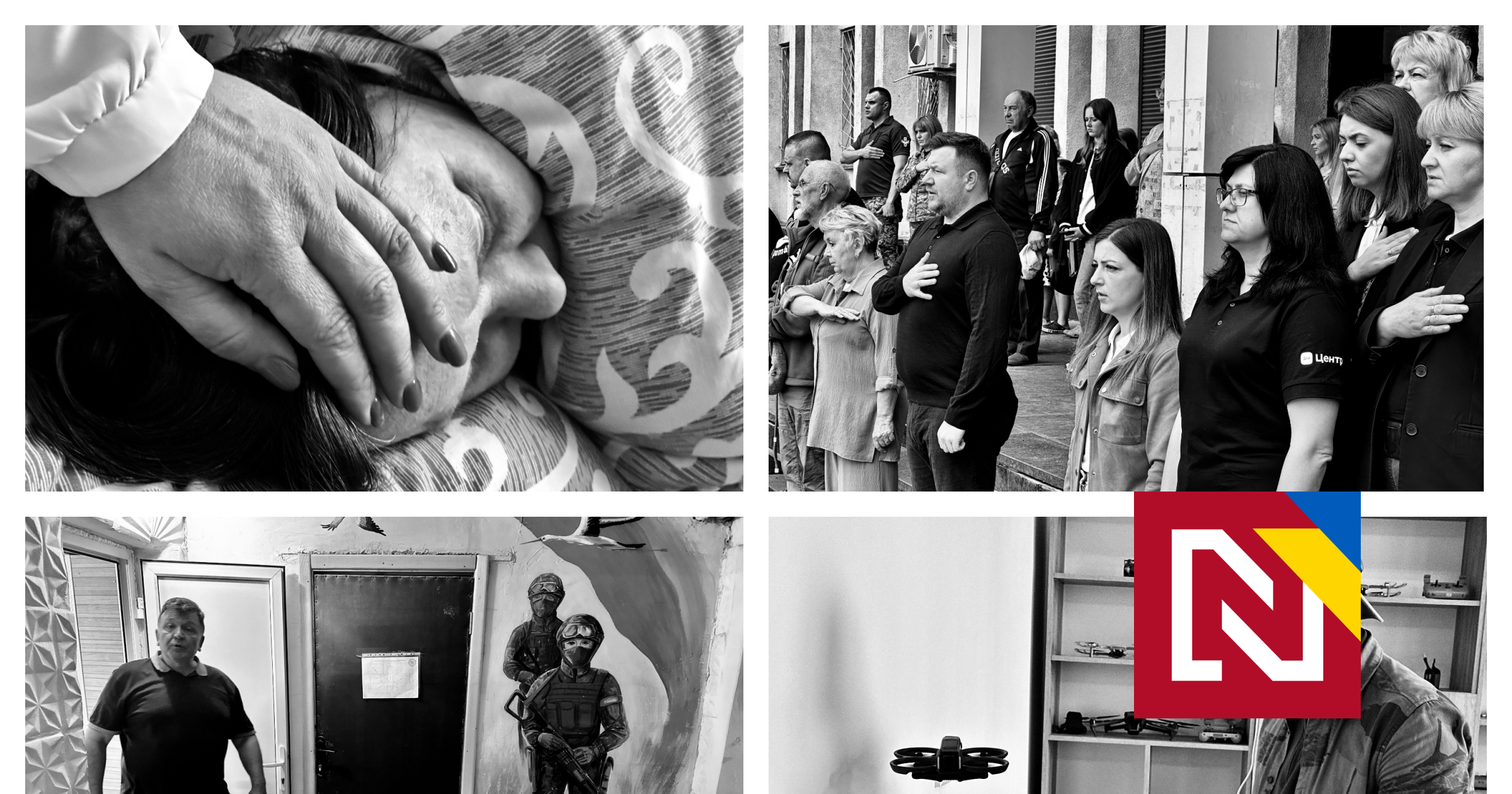
Novovolynsk, a city in western Ukraine near the Polish border, is living under the shadow of Russia's ongoing war while grappling with a complex history of ethnic violence largely forgotten by its residents. The city, which sits in a region where Polish and Ukrainian civilians were massacred during World War II, has seen its past overshadowed by the present conflict with Russia. Novovolynsk has a partnership with Stropkov, a small town in northeastern Slovakia, which has been providing assistance to its Ukrainian twin city during the war. Such cross-border municipal partnerships between Slovak and Ukrainian towns have become an important channel for civilian aid since Russia's full-scale invasion of Ukraine began in February 2022. The reportage highlights how communities once scarred by inter-ethnic atrocities are now united by a common threat, with Slovak partner cities playing a quiet but meaningful role in sustaining Ukrainian civilian life during wartime.

|
International Politics

Three Seas Initiative to Back Infrastructure Projects with Poland Under Slovak Presidency

Slovakia's presidency of the Three Seas Initiative will culminate in a summit and business forum held in Bratislava in April 2027, with a focus on supporting joint infrastructure projects with Poland. The Three Seas Initiative is a regional cooperation framework linking 13 Central and Eastern European countries — stretching from the Baltic, Adriatic, and Black seas — that aims to develop energy, transport, and digital infrastructure across the region, reducing dependence on both Western European and Russian networks. Slovakia's hosting of the summit signals its active role in shaping regional connectivity, at a time when infrastructure investment and energy independence have become urgent priorities across Central Europe following Russia's invasion of Ukraine.

|
International Politics

Ukrainian Foreign Minister Thanks Czech Republic for Unwavering Support

Ukrainian Foreign Minister Andrii Sybiha held a phone call with his Czech counterpart Jan Lipavský, thanking Prague for its steadfast support of Kyiv amid Russia's ongoing invasion. During the conversation, Sybiha expressed gratitude for the Czech Republic's backing of Ukraine's bid to join the European Union, a process that Kyiv regards as a key strategic priority. The two ministers also discussed the continuation of arms deliveries to Ukraine and efforts to restore the country's war-damaged energy infrastructure, which has been repeatedly targeted by Russian strikes. The Czech Republic has been one of the more active European supporters of Ukraine, both militarily and diplomatically, since Russia launched its full-scale invasion in February 2022.

|
International Politics

US Plans Grants for MAGA-Aligned Political Groups in Europe and Beyond

The United States government is preparing to distribute grants to political groups in Europe and around the world that are aligned with the MAGA (Make America Great Again) movement associated with President Donald Trump. The funding initiative reflects a broader strategy by the Trump administration to build international support for its political agenda by backing like-minded nationalist and populist movements abroad. The move comes as Washington frequently accuses the European Union of suppressing free speech, citing EU regulations on digital platforms and media as examples of censorship — a charge the EU denies, arguing its rules are designed to combat disinformation and protect democratic institutions. The grant program signals a significant shift in American foreign soft-power strategy, traditionally focused on promoting liberal democratic norms, toward actively supporting ideologically aligned political forces overseas.

|
International Politics

Slovakia Sends Nearly Eight Tonnes of Humanitarian Aid to Venezuela

Slovakia has dispatched nearly eight tonnes of humanitarian aid to Venezuela, the Slovak government announced. The shipment includes technical equipment and accommodation capacity materials intended to support relief efforts in the crisis-stricken South American country. Venezuela has been experiencing a prolonged humanitarian emergency marked by economic collapse, food and medicine shortages, and mass emigration, with millions of Venezuelans having fled the country in recent years. Slovakia's contribution forms part of broader international efforts to provide assistance to the Venezuelan population.

|
International Politics

Switzerland Joins NATO Ammunition Procurement Initiative

Switzerland has joined a NATO initiative aimed at coordinating the joint procurement of ammunition among member and partner states. Swiss authorities stated the move will strengthen the country's defense capabilities. Officials also emphasized that joining the initiative is consistent with Switzerland's longstanding policy of neutrality, which has historically guided the country away from formal military alliances. NATO, the North Atlantic Treaty Organization, is a Western military alliance of 32 member states; Switzerland is not a member but has increasingly engaged with the alliance on defense-related matters in recent years.

|
International Politics

Trump's Nominee for U.S. Ambassador to Slovakia Faces Senate Confirmation Hearing

Doug Mastriano, President Donald Trump's pick for U.S. Ambassador to Slovakia, appeared before the U.S. Senate for his confirmation hearing. Mastriano, a former Pennsylvania state senator, is a staunch Trump ally and is known as one of the Republican politicians who questioned the legitimacy of Joe Biden's victory in the 2020 presidential election. If confirmed by the Senate, he would represent American interests in Bratislava at a time when U.S.-Slovak relations carry significant weight, particularly given Slovakia's membership in both NATO and the European Union. Mastriano's nomination reflects Trump's pattern of appointing politically loyal figures to key diplomatic posts.

|
International Politics

Slovak Opposition Seizes on EU Rule-of-Law Report as Evidence of Democratic Backsliding

The European Commission published its annual rule-of-law report on Friday, finding that Slovakia had made progress in certain areas of its justice system — but Slovakia's opposition parties have seized on the report as proof that the ruling coalition is undermining democratic institutions. The European Commission, the executive body of the European Union responsible for monitoring member states' adherence to democratic norms and legal standards, releases the report each year to assess the state of the rule of law across EU countries. While the Commission acknowledged some advances in Slovakia's judicial sector, opposition politicians interpreted the overall findings as confirmation of what they describe as a systematic dismantling of checks and balances under the current government. Slovakia is governed by a coalition led by Smer-SD, the left-nationalist party of Prime Minister Robert Fico, which returned to power in 2023. Since then, the government has faced sustained criticism — both domestically and from European institutions — over changes to the criminal code, the disbanding of a specialized anti-corruption prosecutor's office, and perceived pressure on independent media and the judiciary. The opposition argues these moves have weakened the rule of law, a concern that EU bodies have repeatedly flagged. The annual Commission report adds fresh diplomatic weight to those concerns, even as the government maintains that the reforms are legitimate and necessary.

|
International Politics

Czech PM Babiš Claims Victory in Brussels Over EU Emissions Trading Reform

Czech Prime Minister Andrej Babiš is claiming a government victory after the European Union moved to revise its emissions trading system, a carbon pricing mechanism that requires companies to purchase permits for their greenhouse gas emissions. Babiš presented the proposed changes as a significant relief for Czech industry, which has long argued that the cost of emissions permits places it at a competitive disadvantage. The EU's Emissions Trading System (ETS) is a cornerstone of the bloc's climate policy, setting a cap on emissions from major industrial sectors and power generation. Companies must buy allowances for each tonne of CO2 they emit, with the price determined by market forces. Critics of the system, including Babiš and his ANO movement, have argued it drives up energy and production costs. However, opposition politicians in the Czech Republic dismissed Babiš's claims, calling the proposed revisions largely cosmetic and accusing the government of failing to secure meaningful concessions in Brussels. The dispute highlights ongoing tensions within the EU between member states pushing for faster climate action and those prioritizing industrial competitiveness.

|
International Politics

Slovak Government Rejects EU Commission's Assessment on High-Level Corruption Prosecutions

Slovakia's government has pushed back against an evaluation by the European Commission criticizing the country's record on prosecuting high-level corruption, while simultaneously declaring it will address the shortcomings identified in the report. The European Commission, the executive arm of the European Union responsible for monitoring member states' adherence to the rule of law, issued findings pointing to gaps in Slovakia's prosecution of corruption among senior officials and public figures. The Slovak cabinet, led by Prime Minister Robert Fico's Smer-SD party — a left-nationalist ruling party that returned to power in 2023 — disputed the Commission's conclusions, signaling tension between Bratislava and Brussels over judicial independence and anti-corruption standards. The standoff carries broader implications for Slovakia's standing within the EU, as the bloc has increasingly used rule-of-law assessments as a basis for scrutinizing member states and, in some cases, withholding EU funds. Slovakia has faced sustained criticism from European institutions over what critics describe as a rollback of democratic norms and anti-corruption mechanisms since the current government took office.

|
International Politics

Slovak PM Magyar Confirms Investigation into Hungarian Foreign Minister Szijjártó Over Russia Ties

Slovak Prime Minister Peter Magyar has confirmed that Hungarian Foreign Minister Péter Szijjártó is under investigation in connection with alleged cooperation with Russia, though Magyar declined to provide further details about the case. The confirmation marks a significant diplomatic development between Slovakia and Hungary, two neighboring EU and NATO member states whose relations have been strained by differing positions on Russia and the war in Ukraine. Szijjártó, a senior figure in Hungarian Prime Minister Viktor Orbán's government, has been a prominent advocate of maintaining close economic and political ties with Moscow, a stance that has repeatedly put Hungary at odds with the broader European Union consensus on sanctions and support for Ukraine. The investigation, if substantiated, could deepen tensions between Budapest and Bratislava and draw wider European scrutiny of Hungarian officials' relationships with Russia.

|
International Politics

Commentary: U.S. Grants Allegedly Funding Pro-Trump Cultural Agenda in Europe

A commentary published by Slovak news outlet Aktuality argues that the first major use of renewed U.S. foreign assistance funding is not aimed at supporting independent journalism or countering Russian influence operations in Europe, but rather at financing programs aligned with Donald Trump's domestic political agenda and targeting European audiences. The piece, written by commentator Victor Breiner, contends that Washington has issued grants designed to advance what the author describes as a 'culture war' against Europe, raising concerns about the nature and intent of American soft-power spending under the current U.S. administration. The commentary reflects growing debate in Central Europe about the shifting priorities of U.S. foreign policy under Trump, particularly regarding media funding and democracy promotion programs that have historically been directed at countering authoritarian influence. Critics argue the reorientation of such funds toward promoting conservative cultural values represents a significant departure from traditional American democracy-support efforts abroad.

|
International Politics

Slovakia Moves to Establish Diplomatic Relations with the Kingdom of Tonga

Slovakia is seeking to establish formal diplomatic relations with the Kingdom of Tonga, a Pacific island nation, with official documents expected to be signed as early as September. Slovak Foreign Minister Juraj Blanár announced the development following talks with Tongan officials, who also pledged their support for Slovakia's bid for a non-permanent seat on the United Nations Security Council. A non-permanent seat on the Security Council, the UN's most powerful body responsible for international peace and security, is a significant foreign policy achievement for any country. Slovakia's campaign to secure such a seat reflects the government's efforts to raise the country's international profile. The establishment of diplomatic ties with Tonga would expand Slovakia's network of formal international relationships.

|
International Politics

EU Ambassadors Agree on Bloc's 2027 Budget Position

European Union member states have adopted a formal position on the bloc's budget for 2027, taking a cautious approach to spending while emphasizing that funding must be adequate to deliver on EU policies and programs. Ambassadors from EU member states, meeting within the Council of the EU — the institution representing national governments — agreed that the budget should be set at an appropriate level to effectively implement existing programs across the union. The position reflects a balancing act common in EU budget negotiations: ensuring fiscal discipline while maintaining sufficient resources for key initiatives such as agricultural subsidies, regional development funds, and research programs. The Council's position now sets the stage for negotiations with the European Parliament, which must approve the final budget.

|
International Politics

Baltic States Warn of Russian Attack Risk as New EU Sanctions Stall Over Visas and Fish Fingers

Lithuania and Latvia have issued fresh warnings about the growing risk of Russian sabotage and potential attacks on critical infrastructure, as a new package of European Union sanctions against Russia has become stalled in negotiations. The Baltic states — which share borders with Russia and its ally Belarus and have been among the most vocal advocates for a tough European stance toward Moscow — say the threat of deliberate disruption to energy, communications, and transport infrastructure is increasing. Meanwhile, the latest EU sanctions package has hit an unexpected deadlock, with disagreements among member states over provisions related to visas and fish products blocking progress. The sanctions dispute highlights the difficulty of maintaining unity among the EU's 27 member states on Russia policy, even as frontline countries like Lithuania and Latvia press for stronger action. The Baltic states joined the EU and NATO in 2004 and have long argued that the alliance must take the Russian threat more seriously, a position that gained broader European support following Russia's full-scale invasion of Ukraine in February 2022.

|
International Politics

EU Fails to Agree on New Russia Sanctions Package After Hours of Talks

European Union member states failed to reach agreement on a 21st package of sanctions against Russia following hours of negotiations in Brussels. The main sticking point is a demand by Greece over the transit of Russian liquefied natural gas (LNG). Athens is seeking an exemption or accommodation related to the passage of Russian LNG through its territory or infrastructure, a position that has blocked consensus among the bloc's 27 members. The EU has been progressively tightening economic restrictions on Russia since Moscow's full-scale invasion of Ukraine in February 2022, with each successive sanctions package requiring unanimous agreement among member states — a process that frequently gives smaller or more energy-dependent countries leverage to push for carve-outs protecting their economic interests. The impasse highlights the ongoing tension within the EU between maintaining a united front against Russia and accommodating the divergent energy dependencies of individual member states.

|
International Politics

EU-India Trade and Technology Council to Strengthen Bilateral Ties, Šefčovič Says

The European Union and India have taken steps to deepen their economic and technological relationship through the Trade and Technology Council, a bilateral forum designed to coordinate policy on trade, digital technologies, and supply chains. EU Commissioner for Trade and Economic Security Maroš Šefčovič — a Slovak politician and longtime senior European official — said the council will strengthen ties between the two sides, with talks focusing specifically on cooperation in the field of digital technologies. The EU-India Trade and Technology Council, modeled on a similar body established between the EU and the United States, aims to align regulatory approaches and reduce dependencies in strategic sectors. For Slovakia, Šefčovič's prominent role in shaping EU trade and technology policy represents a significant presence on the international stage at a time when the bloc is working to diversify partnerships amid global geopolitical tensions.

|
International Politics

Czech Republic and Slovakia Agree on Joint Military Procurement to Modernize Armies

The Czech Republic and Slovakia have agreed to coordinate joint purchases of military equipment, their defense ministers announced, in a move aimed at streamlining the modernization of both countries' armed forces. The agreement covers shared procurement of hardware including AM120 mortars and Tatra 815 military trucks — the latter a rugged vehicle long associated with Central European defense industries. The deal opens the door to broader defense cooperation between the two neighboring NATO allies. Czech and Slovak defense cooperation has natural foundations in the countries' shared history: the two nations formed a single state, Czechoslovakia, until a peaceful split in 1993. Both are members of NATO and the European Union, and have increasingly sought to align their defense planning and spending amid heightened security concerns following Russia's full-scale invasion of Ukraine in 2022. Joint procurement is seen as a way for smaller NATO members to reduce costs and improve interoperability — the ability of allied forces to operate together effectively.

|
International Politics

Slovakia Expresses Solidarity with Saudi Arabia Following Attacks

Slovakia has expressed solidarity with Saudi Arabia in connection with recent attacks, with Slovak officials noting that the situation has implications for Slovakia as well. The nature of the attacks and the specific Slovak official who conveyed the message were not detailed in available reporting, but the statement signals Bratislava's engagement with security developments affecting its partner countries. Slovakia, a member of NATO and the European Union, regularly aligns its foreign policy statements with broader Western and allied positions on regional security matters.

|