Dávka - Your daily dose of Slovak news
Last refreshed: 27/07/2026 17:42 · 75 articles added
Stories are refreshed at 05:30, 10:30, 15:30, and 21:30 UTC.

International Politics

View all3270 stories
International Politics

European Parliament Approves Temporary Scanning of Private Messages to Combat Child Abuse

The European Parliament has approved a measure allowing messaging platforms such as WhatsApp and Google services to scan private communications for child sexual abuse material. The temporary authorization permits technology companies to search user messages for illegal content, while legislators emphasized the need for strict safeguards to balance child protection with users' right to privacy. The move extends an earlier derogation from EU electronic communications rules that had allowed voluntary scanning by platforms, but comes amid ongoing debate over so-called 'chat control' legislation — a broader and more controversial proposal that would make such scanning mandatory across all encrypted services. Critics have warned that mass scanning of private messages could undermine end-to-end encryption, one of the primary tools protecting digital privacy for millions of Europeans. The European Parliament's backing signals continued political support for using technology to combat online child exploitation, though lawmakers stressed that any permanent framework must include robust legal limits to prevent misuse.

|
International Politics

Slovak Foreign Minister Heads to Rome for Western Balkans Forum

Slovak Foreign Minister Juraj Blanár is traveling to Rome to attend a meeting of the Friends of the Western Balkans, a diplomatic forum of European foreign ministers focused on the region's integration into the European Union. Ministers at the gathering will discuss EU enlargement toward the Western Balkans — a group of countries including Serbia, Bosnia and Herzegovina, Montenegro, North Macedonia, Albania, and Kosovo that are at various stages of the EU accession process — as well as measures to strengthen Europe's strategic autonomy, meaning the continent's capacity to act independently in security and foreign policy matters. Slovakia, under Prime Minister Robert Fico's government, has maintained an active interest in EU enlargement policy, though the current administration has also drawn attention for its divergence from mainstream EU positions on other issues, including the war in Ukraine.

|
International Politics

Slovak Foreign Minister Seeks to Revive Visegrád Group with Broader Agenda

Slovak Foreign Minister Juraj Raši has called for a restart of the Visegrád Four (V4) grouping, proposing to focus on unifying topics and potentially invite additional countries to join the format. Raši believes that with this renewed approach, the V4 nations would carry greater collective weight within the European Union. The Visegrád Four is a regional alliance of four Central European EU member states — Slovakia, the Czech Republic, Hungary, and Poland — formed in 1991 to coordinate on political, economic, and cultural cooperation. The group has faced internal tensions in recent years, particularly over differing stances on the war in Ukraine, migration policy, and relations with Brussels, which have weakened its cohesion and influence within EU institutions. Raši's proposal reflects Slovakia's current government orientation under Prime Minister Robert Fico, whose administration has pursued a more sovereigntist and EU-skeptical course, often finding common ground with Hungary's Viktor Orbán. By broadening the V4's agenda around shared interests and potentially expanding its membership, Raši aims to restore the bloc's relevance as a counterweight within EU decision-making. Whether the other V4 members — particularly Poland and the Czech Republic, whose governments have taken a more pro-Ukraine and pro-Brussels stance — would embrace such a reset remains uncertain.

|
International Politics

Slovak Economists Discuss Trump's 'Kleptocracy' and NATO Summit Expectations

Slovak economists Ivan Mikloš and Dalibor Roháč have taken up the topics of what they describe as Donald Trump's 'kleptocracy' and the outlook for the upcoming NATO summit in the latest episode of the Slovak podcast 'Kde je sever?' (Where is North?). The podcast, which regularly features commentary on domestic and international political and economic affairs, examined concerns about governance and accountability in the United States under Trump, as well as what European and Slovak audiences might expect from the alliance's forthcoming high-level meeting. NATO summits bring together heads of state and government from the alliance's 32 member countries to set strategic priorities and make key decisions on collective defense — issues of particular relevance to Slovakia, a NATO member since 2004 that borders Ukraine.

|
International Politics

Slovak Foreign Minister Says Ankara Summit Confirmed Slovakia's Firm Place in NATO

Slovakia's Foreign Minister Juraj Blanár said a NATO summit held in Ankara confirmed the country's firm anchoring within the alliance and demonstrated unity among its members. Blanár, a minister from Smer-SD — the ruling populist-social democratic party led by Prime Minister Robert Fico — made the remarks following the gathering of allied foreign ministers in the Turkish capital. The statement is notable given ongoing questions about Slovakia's geopolitical orientation under the current Fico government, which has taken positions on the war in Ukraine that have at times put it at odds with other NATO and European Union partners. Blanár characterized the summit as a show of allied cohesion, signaling that despite those tensions, Slovakia remains formally committed to the transatlantic alliance.

|
International Politics

Slovak MEPs Welcome EU Move to Better Protect Cross-Border Workers

Slovak members of the European Parliament have expressed support for new European Union measures aimed at improving protections for cross-border workers. MEP Michal Hojsík, representing Progresívne Slovensko (Progressive Slovakia), a liberal pro-European opposition party, highlighted that hundreds of thousands of Slovak citizens work across EU member states and are regularly burdened with excessive bureaucracy when managing essential services such as health insurance and pension contributions. The new EU measures are intended to reduce that administrative burden and strengthen the rights of workers who live in one country while employed in another. Cross-border labor is a significant issue for Slovakia, which has long seen large numbers of its citizens seek employment in wealthier EU countries such as Germany, Austria, and the Czech Republic. Streamlining social security coordination across borders is seen as a practical benefit for these workers, who often face complex and overlapping national systems when claiming entitlements.

|
International Politics

Slovakia Defends Its 2035 Defense Spending Timeline at NATO Ankara Summit

Slovak President Peter Pellegrini praised the NATO summit held in Ankara, Turkey, saying it confirmed unity among the alliance's members and that Slovakia faced no criticism for its plan to reach a five-percent GDP defense spending target by 2035. The summit was dominated by a push from U.S. President Donald Trump, who called on NATO member states to raise their defense budgets to five percent of gross domestic product as quickly as possible, saying most allies had agreed to the target. Slovakia, a NATO member since 2004, had previously committed to the ambitious spending goal but on a longer timeline than some allies may have preferred. Pellegrini's positive assessment suggests Bratislava successfully defended its phased approach without facing pressure from alliance partners. The five-percent target represents a significant escalation from the existing NATO benchmark of two percent of GDP, which many European members have only recently begun to meet following Russia's full-scale invasion of Ukraine in 2022. Whether European allies can realistically meet the higher threshold remains a point of debate across the continent.

International Politics

NATO Leaders Reaffirm Commitment to Collective Defence, Trump Pledges U.S. Will Stay in Alliance

Leaders of NATO member states have jointly reaffirmed their commitment to collective defence under Article 5 of the alliance's founding treaty, the provision that treats an attack on one member as an attack on all. U.S. President Donald Trump assured allied leaders that the United States intends to remain in NATO, offering reassurance amid longstanding questions about Washington's dedication to the transatlantic alliance. The joint declaration signals an effort by member states to present a unified front on the alliance's core security guarantees. Article 5, NATO's mutual defence clause, is widely considered the cornerstone of the alliance's deterrence posture, particularly in the context of Russia's ongoing war in Ukraine and heightened security concerns across Europe. Trump's pledge is significant given his repeated past criticism of NATO and suggestions that the U.S. might not automatically defend allies he deemed to be contributing insufficiently to their own defence budgets.

|
International Politics

NATO Summits Need Not Be Annual, Slovak President Says After Talks with Rutte

Slovak President Peter Pellegrini said NATO summits do not need to be held every year, following what he described as a constructive alliance meeting that demonstrated unity among member states. Pellegrini also expressed confidence that NATO Secretary General Mark Rutte is capable of working effectively with U.S. President Donald Trump, whose relationship with the alliance has been a source of concern among European members. Pellegrini, who leads Slovakia as a largely ceremonial head of state while the government is run by Prime Minister Robert Fico's ruling Smer-SD party, has generally sought to maintain a balancing act between Euro-Atlantic commitments and a more cautious stance toward the war in Ukraine — a position broadly aligned with Fico's government. The remarks suggest Slovakia views the alliance's internal cohesion as intact despite ongoing tensions over defense spending expectations and U.S. engagement with European security.

|
International Politics

Slovak President Pellegrini Attends NATO Summit

Slovak President Peter Pellegrini traveled to the NATO summit to represent the country in high-level alliance talks. The visit comes at a sensitive time for Slovakia, whose government under Prime Minister Robert Fico has taken positions at odds with the broader NATO consensus, particularly regarding support for Ukraine and relations with Russia. Pellegrini, who serves as head of state and holds a largely ceremonial but symbolically important role in foreign policy, has at times sought to project a more pro-Western image than Fico's administration, creating a degree of tension within Slovak leadership over the country's international positioning. Slovakia, a NATO and EU member since 2004, has faced growing scrutiny from allies over Fico's rhetoric and policy choices since he returned to power in 2023.

|
International Politics

Czech Opposition Leader Calls NATO Summit Representation 'Embarrassing' as Two Delegations Head to Ankara

Vít Rakušan, leader of the Czech opposition party Mayors and Independents (Starostové) and former interior minister, has sharply criticized his country's representation at the NATO summit in Ankara, calling it an "embarrassment" and "ridiculous." The Czech Republic sent two separate delegations to the summit after President Petr Pavel and the government failed to agree on who should represent the country — an unusual diplomatic split that drew mockery from the opposition. Slovakia, by contrast, was represented by a single delegation headed by President Peter Pellegrini. The dispute reflects a broader tension in Czech politics between the president and the ruling government over foreign policy authority — a recurring issue in parliamentary systems where executive power is divided. Rakušan used the situation to highlight what he described as dysfunction within the current Czech leadership. Separately, Rakušan commented on an incident at a folklore festival in Strážnice, a traditional open-air museum village in the Czech Republic, where attendees booed Czech government politicians — echoing a similar episode in Slovakia, where Culture Minister Martina Šimkovičová was booed at the Východná folklore festival. While most Czech politicians ignored the crowd's reaction, Foreign Minister Jan Macinka shouted back at the booing audience, telling them they were "crazy" — a response that drew additional criticism. Rakušan argued that politicians must be willing to face hostile crowds rather than avoid public scrutiny.

|
International Politics

NATO Leaders Gather in Ankara to Navigate Trump Era Tensions

NATO alliance leaders have convened in Ankara, Turkey, seeking to persuade U.S. President Donald Trump that European member states are taking defense spending seriously. Trump has repeatedly criticized European allies for insufficient military investment and limited support for U.S. policy on Iran. In a gesture aimed at appeasing the American president, NATO Secretary General Mark Rutte announced planned purchases of aircraft and drones ahead of the summit. The meeting reflects broader anxiety among European NATO members about maintaining Washington's commitment to the alliance under Trump's leadership, as the president has questioned the value of collective defense arrangements that underpin European security.

|
International Politics

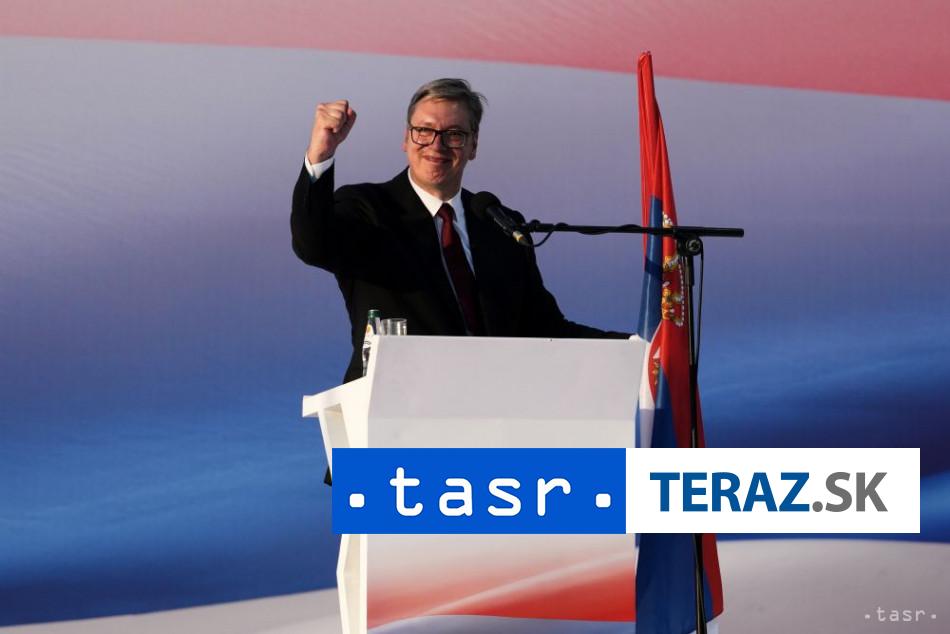
Serbian President Doubts Near-Term EU Enlargement as Ukrainian Speaker Pushes for Acceleration

Serbian President Aleksandar Vučič has expressed skepticism about the prospect of imminent European Union expansion, while Ukrainian parliamentary speaker Ruslan Stefanchuk called for the process to be accelerated. The diverging views highlight tensions within the broader EU enlargement debate, which has gained renewed urgency since Russia's full-scale invasion of Ukraine in February 2022. Ukraine, Moldova, and Georgia were all granted EU candidate status in June 2022 in the wake of that invasion, reflecting the bloc's political response to the shifting security landscape in Eastern Europe. EU enlargement is a lengthy and complex process requiring candidate countries to meet strict democratic, legal, and economic standards before accession negotiations can be completed, and member states must unanimously approve any new members.

|
International Politics

European Commission to Consider Unconditional Basic Income Initiative

The European Commission will formally examine a citizens' initiative calling for the introduction of an unconditional basic income across the European Union. The initiative, which has gathered sufficient support to trigger a Commission review, argues that a guaranteed basic income would allow all citizens to live with dignity and would contribute to a fairer society. Under EU rules, a European Citizens' Initiative that collects one million verified signatures from at least seven member states obliges the Commission to consider the proposal and respond, though it is not required to introduce legislation. Supporters of the measure contend that unconditional basic income — a regular payment made to all residents regardless of employment status or other conditions — would reduce poverty and inequality across EU member states. The initiative enters a formal deliberation process at a time of growing debate across Europe about the future of work, automation, and social safety nets.

|
International Politics

NATO Summit Tensions Mount Before It Begins: Trump Targets Meloni, Fico Rejects Ukraine Loans

Sharp disagreements among NATO allies are already surfacing ahead of the alliance's upcoming summit, with disputes involving U.S. President Donald Trump and several European leaders threatening to overshadow the meeting before it formally opens. Trump has proposed a so-called "restraining order" against Italian Prime Minister Giorgia Meloni — a provocative gesture toward one of Europe's most prominent right-wing leaders and a figure who had previously been seen as sympathetic to Trump's political outlook. Meanwhile, Slovak Prime Minister Robert Fico, who leads a left-nationalist coalition government in Bratislava and has consistently opposed Western military support for Ukraine, is rejecting proposals to extend loans to Kyiv through NATO mechanisms. The NATO summit, which brings together the leaders of the 32-member military alliance, was expected to center on defense spending commitments and continued support for Ukraine following Russia's 2022 invasion. However, the pre-summit disputes highlight deepening fractures within the alliance. Fico's position is consistent with his government's broader stance of blocking or complicating Western aid to Ukraine, which has repeatedly put Slovakia at odds with its EU and NATO partners. His rejection of loan arrangements for Kyiv adds another point of contention to an already fraught diplomatic gathering. The disputes signal that the summit faces significant internal conflict, with the risk that disagreements over Ukraine funding and intra-alliance personal tensions could undermine the show of unity NATO leaders had hoped to project.

|
International Politics

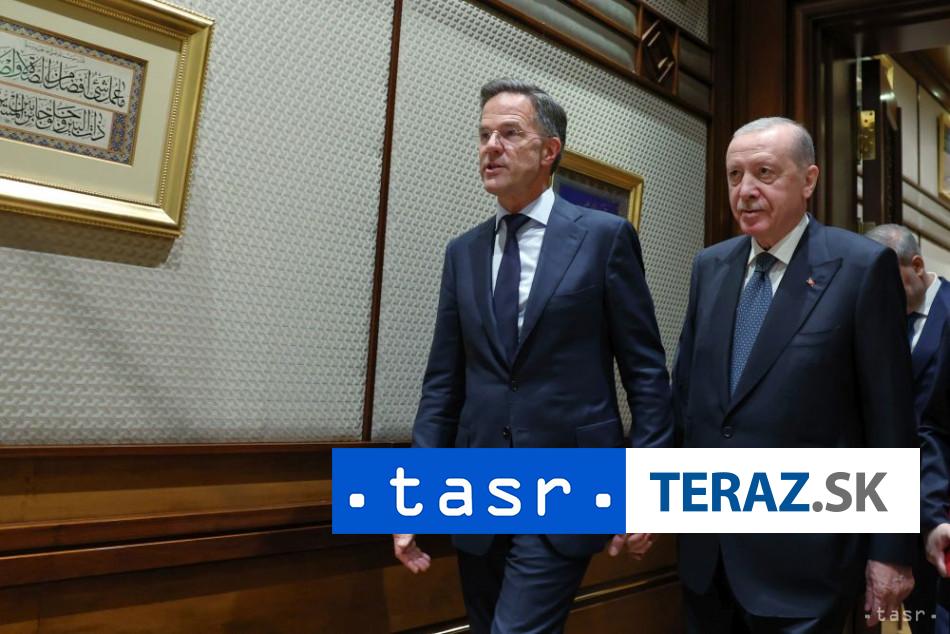
NATO Summit Opens With Ukraine Support and Defence Spending Expected to Dominate Agenda

A NATO summit has opened with alliance members expected to reaffirm support for Ukraine and debate increased defence spending commitments. Slovakia is represented at the summit by President Peter Pellegrini, who is also scheduled to hold a bilateral meeting with Turkish President Recep Tayyip Erdoğan on the sidelines of the gathering. The summit brings together leaders of NATO's 32 member states to coordinate on key security issues, including ongoing military and political support for Ukraine amid Russia's invasion, as well as pressure on member countries to meet or exceed the alliance's defence spending targets. Pellegrini's meeting with Erdoğan is notable given Turkey's historically independent stance within NATO on issues ranging from arms exports to relations with Russia, making such bilateral contacts significant for smaller alliance members like Slovakia.

|
International Politics

EU Blocks French Social Media Ban for Minors, Citing Conflict With Digital Rules

The European Commission has ruled that France's proposed ban on social media access for children is incompatible with European Union law in its current form, effectively halting the measure. The Commission said in a formal opinion that while it fully supports the goal of better protecting minors online, the rules proposed by Paris conflict with the EU-wide Digital Services Act (DSA) — a landmark regulation governing online platforms across all member states — and would grant French authorities excessively broad powers that fall outside what individual countries are permitted to exercise under the bloc's legal framework. The DSA, which came into full force in 2024, is designed to create a single set of rules for digital platforms across the EU, limiting the ability of individual member states to impose separate national regulations in the same area. The Commission is now considering whether a similar child protection measure could be introduced at the EU level, which would apply uniformly across all 27 member states.

|
International Politics

Slovak and Bulgarian Foreign Ministers Discuss Upcoming NATO Summit in Ankara

Slovak Foreign Minister Juraj Blanár held a phone call with his Bulgarian counterpart, during which the two ministers expressed mutual support for the upcoming NATO summit in Ankara, Turkey. The conversation covered bilateral relations between Slovakia and Bulgaria as well as coordination ahead of the alliance summit. NATO summits bring together heads of state and government from all 32 member countries to set strategic priorities and address key security issues facing the alliance.

|
International Politics

Slovakia Accused of Concealing Its Position Ahead of NATO Summit

Slovakia's government is withholding its official stance going into an upcoming NATO summit, according to the opposition Progressive Slovakia (PS) party, which called the lack of transparency a mockery of citizens. Progressive Slovakia, a pro-European liberal party currently in opposition, criticized the ruling government for failing to publicly disclose what positions and commitments Slovakia intends to bring to the alliance's gathering. NATO summits are key events where member states coordinate defense policy, set spending targets, and align on strategic priorities — making each country's declared position a matter of significant public interest. The accusation adds to ongoing tensions between the opposition and Prime Minister Robert Fico's government, which has drawn criticism for its ambiguous stance on Western security commitments since taking office in 2023.

|
International Politics

Slovakia Reaffirms It Will Not Provide Military Aid to Ukraine Ahead of NATO Summit

Slovakia's top constitutional officials have agreed on a unified foreign policy position ahead of an upcoming NATO summit: the country will honor its alliance commitments but will not provide any military or financial assistance to Ukraine for military purposes. The agreement was reached at a meeting held at the Presidential Palace, bringing together the country's highest constitutional representatives. The Slovak delegation is set to travel to Ankara, Turkey, on Tuesday, July 7, 2026, where the NATO summit will take place. The position was announced by Foreign Minister Juraj Blanár, a member of Smer-SD, the ruling left-nationalist party led by Prime Minister Robert Fico. Slovakia's government has maintained a consistent stance against arming Ukraine since Fico returned to power in 2023, distinguishing itself as one of the most vocal critics within NATO of continued military support for Kyiv in its war against Russia. While Bratislava has pledged to meet its NATO obligations — including defense spending targets — it has drawn a firm line against direct arms transfers or military funding to Ukraine. The NATO summit in Ankara is expected to focus heavily on the alliance's continued support for Ukraine and member states' defense commitments. Slovakia's position is likely to draw attention from allies, particularly as pressure mounts within the 32-member alliance for unified backing of Ukraine. Fico's government has argued that military aid prolongs the conflict and that Slovakia's national interest lies in pursuing a diplomatic resolution.

|