Dávka - Your daily dose of Slovak news
Last refreshed: 27/07/2026 17:42 · 75 articles added
Stories are refreshed at 05:30, 10:30, 15:30, and 21:30 UTC.

Economy

View all1892 stories
Economy

Slovak Breweries Produced Over Three Million Hectoliters of Beer in 2024

Slovak breweries produced more than three million hectoliters of beer last year, with non-alcoholic beer setting a new production record. The brewing industry in Slovakia, a country with a long tradition of beer culture, saw notable growth in the non-alcoholic segment, reflecting a broader European trend toward lower and alcohol-free alternatives. The milestone highlights the resilience of the domestic brewing sector amid rising production costs and shifting consumer preferences.

|
Economy

Slovak Railways to Annul Bid Evaluation for Spiš Rail Modernization Project

Slovak Railways is set to cancel the evaluation of bids submitted in a public tender for the modernization of a railway section in the Spiš region of eastern Slovakia, in a move aimed at correcting an unlawful situation in the procurement process. The decision marks another disruption to the project, as the word 'again' suggests a prior cancellation had already occurred in the same tender. Public procurement disputes of this kind are common in large infrastructure projects in Slovakia, where legal challenges or procedural irregularities can force contracting authorities to restart or repeat evaluation processes, significantly delaying construction timelines. The Spiš rail corridor is part of broader efforts to upgrade Slovakia's ageing railway network, and repeated setbacks in the tendering process risk pushing back the modernization timetable and increasing costs.

|
Economy

Managing Cash Flow: Why Profitable Slovak Businesses Can Still Run Out of Money

A business can show strong revenues and profits on paper while still struggling to meet basic financial obligations — a situation that highlights the critical importance of cash flow management. Even when a company is technically profitable, the timing of when money actually arrives in a bank account determines whether it can pay wages, suppliers, rent, and fund further growth. Tools such as cash flow reports and practical calculation methods help business owners anticipate tight periods and take preventive action before a liquidity crisis occurs. Financial experts recommend that companies focus not just on how much they earn, but on when those earnings are actually received, as the gap between invoicing and payment can leave even successful businesses unable to cover day-to-day expenses.

|
Economy

Slovakia Eyes Full Control of Nuclear Project as Silicon Valley Giants Clash

Slovak Prime Minister Robert Fico repeated his government's intention over the weekend to purchase the remaining stake in JESS, a joint venture company, in order to gain full state control over a planned nuclear reactor at Jaslovské Bohunice, a site in western Slovakia with a long history of nuclear energy production. Fico's government, led by his Smer-SD party, has signaled that state ownership of the project is a strategic priority, though no deal has been finalized. On the international front, a lesser-known oligarch connected to Russian President Vladimir Putin spoke publicly, and a high-profile dispute erupted between major Silicon Valley technology companies, reflecting broader tensions in the global artificial intelligence industry.

|
Economy

Daimler Truck Warns of Threat to European Heavy Vehicle Production

Daimler Truck, one of the world's largest manufacturers of commercial vehicles, has raised concerns about the future of heavy truck production in Europe, warning that the sector could suffer serious consequences from newly established emissions standards. The company fears that stringent CO2 reduction targets set for the freight transport industry may undermine the economic viability of manufacturing trucks on the continent. The European Union has been tightening emissions regulations for heavy-duty vehicles as part of its broader push toward climate neutrality, requiring significant reductions in carbon emissions from trucks over the coming decades. Industry leaders argue that the pace and scale of the required transition — primarily toward zero-emission vehicles such as hydrogen-powered or battery-electric trucks — may outstrip the development of necessary infrastructure and market demand, putting European production facilities and jobs at risk.

|
Economy

Žilina Region Adjusts Budget to Over €332 Million

The Žilina self-governing region in northwestern Slovakia has revised its annual budget upward, pushing total spending past €332 million. The adjustment included a nearly €1.8 million increase in capital expenditures, with the additional funds directed toward development and investment projects across the region. Regional governments in Slovakia, known as self-governing regions or kraje, manage public services including secondary education, social care, and regional infrastructure.

|
Economy

Eastern Slovakia Has Country's Worst Housing Affordability as Prices Rise Faster Than Wages

Eastern Slovakia faces the most severe housing affordability crisis in the country, with property prices climbing while local wages continue to lag behind, making homeownership increasingly out of reach for residents in the region. The Košice-centered east of Slovakia has historically been characterized by lower average salaries compared to the capital Bratislava and western regions, a gap that is now being compounded by rising real estate prices that are outpacing income growth. The disparity means that eastern Slovak residents must dedicate a disproportionately large share of their earnings to housing costs compared to their counterparts elsewhere in the country. The article also raises the question of whether the arrival of Volvo's new manufacturing operations in Slovakia could help reshape the regional real estate market by boosting employment and wages in the area, potentially improving affordability over time.

|
Economy

Slovak Arms Industry Posts Fastest Growth Since Ukraine War Began

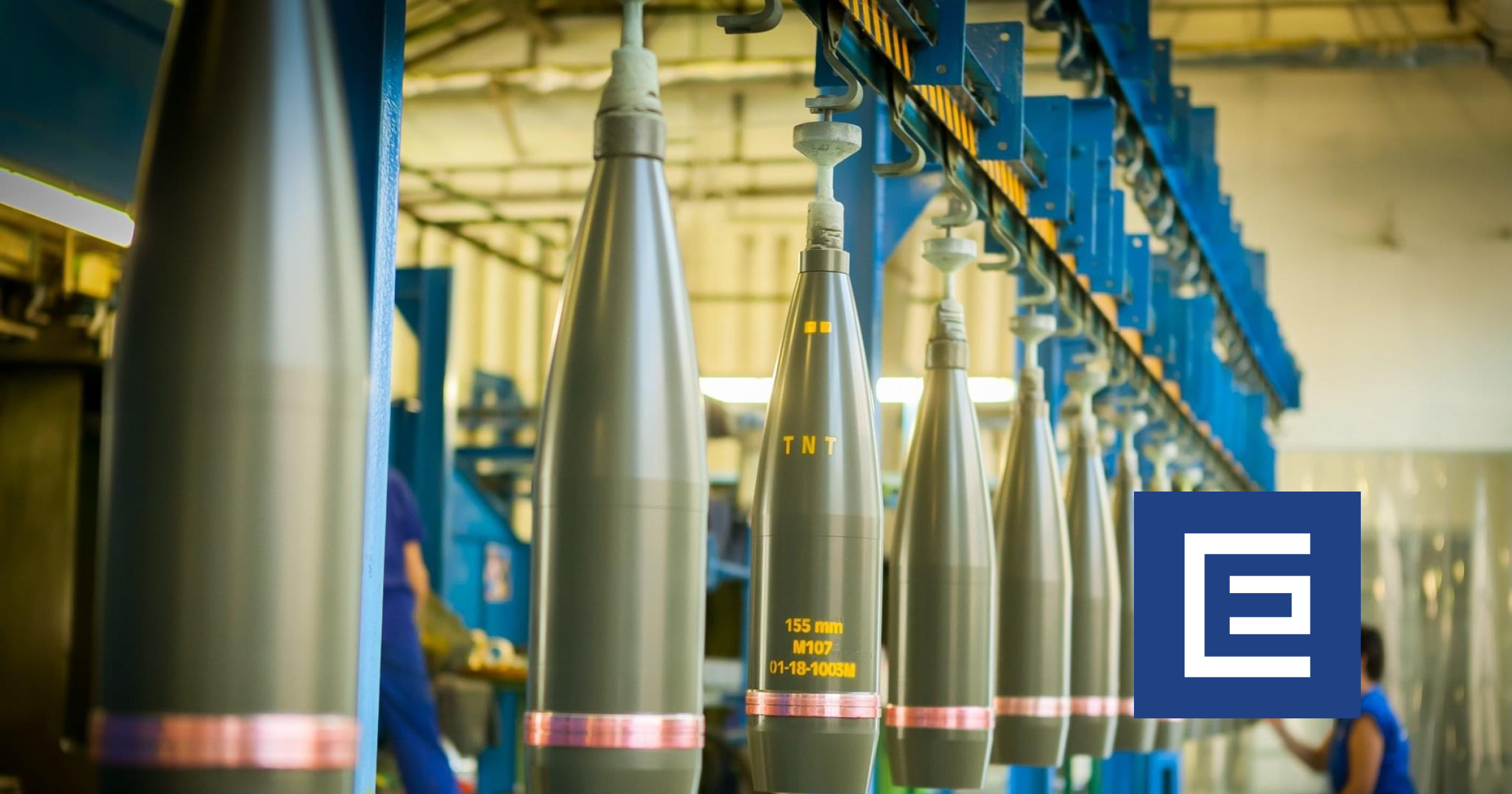
Slovakia's defense manufacturing sector is growing at its fastest pace since Russia's full-scale invasion of Ukraine began in 2022, with expansion now spreading beyond the country's largest producers to mid-sized firms as well. Companies such as Kerametal, Glock's Slovak operations, ZTS Špeciál, and CSM Industry — all mid-tier defense manufacturers — recorded significant revenue increases last year, joining the larger arms producers that had already been benefiting from surging demand driven by the war in Ukraine. Smaller firms in the sector have fared less well, however, with several slipping into losses. While overall revenue growth in the Slovak arms industry accelerated in 2023, profit growth slowed, pointing to a squeeze on margins that is beginning to weigh on the sector. The divergence suggests that while demand for Slovak-made defense equipment remains strong — fueled by NATO rearmament efforts and orders linked to the conflict in neighboring Ukraine — rising production costs are eating into earnings. Slovakia, a member of both the European Union and NATO, has a long industrial tradition in arms manufacturing dating back to the communist era, when its factories produced weapons for Warsaw Pact countries.

|
Economy

Gold Prices Fall as Rising Oil Costs Stoke Inflation Fears

Gold prices declined and are on course to end the week lower, as rising oil prices intensify concerns about accelerating inflation. Higher energy costs tend to fuel broader inflationary pressures, which can shift investor sentiment away from gold despite the metal's traditional role as an inflation hedge. The movement reflects broader uncertainty in global commodity markets.

|
Economy

Lidl Slovakia Confirms Data Breach, Customer Names and Email Addresses Exposed

Lidl Slovakia has acknowledged a cybersecurity incident in which hackers gained unauthorized access to sensitive customer data. The attackers obtained personal information including customers' names and email addresses. Lidl, the German-owned international discount supermarket chain with a significant presence across Slovakia, has confirmed the breach, raising concerns among affected customers about potential misuse of their personal information. Customers are advised to be vigilant about phishing attempts or unsolicited communications that may exploit the stolen data.

|
Economy

Proxenta CEO Tests Client Patience as Pre-Legal Notices Mount Over Unpaid Share Claims

Clients of Proxenta, a Slovak investment group, are sending pre-litigation notices to the company's chief executive after failing to receive payments owed on share claims. The dispute centers on outstanding financial obligations to investors who hold claims against the company, with frustrated clients taking the first formal legal steps toward potential court action. Proxenta has indicated that the sale of real estate assets is expected to stabilize the group financially. The company, which operates in the property and investment sector, appears to be relying on proceeds from property disposals to meet its outstanding obligations — though clients have grown impatient waiting for resolution. The situation highlights broader risks facing investors in Slovak private investment vehicles, where disputes over share valuations and payouts can leave retail clients with limited recourse outside of costly legal proceedings. Pre-litigation notices are a formal step under Slovak law that must typically be completed before a court case can be filed, signaling that some clients are preparing to escalate the matter to the courts if payments are not forthcoming.

|
Economy

Slovakia to Take Full State Control of Highway Toll System, Ending Private Contract

Slovakia is ending its long-running private toll collection arrangement on its motorway network, with the state-owned National Motorway Company (NDS) set to take full control of the system starting next year. The NDS declined to exercise a contractual option that would have extended its partnership with SkyToll, a private company, through 2027, meaning toll collection from freight operators will be handled entirely in-house going forward. SkyToll has operated Slovakia's electronic toll system for heavy vehicles on motorways and expressways under a concession-style contract that has been a source of controversy over the years, with critics long questioning the cost and terms of the arrangement. The move to bring the system under direct state management represents a significant shift in how Slovakia administers its road infrastructure revenue, giving the government greater control over toll operations and eliminating fees paid to the private operator.

|
Economy

Volkswagen Announces Drastic Production Cuts, Halving Model Range

Volkswagen has approved sweeping production cuts that will dramatically reduce the variety of vehicles it offers, though the German automaker has not addressed potential job losses linked to the restructuring. The company plans to cut its model range by 50 percent and reduce the number of optional equipment features available to customers by as much as 75 percent. The announcement is significant for Slovakia, which is home to a major Volkswagen plant in Bratislava — one of the country's largest employers and a key driver of the Slovak economy. Any large-scale restructuring at Volkswagen carries the potential for serious economic consequences for Slovak workers and the broader manufacturing sector, though the company has so far stayed silent on whether layoffs will follow the production overhaul.

|
Economy

Bank for International Settlements Warns of AI Investment Bubble Risk

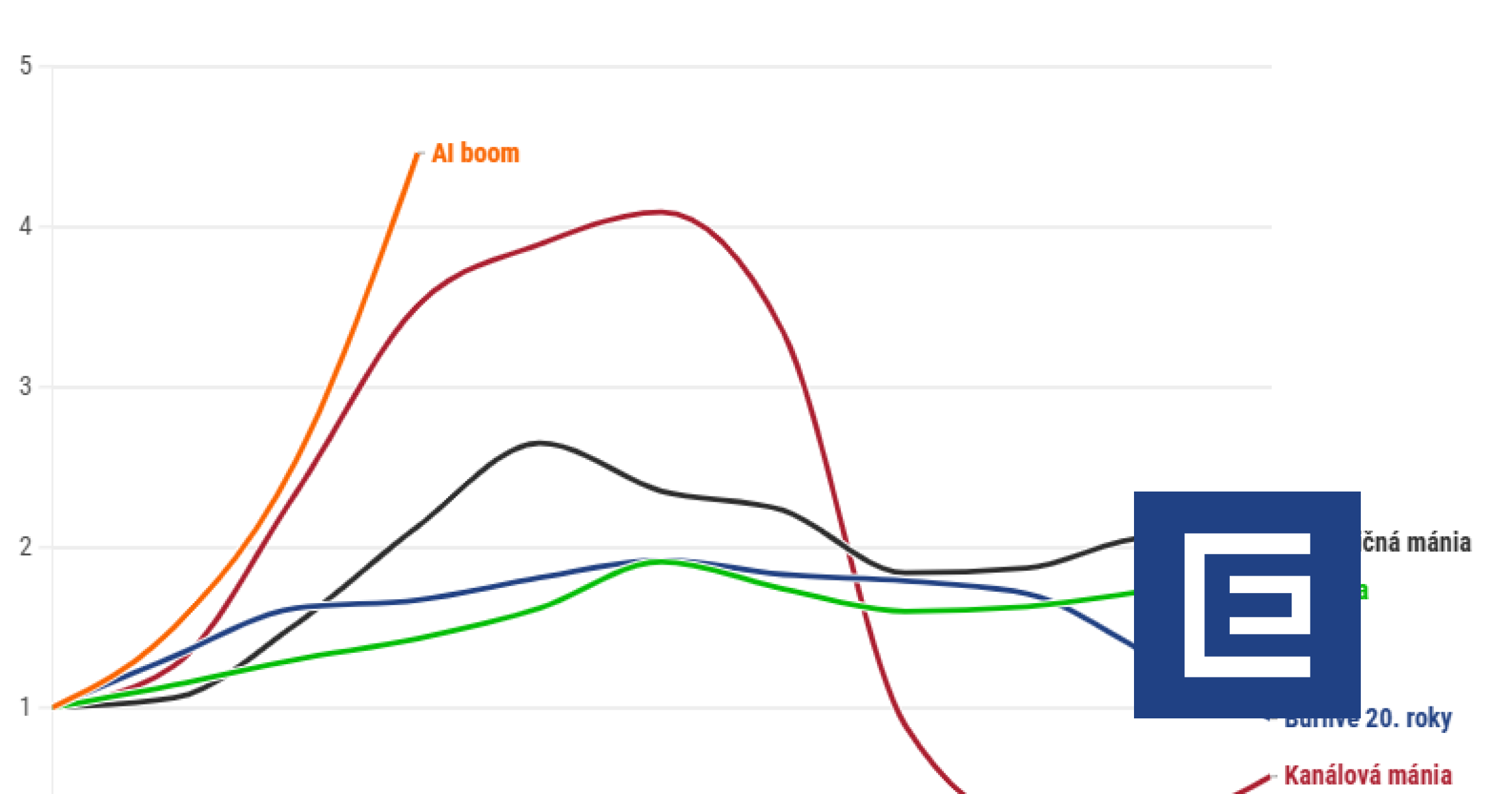
The Bank for International Settlements (BIS), often called the 'central bank of central banks' for its role coordinating global monetary policy, has warned that the artificial intelligence sector may be heading toward a bubble that could eventually burst. The BIS highlighted a complex web of financial arrangements in which major technology companies are effectively financing each other's investments and purchasing each other's services, creating an interconnected and potentially fragile ecosystem. Compounding the risk is the heavy borrowing by tech firms to fund massive AI-related capital expenditures. The warning draws on historical parallels with previous investment manias driven by transformative technologies — from railways to the dot-com boom — where capital flowed into sectors far in excess of their ability to generate real returns. When those industries hit limits on actual profitability, the resulting corrections were severe. The BIS caution comes as global investment in AI infrastructure, including data centers and computing hardware, continues to accelerate at an unprecedented pace, raising questions about whether current valuations and spending levels are sustainable.

|
Economy

Slovakia Ends Online-Only Company Registration, Requires Notary or Lawyer

Slovakia is tightening the rules for registering new limited liability companies, ending the option to complete the process entirely online without professional oversight. Under amendments to the Commercial Register Act taking effect August 17, founders of limited liability companies — the most common business structure in Slovakia — will be required to have their founding documents either notarized or authorized by a lawyer. Recording subsequent changes to a company's registration will also become more complex under the new rules. A significant additional change is that data published on the Commercial Register website will become legally binding, giving official online records greater legal weight than before. The changes mark a reversal from earlier reforms that had simplified and digitized company formation, instead prioritizing legal certainty and document authenticity over administrative ease.

|
Economy

Semiconductor Chips Drive Top ETF Performance in 2024

Rising chip prices have made semiconductor-focused investment funds among the best-performing financial products of the year. Exchange-traded funds (ETFs) — investment vehicles that track baskets of stocks and trade on public markets — with heavy exposure to chipmakers and related technology companies have dominated performance rankings, as surging demand for semiconductors, driven largely by artificial intelligence development and data center expansion, has delivered exceptional returns for manufacturers and investors alike. The trend underscores how the global semiconductor industry has emerged as one of the defining economic stories of the era, with companies producing chips for AI applications seeing their valuations soar.

|
Economy

Slovakia's Iconic Coffee and Tea Brand Returns to Profit After Two Years of Losses

Baliarne obchodu Poprad, Slovakia's largest domestic producer of coffee and tea, has returned to strong profitability after two years of declining earnings, posting a net profit of nearly 2.2 million euros last year. The company, based in the northern Slovak city of Poprad, is best known for heritage brands — including Popradská káva coffee and Pigi tea — that date back to the communist era and remain household names in Slovakia. The return to profit opens the door for renewed investment, with the company prioritizing new machinery to package its products in more environmentally friendly materials. The turnaround is significant for a firm that has maintained a loyal domestic customer base for decades despite increased competition from international coffee brands.

|
Economy

Oil Prices Surge Past $80 as Conflicts Flare in Persian Gulf and Black Sea

Global oil prices jumped above $80 per barrel this week as simultaneous flare-ups in two key regions rattled energy markets. In the Persian Gulf, a ceasefire collapsed, reigniting tensions in one of the world's most strategically important oil transit corridors. Meanwhile, in the Azov Sea — a body of water between Ukraine and Russia — Ukrainian drones struck Russian oil tankers, further disrupting supply routes. Brent crude, the international oil price benchmark, surged sharply in response. The price spike poses a renewed challenge to European economies, which remain sensitive to energy cost increases following years of volatility triggered by Russia's invasion of Ukraine in 2022. However, Europe's exposure is somewhat reduced compared to previous crises, as significant investment in solar and wind power capacity has made the continent's energy mix more resilient to oil market shocks. Slovakia, a landlocked Central European country heavily dependent on energy imports, is also benefiting from this gradual shift toward renewables.

|
Economy

Airbus Deliveries Jump 15% in First Half of 2026

European aerospace giant Airbus increased aircraft deliveries by 15% in the first half of 2026, handing over 351 planes to customers compared with 306 in the same period last year. In June alone, the company delivered 89 aircraft. The figures signal a continued recovery and production ramp-up for Airbus, which has been working to clear a backlog of orders and stabilize its supply chain following disruptions in recent years.

|
Economy

European Stocks Suffer Sharp Decline

European equity markets fell sharply on Wednesday, with the pan-European Stoxx 600 index dropping 1.61% to 635.91 points. The EuroStoxx 50, which tracks the 50 largest blue-chip companies in the eurozone, fell by 1.82% to 6,204.91 points.

|