Dávka - Your daily dose of Slovak news
Last refreshed: 27/06/2026 15:41 · 46 articles added
Stories are refreshed at 05:30, 10:30, 15:30, and 21:30 UTC.

Domestic Politics

View all2777 stories
Domestic Politics

Slovak Ruling Party Official Plans Meeting with Andrew Tate Despite Slovak Abuse Allegations

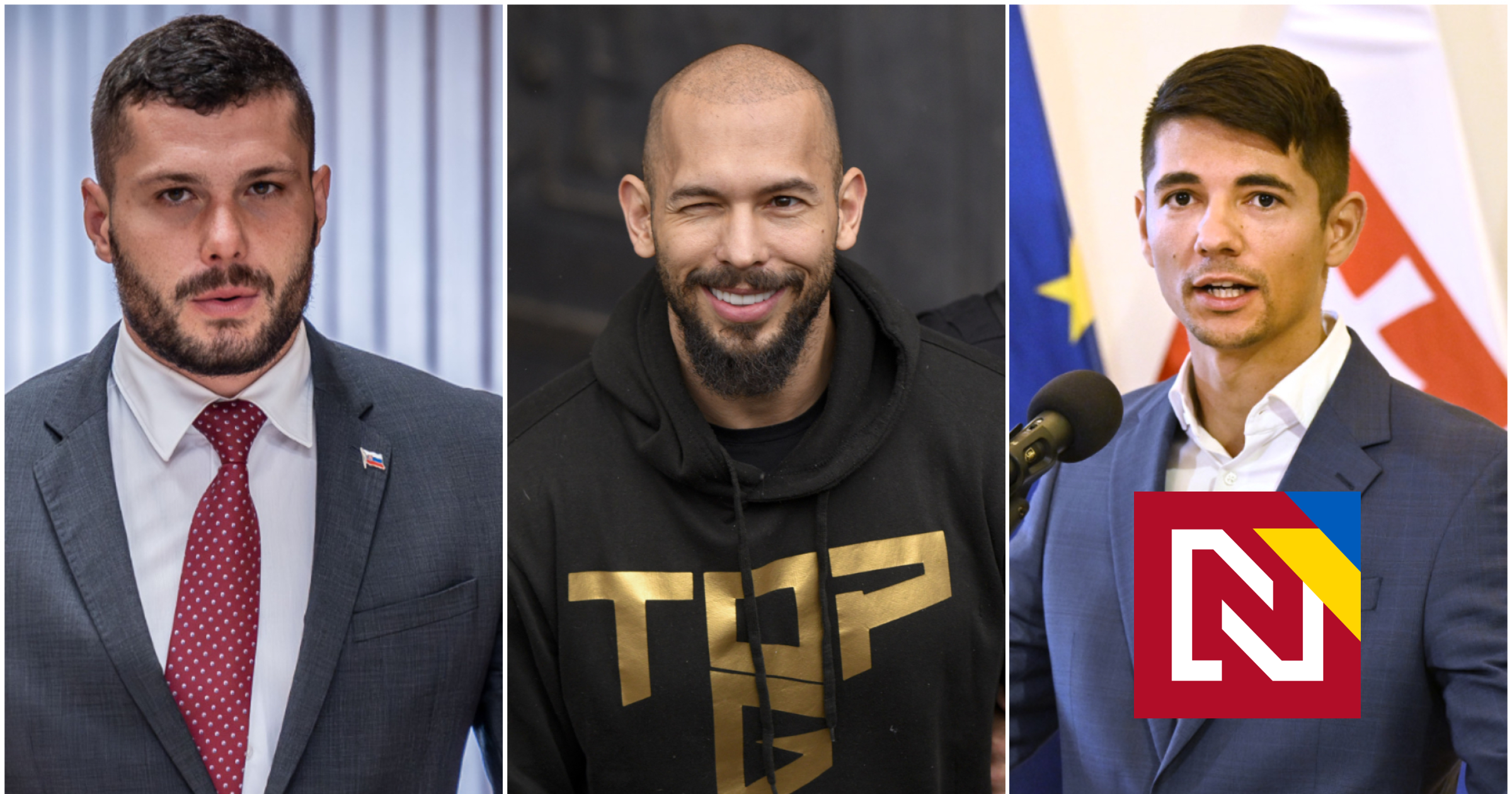
Erik Kaliňák, a Member of the European Parliament and head of the advisory board to Slovak Prime Minister Robert Fico, has announced plans to meet again with Andrew Tate — the American-British influencer facing criminal charges for human trafficking and rape — sparking sharp criticism from opposition politicians who accuse the ruling coalition of cynically courting votes. The announcement came in response to an investigative report published by The New Yorker, which revealed that Tate had allegedly exploited a Slovak minor, meeting her in the eastern Slovak city of Košice when she was 15 years old. When she turned 17, she relocated to England to be with him. Despite the report, Kaliňák stated publicly that he intends to meet with Tate again, noting that the two have previously been in contact. Opposition politicians responded with strong condemnation, arguing that the planned meeting is not a matter of principle or ideology, but a calculated electoral strategy. Critics claim that Kaliňák and Fico's ruling Smer-SD party — a left-nationalist movement that has increasingly adopted populist and culturally conservative messaging — are attempting to capture voters from the rival hard-right party Republika, which has built support among younger, male voters drawn to anti-establishment figures like Tate. Tate has cultivated a global following through social media, promoting misogynistic views, and has become a controversial symbol within far-right and manosphere communities. His ongoing criminal proceedings in Romania, where he faces charges of human trafficking and rape, have not deterred some European politicians from associating with him.

|
Domestic Politics

Opinion: Why Billionaires and Republics Make a Dangerous Mix

A commentary published by the Slovak daily Sme argues that extreme personal wealth poses a structural threat to democratic governance, warning that billionaires are uniquely positioned to convert financial resources directly into political influence. The piece contends that when individuals accumulate wealth on a scale that dwarfs the resources of political parties, civil institutions, or even state budgets, the foundational principle of democratic equality — one person, one vote — becomes distorted. The author frames the relationship between concentrated private wealth and republican systems of government as inherently toxic, suggesting that money, when held in sufficient quantity, does not merely buy access to politics but can effectively reshape political outcomes, regulatory environments, and public discourse in ways that ordinary citizens cannot counter. The commentary does not focus on any single country or billionaire but presents the argument as a general structural concern relevant across modern democracies.

|
Domestic Politics

Coalition Tensions Emerge as SNS Moves to Place Its Own Official in Taraba's Ministry

Slovak National Party (SNS) chairman Andrej Danko is reportedly sending a loyalist to the Ministry of Environment, headed by Tomáš Taraba of the far-right Slovak National Party splinter group Life National Party (Život–NS), in a move seen as an attempt to monitor and influence the ministry's operations. The placement is ostensibly linked to overseeing the contentious issue of land zoning — a politically sensitive process that determines how protected natural areas are classified and managed in Slovakia. The move reflects underlying tensions within Slovakia's ruling coalition, led by Prime Minister Robert Fico's Smer-SD party, which also includes SNS and smaller coalition partners. Taraba, a prominent and ambitious minister, has reportedly consolidated significant influence within his portfolio, and Danko's decision to insert a party operative into the ministry signals friction over the balance of power among coalition partners. Land zoning has been a major political flashpoint in Slovakia, pitting environmental protection advocates against landowners and regional economic interests, making it a high-profile issue for any official assigned to oversee it.

|
Domestic Politics

Slovak Viewers' Trust in TV Nova Highlights Broader Media Literacy Concerns

A commentary piece highlights a growing concern about media literacy and editorial independence among Slovak and Czech television audiences. The piece centers on the viewing habits of older, rural audiences — colloquially referred to as "babičky" (grandmothers) — who are devoted fans of Czech TV Nova's popular soap opera "Chalupáři." For these viewers, questions about the editorial independence of the channel are largely irrelevant, as their loyalty is tied to entertainment programming rather than news coverage. The commentary uses this dynamic to illustrate a broader political concern: Czech billionaire and former Prime Minister Andrej Babiš, whose media empire includes TV Nova's parent company, benefits from a viewer base that trusts his explanations of controversial issues — including state subsidies he has received. Babiš has publicly argued that he is legally entitled to such subsidies, and many of his loyal viewers accept this framing without question. The piece raises a wider issue relevant across Central Europe: when audiences consume media primarily for entertainment, they may be less critical of the political affiliations or business interests of media owners, allowing figures like Babiš to shape public perception with limited scrutiny. This dynamic has long been a concern for press freedom advocates in the region, who argue that media ownership concentration poses risks to democratic accountability.

|
Domestic Politics

Slovakia's Constitutional Court Clears Amendment on Appointing Agency Heads

Slovakia's Constitutional Court has ruled that an amendment to the country's competency law does not violate the constitution. The challenge before the court concerned provisions governing the appointment and dismissal of the heads of certain government offices and agencies. The competency law defines the powers and responsibilities of central state administration bodies, and disputes over who controls the appointment of agency leaders often reflect broader tensions between the government, the president, and independent institutions. The court's ruling clears the legal path for the amendment to take effect.

|
Domestic Politics

Slovakia's Ruling Coalition Defers Key Political Decisions Until September

Slovakia's ruling coalition has chosen to postpone several contentious political issues until September, effectively shelving them before the summer parliamentary recess rather than reaching agreement. Among the decisions delayed are the planned abolition of postal voting for Slovaks living abroad, the unresolved situation at the Arts Support Fund (known by its Slovak acronym FPU, a state body that distributes cultural grants), and the potential dismissal of government ministers. A long-standing dispute within the coalition over these matters has prevented any resolution. Adding to the political pressure, the government faces an outstanding obligation to seek a formal vote of confidence in the National Council, Slovakia's parliament — a step it has been avoiding since last autumn. Under Slovak constitutional rules, a government is required to seek parliamentary confidence following certain political changes. The continued postponement raises questions about the internal cohesion of the three-party coalition led by Prime Minister Robert Fico's Smer-SD, a nationalist-leaning social-democratic party that returned to power after the September 2023 elections. The pattern of deferral signals deepening divisions within the coalition on multiple fronts. By pushing these decisions past the summer break, the government avoids immediate confrontations but risks entering the autumn session facing a pile-up of unresolved controversies, including ministerial accountability, cultural funding governance, and electoral reform — each carrying significant political and institutional implications.

|
Domestic Politics

Charges Filed in Slovak Pandemic Aid Fraud Case Involving Labour Office Staff

Prosecutors have filed criminal charges in a case involving the alleged misuse of pandemic financial assistance in western Slovakia. The accused are employees of the Labour Office in Pezinok, a district town near Bratislava. Labour offices in Slovakia administered state aid programs during the COVID-19 pandemic, including direct financial support to businesses and workers affected by lockdowns and restrictions. The charges suggest the employees exploited their positions to abuse those relief funds, though specific details of how the fraud was allegedly carried out have not been disclosed. The case reflects ongoing scrutiny of how pandemic-era emergency funds were distributed and managed across Slovak public institutions.

|
Domestic Politics

Slovak Theatre Director Says Culture Minister Blocked Him After Reconciliation Attempt

Pavel Bruchala, a Slovak theatre director, reached out to Culture Minister Martina Šimkovičová in an attempt to reconcile their differences, but says her response left him disappointed — and that she subsequently blocked him. The dispute between Bruchala and Šimkovičová reflects ongoing tensions between Slovakia's cultural community and the minister, who has been a controversial figure since taking office as part of the ruling coalition led by Prime Minister Robert Fico's Smer-SD party. Šimkovičová, affiliated with the Slovak National Party (SNS), has clashed repeatedly with arts and cultural institutions over funding decisions and management appointments, drawing widespread criticism from within the sector. The apparent breakdown of the attempted reconciliation suggests that relations between the minister and parts of the cultural community remain strained, with little sign of improvement.

|
Domestic Politics

Seven People Charged in €13.5 Million Subsidy Fraud Case Dating to 2021

Slovak prosecutors have filed charges against seven individuals in connection with a subsidy fraud scheme that caused losses exceeding €13.5 million to the Pezinok Labor Office. The fraud, which dates to 2021, targeted the labor office in Pezinok, a town near Bratislava, which is one of the regional offices responsible for administering employment support payments and state subsidies to businesses and individuals. The case represents one of the larger subsidy fraud prosecutions in recent years, with the charges bringing the suspects a step closer to trial. Subsidy fraud involving labor offices attracted particular scrutiny in Slovakia following the COVID-19 pandemic, during which the government distributed large volumes of financial support to employers and workers, creating opportunities for fraudulent claims.

|
Domestic Politics

Slovakia's Constitutional Court Rules Government Must Immediately Seek Confidence Vote When Debt Limit Breached

Slovakia's Constitutional Court has issued a binding ruling that the government must immediately request a parliamentary confidence vote when the country's public debt exceeds a legally defined threshold — closing off a legal ambiguity that Prime Minister Robert Fico's administration had used to delay such a vote. The ruling came in response to a petition filed by a group of 32 members of the National Council, Slovakia's parliament, who sought an authoritative interpretation of the word "immediately" as it appears in the country's fiscal responsibility law, commonly known as the "debt brake." The Fico government and members of his Smer-SD party had interpreted the term loosely, effectively postponing a mandatory parliamentary vote on the confidence of the fourth Fico cabinet. The debt brake is a constitutional mechanism designed to force corrective action when Slovakia's state debt crosses critical thresholds. Among its provisions is a requirement that the government seek a parliamentary confidence vote — a politically significant step that could, in principle, bring down the administration if it loses. By delaying this vote, the government had avoided that political risk. The Constitutional Court's ruling now establishes that "immediately" means without delay, leaving no room for the interpretation Smer-SD had relied upon. The decision carries significant political weight. Fico's government, a coalition led by Smer-SD — a left-nationalist party — has faced sustained criticism over Slovakia's deteriorating public finances. The ruling strips the cabinet of the procedural flexibility it had used to sidestep parliamentary scrutiny, and opposition parties are likely to use the decision to increase pressure on the government.

|
Domestic Politics

Head of Slovak State Power Transmission Company Unexpectedly Removed Days After Announcing Record Profits

The director of SEPS, Slovakia's state-owned electricity transmission company, has been abruptly removed from his post just days after publicly announcing what he described as outstanding financial results for the company. The sudden departure came as a surprise, given that the announcement of strong performance would typically signal stability in leadership rather than a change. The director had previously raised his public profile during a recent oil supply crisis, when SEPS played a role in managing energy security issues affecting Slovakia. No official explanation for the dismissal was immediately provided. The unexpected removal of the head of a key state energy infrastructure company raises questions about political influence over state-owned enterprises in Slovakia, where government-appointed executives at strategic firms are frequently subject to changes driven by shifts in political priorities rather than business performance.

|
Domestic Politics

Slovak Election Campaigns Underway as Candidates Spend Hundreds of Thousands of Euros

Election campaigns in Slovakia are gaining momentum, with candidates already spending hundreds of thousands of euros on their political messaging, according to data tracked by the transparency watchdog Transparency International Slovakia. Among the top spenders, candidates from Košice and the progressive liberal party Progresívne Slovensko (PS) are leading in campaign expenditure. PS, currently the main opposition force in Slovakia, has positioned itself as a pro-European, liberal alternative to the ruling coalition led by Prime Minister Robert Fico's Smer-SD party. Campaign finance transparency is a closely watched issue in Slovak politics, where concerns about the influence of money in elections have persisted for years. The high early spending signals an intensely competitive electoral race ahead.

|
Domestic Politics

Opposition Criticises Appointment of Two Politicians as Slovak Ambassadors

Slovakia's opposition has sharply criticised the government's decision to appoint two political figures as ambassadors, calling the nominations emblematic of the country's disjointed foreign policy. Opposition lawmaker Juraj Krúpa of SaS (Freedom and Solidarity), a liberal opposition party, said the appointments of Kmec and Radačovský perfectly illustrate a foreign policy that points in all four directions at once — a pointed remark suggesting the ruling coalition lacks a coherent or consistent approach to international affairs. The criticism reflects broader tensions between Slovakia's ruling coalition, led by Prime Minister Robert Fico's Smer-SD party, and opposition forces over the direction of the country's diplomacy, particularly amid ongoing debates about Slovakia's stance toward Russia, the European Union, and NATO allies.

|
Domestic Politics

Slovak Government Holds Cabinet Briefing

The Slovak government held a cabinet meeting, with officials delivering post-session briefings outlining the outcomes of their deliberations. No further details on the specific agenda items or decisions were immediately available from the broadcast coverage.

|
Domestic Politics

Slovak Prosecutor General Calls for Tougher Penalties on Tax Fraud, Opposition to Carry Bill

Slovakia's Prosecutor General Maroš Žilinka is pushing for stricter criminal penalties for tax-related offenses, including lowering the threshold at which tax fraud constitutes a criminal act. The opposition plans to introduce his proposals in parliament in September. Žilinka is urging the ruling coalition to reverse softened sentences for economic crimes that were introduced under Prime Minister Robert Fico's fourth government. That government passed a controversial amendment to the criminal codes that reduced penalties across a range of offenses — a move widely criticized for bypassing proper expert consultation. The amendment was subsequently partially revised under pressure, but Žilinka argues further changes are needed to improve tax collection and combat financial crime. Because the ruling coalition — led by Fico's Smer-SD, a left-nationalist party — is unlikely to support the proposals, opposition parties have agreed to sponsor the legislation and bring it to the National Council, Slovakia's parliament, in the autumn session. The move highlights ongoing tensions between the Fico government and key institutions, including the Prosecutor General's office, over the direction of criminal justice policy. Stronger penalties for tax fraud could have significant implications for state revenues and the enforcement of financial laws in Slovakia.

|
Domestic Politics

Coalition Parties Fail to Advance Early Election Proposal, Informant Law Moves Forward

Two parties in Slovakia's ruling coalition have failed in their attempt to shorten the current parliamentary term, while a controversial amendment to laws governing cooperating witnesses — commonly known as the 'informant law' — advanced to a second reading in parliament. Hlas-SD and the Slovak National Party (SNS), both junior partners in the coalition led by Prime Minister Robert Fico's Smer-SD, pushed for a constitutional amendment that would have cut short the current electoral term. The proposal did not gain sufficient support to proceed. Meanwhile, a separate legislative measure amending rules around so-called 'kajúcnici' — defendants who cooperate with prosecutors in exchange for reduced sentences, a mechanism widely used in major corruption cases in Slovakia — passed its first reading and moved to the next stage of the legislative process. The debate over cooperating witnesses has been politically charged in Slovakia. Critics of the current rules, including members of the ruling coalition, have argued that the system has been abused, particularly in high-profile prosecutions of politicians and businesspeople linked to the Fico-era governments. Supporters of the existing framework, largely in the opposition, contend that weakening protections for cooperating witnesses would undermine the country's ability to prosecute organized crime and corruption. The amendment's advancement signals that the coalition retains enough votes to push the measure through parliament despite opposition resistance.

|
Domestic Politics

Commentary: Smer Fumbles Communications Over Michal Fico Salary Controversy

Slovak Prime Minister Robert Fico's ruling party, Smer-SD, has struggled to manage the political fallout from controversy surrounding remuneration paid to Michal Fico — a matter that has drawn public criticism and put the party on the defensive. According to political commentary, while Smer previously held the upper hand in disputes over the so-called Forum Project — a government-backed initiative that drew opposition scrutiny — the party finds itself at a disadvantage in the current debate over who benefits most from state resources. The commentary argues that Robert Fico mishandled the communications around the affair, and that Smer cannot win a public argument centered on accusations of state dependency or improper benefits. Smer-SD, a left-wing populist party that leads Slovakia's coalition government, has frequently clashed with opposition figures and media critics, but this episode is seen as a rare instance where the party's usually effective messaging has fallen short.

|
Domestic Politics

Slovak Nationalist Party Fails to Extend Parliamentary and Local Government Terms

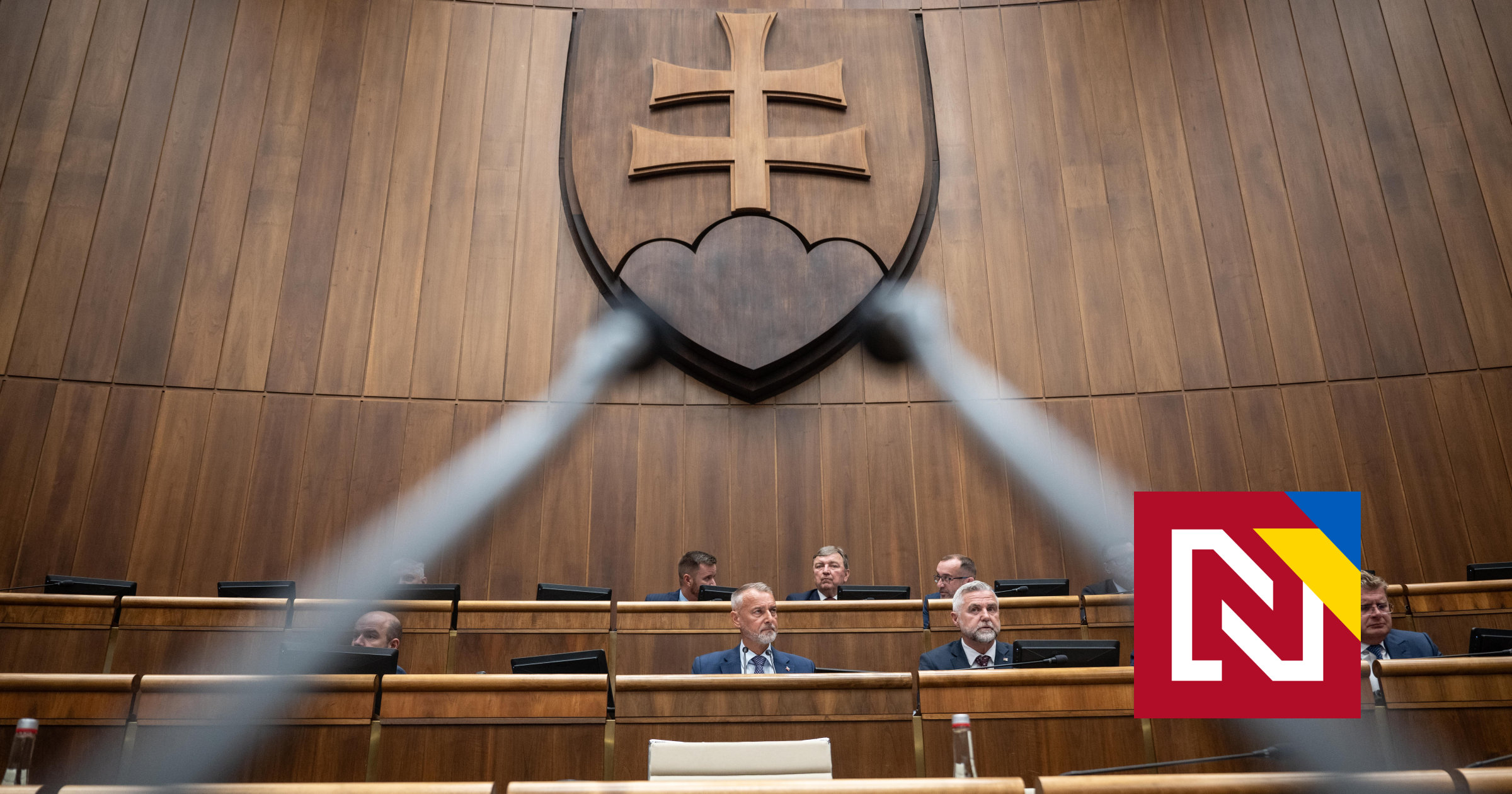
A constitutional amendment proposed by the Slovak National Party (SNS) to extend the term lengths of both parliament and local governments was rejected in the National Council, Slovakia's unicameral parliament. The measure received only 77 votes in favor, falling short of the 90-vote supermajority required to amend the constitution. SNS is a nationalist party and junior partner in Slovakia's ruling coalition, led by Prime Minister Robert Fico's Smer-SD party. Constitutional changes in Slovakia require support from at least three-fifths of all 150 members of parliament, meaning such proposals need a broad cross-party consensus to pass. The failure of the vote indicates the proposal lacked sufficient backing even within the coalition's broader parliamentary bloc, leaving current electoral term limits unchanged for both national and local levels of government.

|
Domestic Politics

Court Rules Interior Minister Acted Unlawfully in Ďurko Case; Minister Drops Complaint

A Slovak court has ruled that Interior Minister Matúš Šutaj Eštok acted unlawfully in his handling of the case involving police official Ľubomír Ďurko, but the minister has since withdrawn a related complaint, saying further legal action would be economically and procedurally pointless. The ruling represents a judicial rebuke of Šutaj Eštok, who leads the Hlas-SD party, a center-left party that forms part of Prime Minister Robert Fico's ruling coalition. The minister had faced scrutiny over his decisions regarding Ďurko, a senior police figure whose case attracted significant public attention. After the court found the minister's conduct to be unlawful, Šutaj Eštok reversed course and withdrew his complaint rather than pursuing the matter further. The case adds to ongoing tensions surrounding the Interior Ministry and its oversight of law enforcement in Slovakia. Critics have argued that the current government has sought to exert undue influence over police structures since taking power in 2023. The court's finding of unlawful conduct by the minister is likely to fuel further opposition scrutiny of his management of the country's internal security apparatus.

|