Dávka - Your daily dose of Slovak news
Last refreshed: 27/06/2026 15:41 · 46 articles added
Stories are refreshed at 05:30, 10:30, 15:30, and 21:30 UTC.

Domestic Politics

View all2777 stories
Domestic Politics

Slovakia Moves to Overhaul Plea Cooperation Rules for Criminal Witnesses

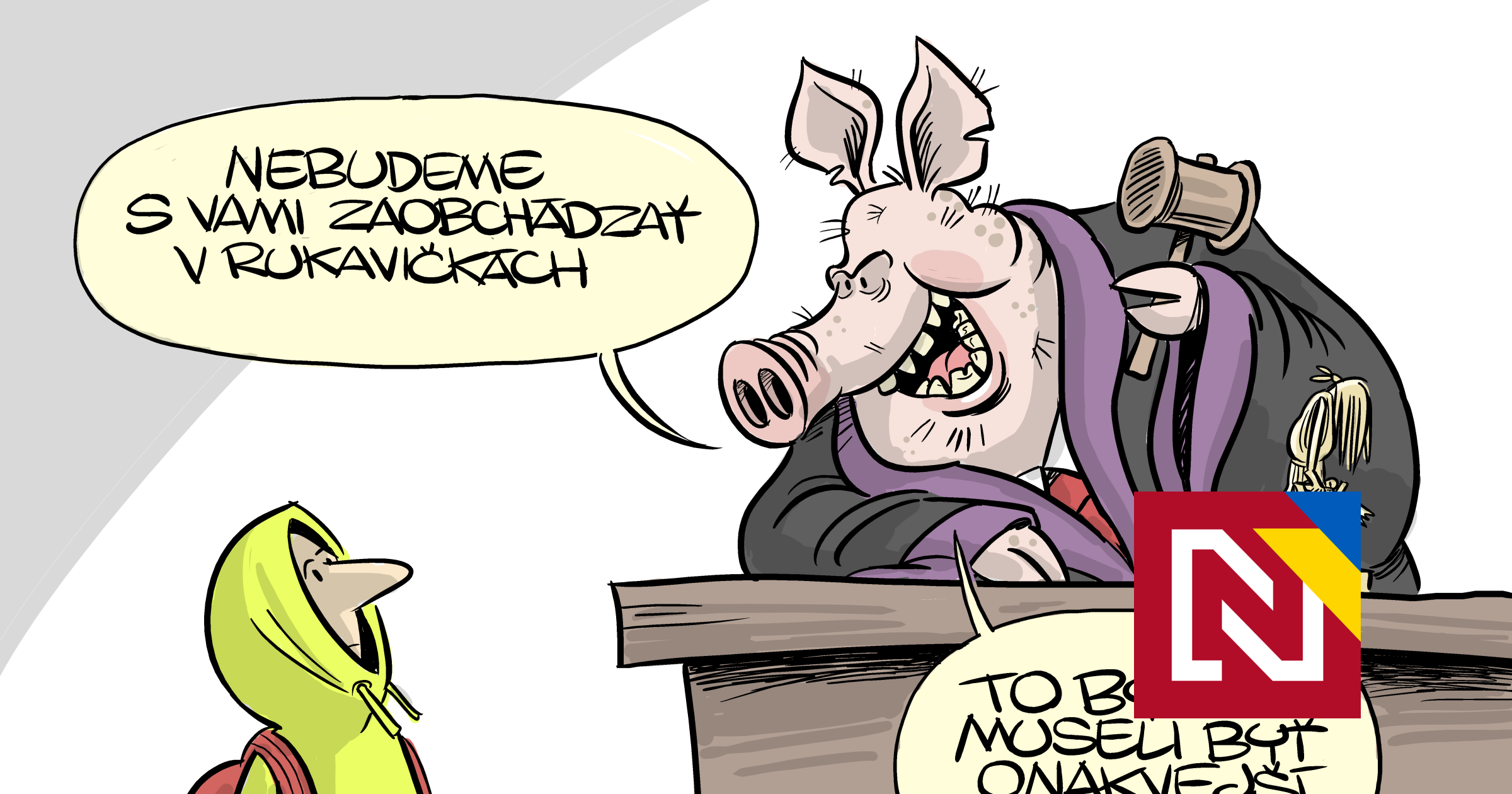
Slovakia is preparing a significant overhaul of its legal framework governing cooperative witnesses — commonly known as 'kajúcnici,' or repentant witnesses — who receive benefits in exchange for testimony against other suspects. The National Council, Slovakia's parliament, has advanced an amendment to the Criminal Procedure Code, drafted by the Ministry of Justice, to a second reading, bringing the legislation one step closer to adoption. The proposed amendment would fundamentally reshape the existing philosophy behind granting benefits to cooperative witnesses, though the specific changes are still being debated in the legislative process. Under the current system, individuals who assist prosecutors by testifying against co-conspirators or other criminals can receive reduced charges or lighter sentences in return. The reform carries considerable political weight in Slovakia, where cooperative witness testimony has played a central role in high-profile corruption and organized crime prosecutions in recent years. Critics of the current system, including members of the ruling coalition led by Prime Minister Robert Fico's Smer-SD party, have argued that the rules have been abused, allowing individuals to escape serious consequences by providing testimony of questionable reliability. The advancement of the bill to a second reading means lawmakers will now debate its specific provisions in detail before a final vote.
|
Domestic Politics

Two Decades of Fico: Slovakia Falling Behind on Wages, Investment, and Education

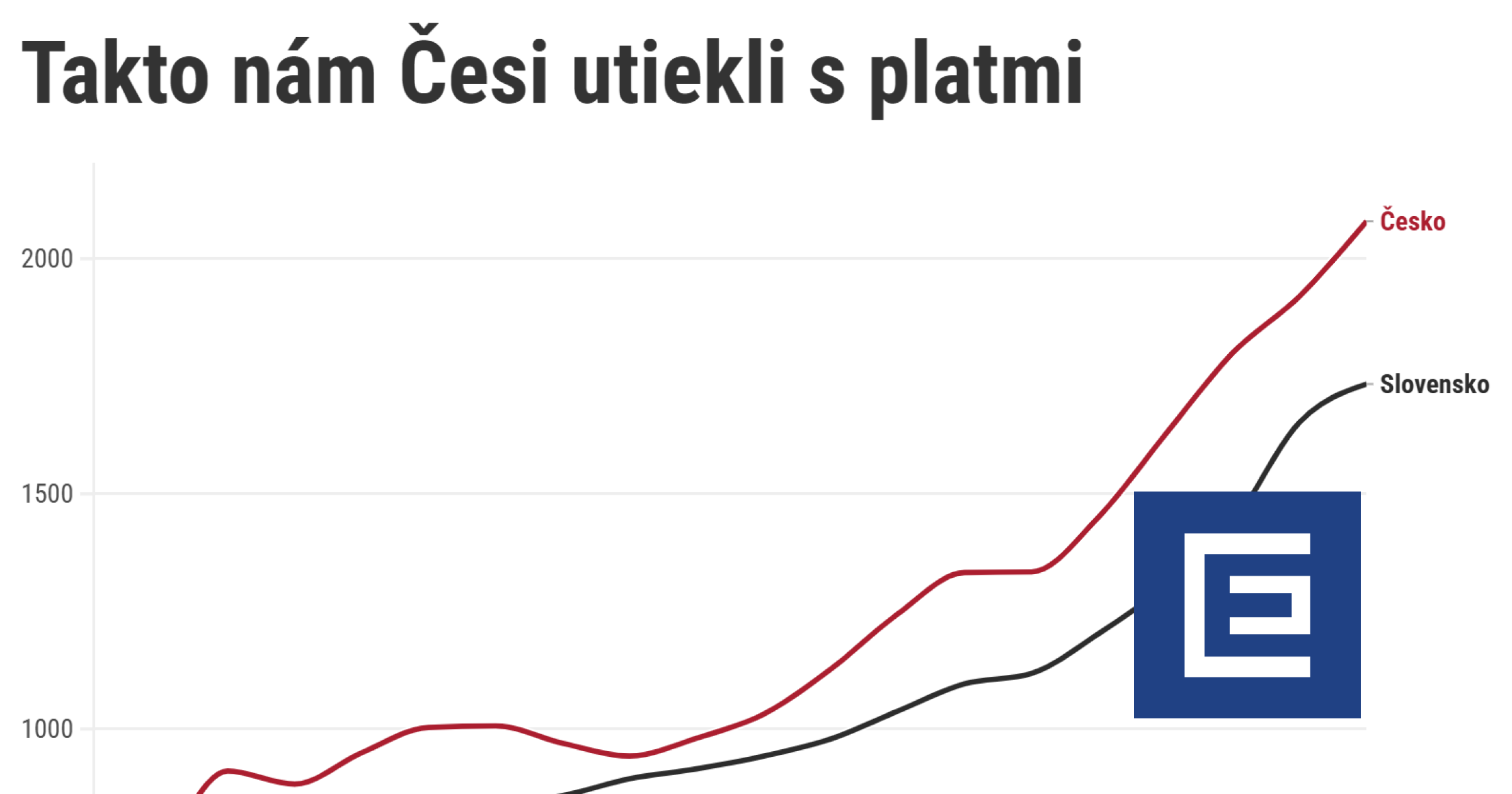
Twenty years after Robert Fico first rose to political dominance, Slovakia is growing wealthier more slowly than its regional neighbors, investing relatively little, and watching its students' academic performance decline, according to a new economic analysis. While Slovak wages have risen under successive Fico governments, Czech workers now earn roughly one-third more, and Poland is also widening its lead over Slovakia. The Slovak state expanded significantly in size and accumulated substantial debt during this period, yet that spending translated into only minimal gains in productive investment. Household debt among Slovaks rose faster than in any other comparable country during the Fico era, though the primary driver was mortgage borrowing for home ownership rather than consumer spending. Robert Fico, leader of the left-nationalist Smer-SD party, has dominated Slovak politics since 2006, serving multiple terms as prime minister. He currently leads the government after returning to power in 2023. While analysts caution that Fico's governments cannot be held solely responsible for all economic trends — global conditions, EU membership, and structural factors all play a role — the pattern of slow convergence with wealthier EU neighbors, weak public investment, and deteriorating educational outcomes raises questions about the long-term trajectory of the Slovak economy under his political stewardship.

|
Domestic Politics

Slovak Parliament Delays Vote on Postal Voting Reform and Arts Fund Until Autumn

Slovakia's parliament has postponed a controversial vote on reforming postal voting rules for citizens living abroad, deferring the debate until the autumn parliamentary session beginning September 15. Lawmakers in the National Council, Slovakia's unicameral parliament, voted Wednesday to push back the proposal, which was drafted by Smer-SD, the ruling social-democratic party led by Prime Minister Robert Fico. A separate measure concerning the Fund for the Support of Art — a public body that finances cultural projects — was also delayed to the same autumn session. The postal voting legislation had been contentious, as it would introduce significant changes to how Slovak citizens residing abroad cast their ballots in elections, a reform critics argue could affect voter turnout and electoral fairness among the Slovak diaspora.

|
Domestic Politics

Rebel MPs Force Government to Delay Postal Voting Abolition Until September

Slovakia's ruling coalition has been forced to postpone legislation abolishing postal voting until September, after three rebel MPs refused to back a related electoral reform bill. The three lawmakers, aligned with Rudolf Huliak — a MP whose small nationalist faction has repeatedly caused headaches for the coalition — withheld their support for a proposal to raise the threshold for preferential candidate voting, known as 'kroužkování.' Without their votes, the coalition lacked the majority needed to pass the measure. The setback highlights the fragile arithmetic underpinning Prime Minister Robert Fico's government, which relies on a coalition of his Smer-SD party — a left-nationalist grouping currently leading Slovakia — along with smaller partners whose loyalty has at times proven unreliable. Huliak's faction has previously clashed with the coalition leadership over policy and personnel disputes, and its continued defiance complicates the government's legislative agenda heading into the autumn parliamentary session.

|
Domestic Politics

Twenty Years Since Fico First Came to Power: Dzurinda Reflects on What Could Have Been

Twenty years ago, Robert Fico came to power in Slovakia for the first time — the beginning of a political career that has seen him serve as prime minister for more than twelve and a half years in total, making him the dominant figure in Slovak politics for two decades. Former Prime Minister Mikuláš Dzurinda, who led Slovakia before Fico's first election victory in 2006, reflected on the anniversary, suggesting that the outcome at the time was not inevitable and that events could have unfolded differently. Fico leads Smer-SD, a left-nationalist ruling party he founded, which has governed Slovakia for much of the past two decades. Dzurinda, by contrast, led the Slovak Democratic and Christian Union (SDKÚ), a center-right party that steered Slovakia into both the European Union and NATO in 2004. The anniversary comes as Fico continues to serve as prime minister, having returned to power in 2023 at the head of a coalition government that has drawn criticism from Western partners over its foreign policy orientation, particularly its stance toward Russia and Ukraine.

|
Domestic Politics

Slovak Government Approves €17.3 Million IT Investment in Tax and Healthcare Systems

Slovakia's government has approved a package of IT investments totaling more than €17.3 million, targeting upgrades to systems in the tax administration and hospital sectors. The funding is intended to modernize digital infrastructure in two critical areas of public services — tax collection and healthcare management — reflecting broader efforts by Slovak authorities to improve the efficiency and digitalization of state institutions. Such investments are part of an ongoing push across European Union member states to bring public sector technology in line with modern standards, often supported by EU structural funds.

|
Domestic Politics

Slovakia's Environment Ministry Expands to Three State Secretaries with New SNS Appointment

Slovakia's Ministry of the Environment will again have three state secretaries after the government appointed a new official with ties to the state lottery company Tipos and the Slovak National Party (SNS). The newly appointed state secretary, identified as Deďo, previously worked at Tipos, the state-run gambling and lottery operator, and also serves as a member of the SNS presidium — the governing body of the party. SNS, the Slovak National Party, is a nationalist party and a junior partner in the current ruling coalition led by Prime Minister Robert Fico's Smer-SD. The appointment restores the Environment Ministry's complement of three state secretaries, who serve as senior deputy officials assisting the minister in running the department. The move reflects the coalition's ongoing practice of distributing government posts among its partner parties, with SNS securing influence over key positions within ministries allocated to its portfolio.

|
Domestic Politics

Opposition Party PS Demands Audit of Digital Ministry Grant Scheme

The opposition movement Progresívne Slovensko (PS) has called for a review of a digital funding initiative launched by Slovakia's Ministry of Investments, Regional Development and Informatisation. PS representative Ján Hargaš urged Prime Minister Robert Fico to intervene and hold ministry head Richard Migaľ accountable over concerns about the handling of the grant scheme. PS, a liberal pro-European opposition party, has raised questions about transparency and proper oversight of the digital call for projects administered under Migaľ's ministry. Hargaš directed his appeal to Fico, whose Smer-SD party leads the ruling coalition government, calling on the prime minister to ensure corrective action is taken within the ministry. Slovakia has seen repeated political disputes over the management of EU-funded programs and national grant schemes, with opposition parties frequently challenging the transparency of processes overseen by coalition-appointed ministers. The call for a review adds to ongoing tensions between the ruling coalition and opposition forces in the National Council, Slovakia's parliament.

|
Domestic Politics

Critics Warn Proposed Slovak Law Change Could Shield Mafia Killers From Conviction

Slovak lawmakers are set to vote Wednesday on a criminal law amendment that legal experts and critics warn would make it effectively impossible to convict perpetrators of some of the most serious organized crime murders. The amendment, linked to Justice Minister Suska, has drawn alarm because under its proposed provisions, a notorious mafia killing — in which a victim's body was disposed of in a meat grinder — would not have resulted in a conviction. The case, widely known in Slovakia as an example of brutal organized crime, illustrates what opponents say are the real-world consequences of weakening criminal statutes. Slovakia has seen a series of controversial amendments to its criminal code since the government of Prime Minister Robert Fico, leader of the social-democratic but increasingly nationalist Smer-SD party, returned to power in 2023. Critics, including opposition politicians and legal experts, have accused the government of systematically dismantling anti-corruption and anti-organized crime legal frameworks. Earlier amendments reduced sentences for corruption and reorganized prosecutorial oversight in ways that opponents said benefited individuals connected to organized crime networks. The latest proposed change follows this pattern, according to critics. The vote comes amid heightened scrutiny of Slovakia's rule-of-law standards from the European Union, which has raised concerns about the direction of judicial and prosecutorial reforms under the current government. Opposition parties argue the cumulative effect of these legislative changes is to erode the legal tools that investigators and prosecutors rely on to pursue organized crime and hold powerful criminal figures accountable.

|
Domestic Politics

Government Works on Second Expert Report for Slovakia's Main Public Services Portal

Slovak authorities are developing a second version of an expert report on slovensko.sk, the country's central government online portal used by citizens and businesses to access public services. Minister of Investments and Regional Development Richard Migaľ confirmed that the National Agency for Network and Electronic Services (NASES), the state body responsible for managing government IT infrastructure, is currently handling the portal's issues. The portal has faced persistent criticism over technical reliability and user experience, making its overhaul a priority for the government's digitalization agenda.

|
Domestic Politics

Slovak Government to Discuss Billion-Euro EU Loan, President to Appoint New Ambassadors

Slovakia's cabinet is set to meet to deliberate on a major loan from the European Union worth billions of euros, while President Peter Pellegrini is expected to appoint a new round of ambassadors. The EU loan, if approved, would form a significant part of Slovakia's public financing strategy, providing funds likely earmarked for investment or budgetary support. Ambassador appointments are among the constitutional duties of the Slovak president, who nominates and formally appoints the country's diplomatic representatives abroad. Peter Pellegrini, a centrist politician and former prime minister, has served as Slovakia's head of state since June 2024, when he defeated the opposition-backed candidate in a presidential election. His relationship with the government of Prime Minister Robert Fico — leader of the ruling Smer-SD party — has at times appeared cooperative, though the two men have occasionally signaled differing positions on key issues, including Slovakia's stance toward the war in Ukraine.

|
Domestic Politics

New Scandal Puts Slovak Prime Minister Fico in Unprecedented Pressure

Slovak Prime Minister Robert Fico and his ruling party Smer-SD are facing a fresh political scandal that, according to commentators, has struck the party at its most vulnerable point — placing Fico in a position he has not faced before. Smer-SD, a left-nationalist party that has dominated Slovak politics for much of the past two decades, has weathered numerous controversies since returning to power in 2023, but the latest affair is described as uniquely damaging. While details of the specific scandal were not fully outlined in available reporting, analysts note that the cumulative effect of repeated controversies surrounding Smer raises serious questions about political accountability in Slovakia. Fico, who survived an assassination attempt in May 2024, has continued to govern despite sustained domestic and international criticism over his government's pro-Russian foreign policy stance and its perceived weakening of democratic institutions.

|
Domestic Politics

Fico's Attack on Opposition Leader Backfires, Analysts Say

Slovak Prime Minister Robert Fico's efforts to discredit opposition leader Michal Šimečka appear to have rebounded against the premier himself, according to political commentary. Fico, who leads the ruling Smer-SD party — a left-nationalist movement that has dominated Slovak politics for much of the past two decades — had sought to portray Šimečka, head of the liberal opposition Progressive Slovakia party, in a negative light. However, the attempt has drawn renewed scrutiny to Fico's own political connections and associations. The prime minister has been trying to present certain political ties and relationships as normal and unproblematic, a framing that critics argue instead highlights the very conflicts of interest he sought to deflect attention from. The episode is the latest in an ongoing confrontation between Fico's coalition government and the pro-European opposition, a divide that has deepened since Fico returned to power in 2023 after distancing Slovakia from Western support for Ukraine and clashing repeatedly with EU partners.

|
Domestic Politics

Slovak PM Fico Acknowledges Nepotism Within His Own Party

Slovak Prime Minister Robert Fico has publicly admitted that nepotism exists within his party, Smer-SD, the ruling left-nationalist party that has dominated Slovak politics for much of the past two decades. Fico acknowledged that party members and their relatives have benefited from positions and opportunities connected to state influence, a practice commonly referred to in Slovak as 'rodinkárstvo' — the favoring of family members and close associates in public appointments and contracts. Separately, reports indicate that state-owned properties are being restructured and transferred through real estate dealings, raising concerns about transparency in the management of public assets. Nepotism and the blurring of lines between party interests and state resources have long been central criticisms leveled at Smer-SD by opposition parties and civil society groups. Fico's admission, however rare, is unlikely on its own to prompt institutional consequences, but it adds to ongoing scrutiny of governance standards under his administration, which returned to power in October 2023.

|
Domestic Politics

Slovakia Updates Armored Vehicle Purchase Agreement with Finnish Manufacturer Patria

Slovakia has revised its procurement agreement with Finnish defense manufacturer Patria for the purchase of armored vehicles, with the updated deal including a new delivery schedule. The amendment modifies the terms of the original contract, adjusting the timeline for when the vehicles will be delivered to Slovak armed forces. The Patria armored personnel carrier, known as the AMV (Armored Modular Vehicle), is a wheeled infantry fighting vehicle used by several NATO member states. Slovakia, which joined NATO in 2004, has been working to modernize its military equipment in line with alliance standards, and the Patria deal forms part of that broader effort to upgrade the country's ground forces capabilities.

|
Domestic Politics

Slovak Judges Who Aided Interior Minister Have History of Controversial Rulings

The Slovak judges who issued a ruling favorable to Interior Minister Matúš Šutaj Eštok are not making such a decision for the first time, raising fresh questions about judicial impartiality in politically sensitive cases. The judges involved have previously issued other notable rulings that drew scrutiny, suggesting a pattern that critics argue warrants closer examination. Šutaj Eštok, a senior figure in Slovakia's ruling coalition led by Prime Minister Robert Fico's Smer-SD party, has been at the center of political controversy, and any court decisions seen as protecting him from legal or political consequences draw intense public attention. In separate developments, two other individuals identified as Mažgút and Rybanský are reported to be successfully navigating a process of political or institutional transformation, while Ľuboš Blaho — a prominent pro-Kremlin politician and member of the ruling coalition — has finally been removed from the Slovak Academy of Sciences, the country's leading state research institution, a move that had been sought by critics for some time.

|
Domestic Politics

Weekly News Roundup: Flashlight Factory Fined, Officer Charged in ATM Explosion Case

Slovak authorities handed down a fine to a well-known battery manufacturing facility and filed criminal charges against a police officer in connection with an ATM explosion, according to a weekly news digest published by Slovak news outlet Aktuality. The brief summary provides insufficient detail to fully report on either case individually, as the source material consists only of a headline and a short description of a weekly news roundup rather than full reporting on the underlying stories.

|
Domestic Politics

Slovak Parliament Closes Session with Debate on Annual Progress Report to EU

Slovakia's National Council, the country's parliament, concluded its legislative day with a debate on the Annual Progress Report of the Slovak Republic for 2026, a document Slovakia is required to submit each year to the European Commission as part of its obligations as an EU member state. The report serves as a formal assessment of the country's progress across key policy areas and is used by Brussels to monitor member states' alignment with EU standards and commitments. No vote on the document was reported during the session.

|
Domestic Politics

Slovak Ruling Party Smer Funnelled Millions to Firms Linked to Party Members, Including MP's Wife

Slovakia's ruling party Smer-SD has directed millions of euros in public contracts to companies with close ties to party figures, including an agency reportedly run by the wife of a sitting member of parliament. The payments, connected to election-related services, benefited both an official party-linked agency and private firms associated with Smer members. Smer-SD, the dominant party in Slovakia's current ruling coalition led by Prime Minister Robert Fico, has long faced accusations of using political power to steer public funds toward allies and associates. The latest allegations suggest that contracts tied to electoral activities served as a channel for enriching individuals connected to the party. One lawmaker is identified in connection with a firm allegedly managed by his spouse, raising questions about conflicts of interest and the transparency of how party-related contracts are awarded. The revelations add to a pattern of scrutiny surrounding Smer's financial dealings. Critics and opposition figures have repeatedly accused the party of blurring the lines between state resources and party benefit. Slovakia's independent media and civil society organisations have been tracking such arrangements, warning that the concentration of political and economic influence in the hands of Smer-linked networks poses a threat to democratic governance and the rule of law in the EU member state.

|
Domestic Politics

Slovak President to Undergo Second Phase of Military Training

Slovak President Peter Pellegrini is set to undertake the second phase of military training, which will include a final exercise known as a survival course. Pellegrini, who leads Slovakia's largely ceremonial presidency, began military training as part of an initiative to personally experience the conditions faced by the country's armed forces. The survival exercise represents the most demanding stage of the program, testing basic military and endurance skills in field conditions.

|