Dávka - Your daily dose of Slovak news
Last refreshed: 27/06/2026 10:37 · 44 articles added
Stories are refreshed at 05:30, 10:30, 15:30, and 21:30 UTC.

Domestic Politics

View all2774 stories
Domestic Politics

Opposition Leader Šimečka: Government Would Have Continued Acting Unconstitutionally Without Court Ruling

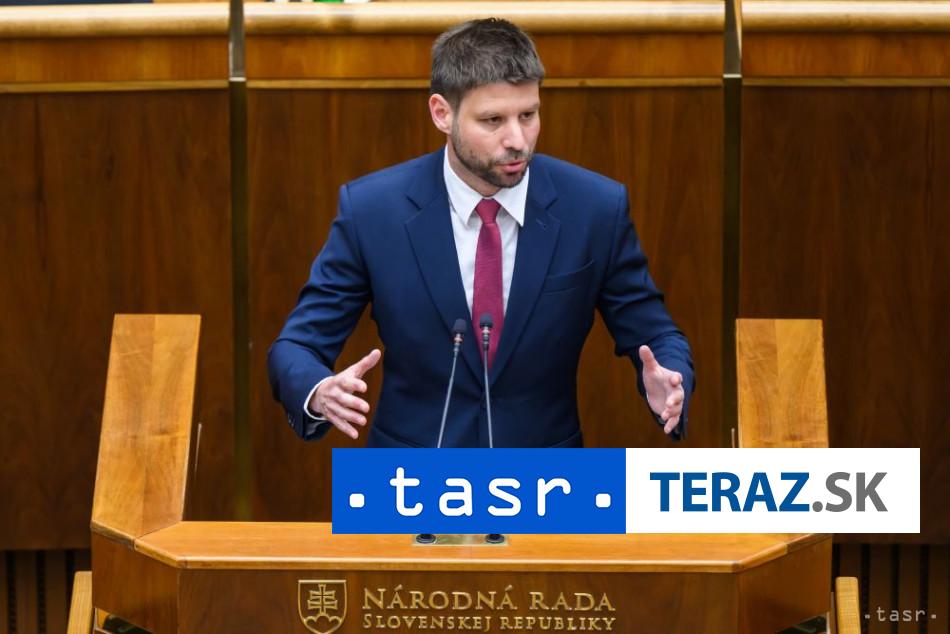
Slovak opposition leader Michal Šimečka has accused the government of acting unconstitutionally, stating that it would have continued to do so had the Constitutional Court not intervened with a ruling against it. Šimečka, who leads the liberal opposition party Progresívne Slovensko (Progressive Slovakia), made the remarks in parliament, where he also criticized Prime Minister Robert Fico for speaking during the parliamentary debate and then leaving the chamber without remaining to hear responses from other lawmakers. The Constitutional Court, Slovakia's highest authority on constitutional matters, has the power to strike down government actions or laws that violate the country's constitution. Šimečka's comments reflect the ongoing tensions between the ruling coalition, led by Fico's left-nationalist Smer-SD party, and opposition forces who have repeatedly accused the government of undermining democratic institutions and the rule of law since Fico returned to power in 2023.

|
Domestic Politics

Ruling Party MP's Company Buys Luxury Apartment Worth Over Half a Million Euros Using Smer Funds

A company linked to Slovak ruling party Smer-SD lawmaker Ján Mažgút has purchased a luxury apartment, raising questions about the flow of public and party funds to private benefit. The company, whose sole client is Smer-SD, paid more than half a million euros for the apartment and garage space, which Mažgút and his wife have since moved into. Smer-SD, the dominant party in Slovakia's ruling coalition led by Prime Minister Robert Fico, has channelled millions of euros into the firm, making it entirely dependent on the party for its revenue. The purchase of the high-end property — financed through a company that exists almost exclusively on Smer contracts — has drawn scrutiny over potential conflicts of interest and the use of party money for personal enrichment. The case highlights ongoing concerns in Slovakia about the relationship between political party financing and private business dealings. Slovakia has faced persistent criticism from transparency watchdogs and EU institutions over corruption and the blurring of lines between political power and private gain. Smer-SD, a left-nationalist party, returned to government in 2023 under Fico, who himself has been a controversial figure, having previously faced serious corruption allegations.

|
Domestic Politics

Oxford Research Flags Slovak Government's Systematic Attacks on Media and NGOs

An international analysis has identified systematic attacks by Slovak Prime Minister Robert Fico's government against journalists and non-governmental organizations, drawing scrutiny from researchers at Oxford University. The study highlights a coordinated campaign targeting independent media and civil society groups, with Fico's ruling Smer-SD party — a left-wing nationalist movement that returned to power in 2023 — paying for hundreds of targeted advertisements on social media platforms to amplify its anti-media messaging. Despite the pressure, Slovak investigative news outlet Aktuality.sk was recognized among top-performing media organizations. The findings are significant as they add to growing international concern about democratic backsliding in Slovakia, where Fico's government has repeatedly clashed with independent journalists, sought to restructure public broadcasting, and curtailed funding for civil society groups. Attacks on press freedom in an EU member state carry implications beyond Slovakia's borders, as the European Union closely monitors media independence and rule of law standards among its members.

|
Domestic Politics

Annual Review Names Slovak Prime Minister Fico as Top Political Offender of the Year

Slovak Prime Minister Robert Fico has topped a year-end review of the country's most significant political and public failings, according to a comprehensive annual assessment published by Slovak news outlet Aktuality. The review, described as the most extensive state-of-the-nation reading the publication has produced, placed Fico — who leads Smer-SD, the ruling left-nationalist party — at the top of what it called a 'list of sins,' highlighting his role as the dominant figure shaping Slovakia's political direction over the past year. Fico, a veteran politician who previously served multiple terms as prime minister and returned to power in 2023, has been a controversial figure both domestically and internationally, drawing criticism over his government's increasingly pro-Moscow foreign policy stance and moves seen by opponents as undermining democratic institutions and the rule of law. The assessment serves as a broad stocktaking of Slovakia's political, social, and institutional state, offering readers an overview of the key developments and actors that defined the country's public life over the year.

|
Domestic Politics

Fico's Legacy Takes Shape — But Not as His Supporters Envision

Slovak Prime Minister Robert Fico appears set to leave a significant mark on his country's history, though not in the manner his supporters have anticipated. The coming months are expected to bring key developments that will shape how his tenure is ultimately judged. Fico, leader of the ruling Smer-SD party — a nationalist, socially conservative movement that returned to power in 2023 — has positioned himself as a defender of Slovak sovereignty and a critic of Western consensus on issues ranging from the war in Ukraine to EU institutional policy. However, observers suggest the legacy taking form diverges sharply from the transformative, pro-sovereignty narrative promoted by his base, with several unresolved political, legal, and institutional questions likely to define the final verdict on his time in office.

|
Domestic Politics

Slovak Veteran Politician Mikloško: Post-1989 Failure to Confront Communist-Era Perpetrators Left Lasting Damage

František Mikloško, a prominent Slovak politician and dissident who played a key role in the 1989 Velvet Revolution, has warned that Slovakia's failure to properly reckon with communist-era wrongdoers after the fall of the regime remains one of the country's deepest unresolved wounds. In a video podcast interview, Mikloško argued that in the euphoria of newly won freedom, Slovak society allowed those responsible for serious abuses under the communist system to escape accountability — a missed opportunity he believes contributed to the widespread frustration that grips the country today. Mikloško also invoked the memory of Ján Langoš, a fellow dissident and former head of the Slovak Institute of National Memory, the body responsible for researching and documenting communist-era crimes, describing him as someone who would today be a symbol of hope. The comments reflect a broader debate in Slovakia about historical memory and political accountability — particularly relevant as the country faces deep polarization between the government of Prime Minister Robert Fico, whose Smer-SD party critics accuse of rehabilitating illiberal tendencies, and a fragmented opposition. Mikloško, a Christian Democrat and longtime civic figure, has consistently argued that confronting the past is essential to building a healthy democratic culture.

|
Domestic Politics

Fico's Nepotism Row Hands Opposition a Political Opening

Slovak Prime Minister Robert Fico has committed a political misstep over allegations of nepotism, energizing an opposition that had struggled to gain traction against his ruling Smer-SD party. The controversy centers on what critics describe as favoritism toward family members or close associates in public appointments or state affairs — a practice commonly referred to in Slovak political discourse as 'rodinkárstvo,' or cronyism rooted in family ties. Fico, who leads Smer-SD, a left-nationalist party that returned to power after the 2023 parliamentary elections, has faced persistent criticism from opposition parties over governance standards and the direction of his government's policies. The latest controversy appears to have given opposition figures a concrete and publicly resonant issue to rally around, potentially shifting the political dynamic ahead of future electoral contests. Nepotism and cronyism have long been sensitive issues in Slovak politics, where public trust in institutions remains fragile. Scandals involving the misuse of public office for personal or family gain have historically proven damaging for Slovak politicians, and observers note that Fico's handling of this episode may prove costly to his government's standing.

|
Domestic Politics

Slovak Constitutional Court Checks Government as President Pellegrini Yields Again

Slovakia's Constitutional Court has pushed back against the ruling government's conduct, in what observers describe as a collision between the cabinet's dismissive approach to legal norms and the country's highest constitutional authority. President Peter Pellegrini, who has faced repeated criticism for failing to act as an independent check on Prime Minister Robert Fico's government, once again deferred to the executive rather than asserting his constitutional prerogatives. The Constitutional Court serves as Slovakia's final arbiter of constitutional disputes and has increasingly become a focal point of tension between the Fico-led coalition — a left-nationalist alliance that critics accuse of undermining democratic institutions — and those seeking to uphold the rule of law. Pellegrini, though elected as an independent figure expected to balance the government, has drawn sustained criticism from the opposition and civil society for aligning too closely with Fico's political agenda.

|
Domestic Politics

Commentary: Slovak MEP's Cyprus Conduct Embarrasses the Country Abroad

A commentary published by Slovak news outlet Aktuality raises sharp criticism over the behavior of Slovak representative Miroslav Radačovský during a visit to Cyprus, arguing that his conduct has brought shame on Slovakia's international reputation. The piece, written by columnist Ľubomír Jašek, suggests that decent Slovak citizens may now need to be wary even on summer holidays of being associated with the image projected by some of the country's official representatives abroad. The commentary uses biting irony — suggesting Slovakia could have sent a butcher to Cyprus instead of Radačovský — to underscore what the author sees as an embarrassingly low standard of conduct from a public official representing the country. Radačovský is a member of the European Parliament associated with Slovakia's ruling political camp. While the commentary does not detail the specific incident on Cyprus, it frames it as part of a broader pattern of behavior by Slovak officials that reflects poorly on the country, both at home and in the eyes of its European partners.

|
Domestic Politics

Daily News Roundup: Smer Party Members' Relatives and Partners Under Scrutiny, Radačovský Heads to Cyprus

Slovak media outlet Aktuality published a daily news digest highlighting two notable stories: an overview examining the relatives and business partners connected to Smer-SD, the ruling left-nationalist party led by Prime Minister Robert Fico, and a report on Miroslav Radačovský, a Slovak member of the European Parliament affiliated with Smer, traveling to Cyprus. Smer-SD has long faced scrutiny over alleged conflicts of interest and the political influence wielded by individuals connected to the party. Radačovský, a former judge who represents Slovakia in the European Parliament, has been a controversial figure known for his outspoken pro-Russian positions. The full details of both stories were featured in the publication's curated daily selection of news items.

|
Domestic Politics

Investigator Recommends Indictment of Smer-Linked Oligarch Over Salary Top-Up Scheme

A Slovak police investigator has recommended that charges be brought against František Imrecze, a businessman closely associated with the ruling Smer-SD party, in connection with illegal salary supplements he allegedly received while heading the country's Financial Administration. The case centers on payments made to top up Imrecze's official salary during his tenure as chief of the Financial Administration — the state body responsible for tax and customs collection — which prosecutors allege were improper. Imrecze is considered one of the influential figures tied to Smer-SD, the left-nationalist party led by Prime Minister Robert Fico that returned to power in 2023. The recommendation to indict signals that investigators believe sufficient evidence exists to bring the case to trial, though a final decision on whether formal charges will be filed rests with prosecutors. The case is one of several high-profile investigations touching on figures linked to Slovakia's ruling party, adding to broader concerns about corruption and rule of law that have strained the country's relations with European Union institutions.

|
Domestic Politics

Slovak Coalition Party Proposes Additional Pension Increase for Seniors Over 85

Andrej Danko, leader of the Slovak National Party (SNS), a junior partner in Slovakia's ruling coalition, has proposed raising pensions specifically for seniors aged 85 and older. Danko claimed his party has persuaded coalition partners from Smer-SD — the dominant ruling party led by Prime Minister Robert Fico — to support the measure. Slovakia's pension system has been a recurring political issue, with the government facing pressure to address the financial situation of older retirees, who are among the most economically vulnerable segments of the population. If adopted, the proposal would introduce an age-based pension tier, targeting the oldest recipients for additional financial support. No specific figures or a legislative timeline have been announced.

|
Domestic Politics

Slovak Parliament Closes Session, Postpones Over 100 Agenda Items to September

Slovakia's National Council, the country's parliament, wrapped up its current session this week, leaving more than 100 agenda items unresolved and pushing them to the next scheduled sitting. The postponed items will be taken up when parliament reconvenes on September 15, marking the start of the next regular session. The large number of outstanding agenda points suggests a heavy legislative workload awaits lawmakers when they return from the summer recess.

|
Domestic Politics

Parliament Selects Two Candidates for Energy Regulatory Council

Slovakia's National Council, the country's parliament, has elected two candidates to be proposed to the president for membership on the Regulatory Council, the governing body of Slovakia's energy and utilities regulator. Parliament selected Peter Bubeník and Eduard Hulík as its nominees. The president will formally appoint members to the council based on parliamentary recommendations. The Regulatory Council oversees the regulation of key sectors including electricity, gas, and other network industries, making its composition an important factor in shaping Slovakia's energy policy.

|
Domestic Politics

Jailed Journalist's Account of Belarus Contrasts With Politicians' Social Media Posts

Two sharply contrasting images of Alexander Lukashenko's Belarus have emerged — one from behind prison bars, the other from the social media feeds of Slovak politicians. Andrej Pačobut, a Polish-Belarusian journalist imprisoned by the Lukashenko regime, has documented the brutal realities of political repression in Belarus from his cell, offering a ground-level account of life under authoritarian rule. His testimony stands in stark contrast to the posts of certain Slovak politicians who have portrayed Belarus in a more favorable or neutral light on social media. Lukashenko has ruled Belarus since 1994 and has faced widespread international condemnation for the violent crackdown on pro-democracy protesters following the disputed 2020 presidential election, during which thousands were arrested, tortured, or forced into exile. The divergence between Pačobut's firsthand account of repression and the framing offered by some Slovak politicians highlights an ongoing debate in Slovakia about how the country's political figures engage with authoritarian regimes on the eastern border of the European Union.

|
Domestic Politics

Slovak Police District Chiefs Defy Interior Minister's Relocation Order

Senior police officials in Slovakia have openly refused a directive from Interior Minister Matúš Šutaj Eštok ordering the relocation of district police headquarters, in a rare act of institutional defiance that has drawn significant political attention. The heads of several district police offices rejected the order, with one district chief publicly acknowledging that pressure surrounding the issue is intense — and that even Prime Minister Robert Fico opposes the planned move. The Interior Ministry, which oversees national police administration, responded by accusing the district chiefs of ignoring official calls to comply with the directive. The standoff highlights growing tensions within Slovakia's security apparatus. Šutaj Eštok, a senior figure in the Hlas-SD party — a center-left party that is part of the ruling coalition alongside Prime Minister Fico's Smer-SD — has faced criticism over his management of the Interior Ministry. The refusal by district police commanders to follow a ministerial order is highly unusual in Slovakia's centralized administrative structure and raises questions about the cohesion of the ruling coalition, particularly given the suggestion that Fico himself stands opposed to the minister's directive.

|
Domestic Politics

Slovak Ruling Party Official Plans Meeting with Andrew Tate Despite Slovak Abuse Allegations

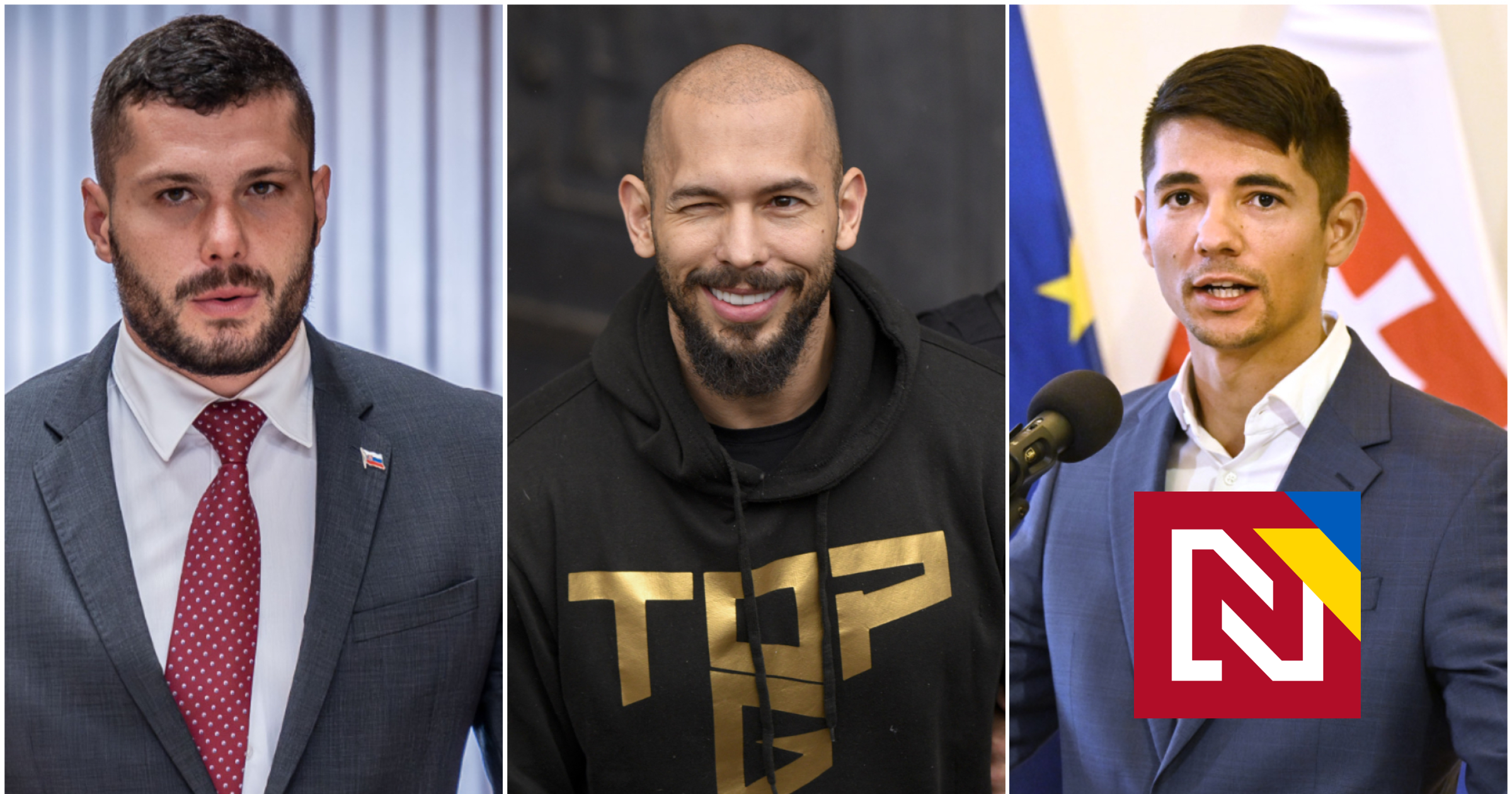
Erik Kaliňák, a Member of the European Parliament and head of the advisory board to Slovak Prime Minister Robert Fico, has announced plans to meet again with Andrew Tate — the American-British influencer facing criminal charges for human trafficking and rape — sparking sharp criticism from opposition politicians who accuse the ruling coalition of cynically courting votes. The announcement came in response to an investigative report published by The New Yorker, which revealed that Tate had allegedly exploited a Slovak minor, meeting her in the eastern Slovak city of Košice when she was 15 years old. When she turned 17, she relocated to England to be with him. Despite the report, Kaliňák stated publicly that he intends to meet with Tate again, noting that the two have previously been in contact. Opposition politicians responded with strong condemnation, arguing that the planned meeting is not a matter of principle or ideology, but a calculated electoral strategy. Critics claim that Kaliňák and Fico's ruling Smer-SD party — a left-nationalist movement that has increasingly adopted populist and culturally conservative messaging — are attempting to capture voters from the rival hard-right party Republika, which has built support among younger, male voters drawn to anti-establishment figures like Tate. Tate has cultivated a global following through social media, promoting misogynistic views, and has become a controversial symbol within far-right and manosphere communities. His ongoing criminal proceedings in Romania, where he faces charges of human trafficking and rape, have not deterred some European politicians from associating with him.

|
Domestic Politics

Opinion: Why Billionaires and Republics Make a Dangerous Mix

A commentary published by the Slovak daily Sme argues that extreme personal wealth poses a structural threat to democratic governance, warning that billionaires are uniquely positioned to convert financial resources directly into political influence. The piece contends that when individuals accumulate wealth on a scale that dwarfs the resources of political parties, civil institutions, or even state budgets, the foundational principle of democratic equality — one person, one vote — becomes distorted. The author frames the relationship between concentrated private wealth and republican systems of government as inherently toxic, suggesting that money, when held in sufficient quantity, does not merely buy access to politics but can effectively reshape political outcomes, regulatory environments, and public discourse in ways that ordinary citizens cannot counter. The commentary does not focus on any single country or billionaire but presents the argument as a general structural concern relevant across modern democracies.

|
Domestic Politics

Coalition Tensions Emerge as SNS Moves to Place Its Own Official in Taraba's Ministry

Slovak National Party (SNS) chairman Andrej Danko is reportedly sending a loyalist to the Ministry of Environment, headed by Tomáš Taraba of the far-right Slovak National Party splinter group Life National Party (Život–NS), in a move seen as an attempt to monitor and influence the ministry's operations. The placement is ostensibly linked to overseeing the contentious issue of land zoning — a politically sensitive process that determines how protected natural areas are classified and managed in Slovakia. The move reflects underlying tensions within Slovakia's ruling coalition, led by Prime Minister Robert Fico's Smer-SD party, which also includes SNS and smaller coalition partners. Taraba, a prominent and ambitious minister, has reportedly consolidated significant influence within his portfolio, and Danko's decision to insert a party operative into the ministry signals friction over the balance of power among coalition partners. Land zoning has been a major political flashpoint in Slovakia, pitting environmental protection advocates against landowners and regional economic interests, making it a high-profile issue for any official assigned to oversee it.

|