Dávka - Your daily dose of Slovak news
Last refreshed: 26/06/2026 21:40 · 42 articles added
Stories are refreshed at 05:30, 10:30, 15:30, and 21:30 UTC.

Domestic Politics

View all2766 stories
Domestic Politics

Slovak Nationalists Field Adam Lučanský Against Former SNS Member in 2026 Regional Race

Slovakia's nationalist SNS party has nominated Adam Lučanský as its candidate for the 2026 regional elections, setting him against Anna Belousovová, a former SNS member who is the incumbent regional governor. Lučanský is running on a platform focused on housing, transport, and healthcare, while also criticizing the current leadership of the region under Belousovová. The contest is notable because it pits the SNS — a nationalist party that forms part of Prime Minister Robert Fico's ruling coalition — against a candidate who was previously a member of that same party. Belousovová parted ways with SNS and now leads the region independently, making the upcoming vote a direct confrontation between her and her former political home. Regional elections in Slovakia are scheduled for 2026 and will determine the leadership of the country's self-governing regions.

|
Domestic Politics

Prešov Redraws Electoral Districts: City Centre Gains Seat at Sekčov's Expense

The city of Prešov in northeastern Slovakia has approved changes to its local electoral boundaries, with the Sekčov district set to lose one council seat, which will be redistributed to the city centre. The proposal, put forward by councillor Drutarovský, was passed by the city council and will affect how residents of Prešov are represented in future local elections. The redistribution reflects shifts in population distribution across the city's districts, with the central area gaining greater representation at the expense of the Sekčov neighbourhood, which had previously held a larger share of council mandates.

|
Domestic Politics

Justice Minister to Order Judicial Oversight After Woman Killed by Husband Released on Bail Weeks Earlier

Slovakia's Justice Minister Boris Susko has announced he will order a supervisory review of court proceedings following the brutal murder of a woman in the eastern Slovak town of Gelnica last Saturday. The victim, identified as Zuzana V., was killed by her husband less than two weeks after a court released him from custody on a conditional basis following charges of making dangerous threats. The case has raised serious questions about the court's decision to release the suspect, who went on to kill his wife shortly after being freed. In Slovakia, ministerial oversight of court proceedings is a formal mechanism allowing the Justice Ministry to scrutinize how a case was handled by the judiciary. The killing has prompted public concern over the adequacy of judicial protections for victims of domestic violence and threatening behavior.

|
Domestic Politics

Slovak Government Allocates Funds for Eastern Water Supply, Medical Equipment, and Pilgrim Accessibility

The Slovak government has approved a package of funding covering a range of priorities across the country, including efforts to secure a backup drinking water source for eastern Slovakia, medical imaging equipment, and accessibility infrastructure for pilgrims. Among the allocations, funds were directed toward identifying and developing a reserve drinking water supply for eastern Slovakia — a region that has faced concerns about long-term water security. Additional grants were distributed to both small villages and larger towns, covering diverse needs such as CT scanner procurement for medical facilities and the installation of a lift to improve access for pilgrims at a religious site. The funding decisions reflect the government's practice of bundling varied regional and local investment priorities into single cabinet sessions. Eastern Slovakia, which includes the country's second-largest city Košice, has historically lagged behind the more economically developed western regions centered on the capital Bratislava, making infrastructure and utility investments there a recurring political priority.

|
Domestic Politics

Fico Meets University Students Amid Protests Against Political Influence in Schools

Slovak Prime Minister Robert Fico held a debate with university students, an encounter that sparked public controversy over the role of politics in educational settings. While students who participated said they were not forced to attend, the event drew criticism from protesters who gathered outside, chanting calls to keep politics out of schools. The demonstration reflected broader public unease about what critics see as the government's attempts to extend its political influence into academic and educational institutions. Fico, leader of the ruling Smer-SD party — a left-nationalist political movement that has dominated Slovak politics for much of the past two decades — has faced repeated accusations from opposition groups and civil society of using state institutions to consolidate power. The protest chants of 'leave the children alone' underscored growing public sensitivity around the separation of political activity and education in Slovakia.

|
Domestic Politics

Slovak Government Provides €80,000 Bailout for Rock Festival With Ties to Ruling Party MP

The Slovak government, led by Prime Minister Robert Fico, has allocated €80,000 to rescue the Rock pod Kameňom music festival, a regional event that has notable connections to Fico's ruling Smer-SD party. Smer-SD, a social-democratic party that returned to power in 2023, holds a parliamentary seat representing the region where the festival takes place, raising questions about potential political favoritism in the allocation of public funds. The local MP's parliamentary assistant is known in the area as an enthusiastic and tireless promoter of the festival, a connection critics may view as a conflict of interest. The funding decision comes as part of broader government support measures, but the overlap between the beneficiary event and the ruling party's local political network has drawn attention in the region.

|
Domestic Politics

Justice Minister Ready to Order Court Supervision Following Gelnica Murder Case

Slovak Justice Minister Boris Susko has said he is prepared to order supervisory oversight of the court connected to a murder case in Gelnica, a town in eastern Slovakia. Susko called on the public and media to avoid speculation about the case and to wait for the results of the ongoing investigation before drawing conclusions. Court supervision is a formal mechanism available to the justice minister to review the conduct and functioning of a court when concerns arise about how a case has been handled.

|
Domestic Politics

Nitra Region Disputes Last-Place Ranking in Transparency Index

The Nitra self-governing region has pushed back against a ranking by Transparency International Slovakia that placed it last among Slovakia's eight regional governments, arguing the evaluation was based on incorrect or incomplete information. Transparency International Slovakia is the local chapter of the global anti-corruption watchdog, which periodically assesses Slovak public institutions on measures such as openness, accountability, and governance. Regional officials contend that the methodology used to compile the rankings failed to accurately reflect the region's actual practices and performance. The dispute highlights ongoing tensions between Slovak regional governments and civil society watchdogs over how transparency and accountability in public administration are measured and reported.

|
Domestic Politics

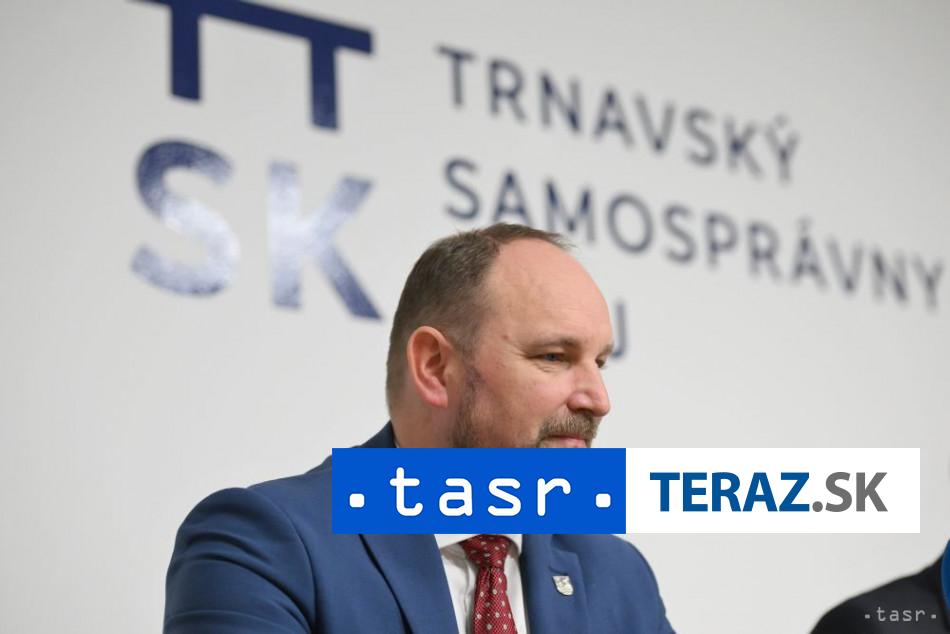
Trnava Regional Governor Presents Candidate List for Upcoming Elections

The governor of the Trnava region in western Slovakia, Jozef Viskupič, has unveiled his slate of candidates for the upcoming regional elections. Viskupič described the team as regionally balanced, bringing together experienced local politicians alongside new candidates drawn from various areas of public life. Regional governors in Slovakia are directly elected and oversee self-governing regions responsible for areas such as secondary education, regional roads, and social services.

|
Domestic Politics

Interior Minister Declares 'Experience It Yourself' Road Safety Campaign a Success

Slovak Interior Minister Matúš Šutaj Eštok has declared the government's 'Experience It Yourself' (Zaži to na vlastnej koži) public awareness campaign a success and announced it will continue in the autumn. The campaign, run by the Interior Ministry, which oversees road safety and policing in Slovakia, was designed to bring attention to traffic safety issues by putting citizens and officials in real-life road danger scenarios. Šutaj Eštok, a member of Hlas-SD — one of the parties in Slovakia's current ruling coalition led by Prime Minister Robert Fico — expressed satisfaction with the campaign's reach and impact. The continuation of the initiative in the autumn suggests the government intends to sustain its focus on road safety as a public policy priority.

|
Domestic Politics

Former Presidential Candidate Ivan Korčok Involved in Car Accident in Pezinok

Ivan Korčok, a former Slovak diplomat and presidential candidate, was involved in a traffic accident Wednesday morning in Pezinok, a town near Bratislava. The driver of the second vehicle involved in the collision sustained injuries. Korčok subsequently spoke publicly about the injured woman. Korčok, a pro-Western independent candidate, ran in Slovakia's 2024 presidential election, narrowly losing to Peter Pellegrini, the candidate backed by Prime Minister Robert Fico's ruling coalition.

Domestic Politics

Slovak Government to Hold Regional Cabinet Meeting Focused on Northeastern Development

The Slovak government is set to hold a special cabinet session in Malcov, a village in the Bardejov district of northeastern Slovakia, where ministers will focus on concrete measures to support the development of the country's northeastern region. The off-site meeting, a format used by governments to draw attention to specific regional challenges, will examine opportunities to boost economic and social growth in an area that has historically lagged behind more prosperous western parts of Slovakia. Northeastern Slovakia, which borders Poland and Ukraine, faces persistent issues including high unemployment, limited infrastructure, and lower average incomes compared to the national average. Holding the cabinet session in the region signals the government's intent to address these disparities through targeted policy measures.

|
Domestic Politics

Slovak Government Meets in Malcov as Key Witness Continues Testimony in Kuciak Murder Case

Slovakia's cabinet is holding an away session in the village of Malcov on Tuesday, while a significant development unfolds simultaneously in one of the country's most consequential criminal trials. Peter Tóth, a key witness in the case surrounding the 2018 murder of investigative journalist Ján Kuciak, is continuing his testimony in court proceedings. The Kuciak murder case remains one of the most significant criminal and political events in modern Slovak history. Kuciak and his fiancée Martina Kušnírová were shot dead in their home in February 2018, a killing that triggered mass street protests and ultimately brought down the government of then-Prime Minister Robert Fico. The assassination is widely believed to have been linked to Kuciak's investigative reporting into corruption and organized crime. Peter Tóth, a former private detective with reported ties to powerful figures in Slovak business and politics, has been a central witness in the ongoing legal proceedings surrounding the murder. The simultaneous government session in Malcov — a practice Slovak cabinets occasionally use to hold meetings outside the capital Bratislava — underscores the routine functioning of government even as the trial continues to grip public attention. The Kuciak case has had lasting implications for Slovak politics, justice, and press freedom, and developments in the courtroom remain closely watched both domestically and internationally.

|
Domestic Politics

Poll Reveals Fico's Smer Party Struggling With Coalition Allies' Poor Voter Appeal

A new opinion poll has exposed a significant political liability for Slovak Prime Minister Robert Fico's ruling Smer-SD party: two of its coalition partners are failing to attract voters, even among Smer's own base. Smer-SD, a left-nationalist party that leads Slovakia's governing coalition, relies on two smaller partners — the Slovak National Party (SNS) and Hlas-SD — to maintain its parliamentary majority. The poll suggests that Culture Minister Martina Šimkovičová, a prominent figure known for her traditionalist and anti-progressive positions, does resonate with a portion of Smer's electorate, particularly its conservative and anti-establishment wing. However, SNS politicians Tibor Migaľ and Rudolf Huliak appear to hold no meaningful appeal for any segment of voters, making them a political burden rather than an asset for the coalition. The findings highlight growing tensions within the ruling bloc, where Fico must balance coalition unity against the electoral drag posed by underperforming partners. With Slovakia's political landscape already polarized, the inability of key coalition figures to broaden their appeal could complicate Smer's position ahead of future elections.

|
Domestic Politics

Official Linked to Bödör and Gorilla 2 Documents Earns Over €200,000 in Interior Ministry Role

A man connected to two major Slovak corruption controversies has earned more than €200,000 while serving in a senior position within Slovakia's Interior Ministry, currently headed by Minister Denisa Saková. The individual was photographed alongside Norbert Bödör, a businessman with close ties to the ruling Smer-SD party who has been linked to alleged manipulation of the Slovak Intelligence Service (SIS), and was also referenced in documents known as 'Gorilla 2.' Gorilla is the name given to a series of leaked intelligence-linked files alleging corrupt ties between Slovak politicians and powerful business interests — 'Gorilla 2' refers to a subsequent set of documents in the same vein that emerged in recent years. The case raises fresh questions about personnel decisions within the Interior Ministry, one of Slovakia's most sensitive government departments, which oversees police and internal security. Critics have long argued that individuals with controversial associations continue to hold well-paid public positions, a concern that gains added weight given the ministry's role in law enforcement and the country's ongoing struggles with high-level corruption.

|
Domestic Politics

Slovak Parliament Votes Confidence in Government as Political Year Draws to Close

Slovakia's National Council, the country's parliament, voted last week to express confidence in the government, marking a significant moment as the political year comes to an end. The vote preserves the ruling coalition's mandate to govern, though the broader political climate has been characterized by missed opportunities and inward-looking politicians focused more on partisan rivalries than on resolving the country's pressing challenges. As Slovakia closes out another turbulent political year, observers note a widening gap between the potential for meaningful reform and the reality of a political class preoccupied with its own internal disputes.

|
Domestic Politics

Slovak Finance Minister Confuses Facts with Impressions, Investigators' Phones Off-Limits

Slovakia's Finance Minister Ladislav Kamenický has drawn criticism for mixing up facts with personal impressions in public statements, while a separate development saw authorities decide against examining the mobile phones of officers linked to former Special Prosecutor Dušan Kováčik's unit, known informally as 'Čurillovci' — investigators associated with the now-disbanded office that handled major corruption and organized crime cases. The decision not to scrutinize the phones raises questions about accountability within Slovakia's law enforcement apparatus, particularly given ongoing public concern over the integrity of institutions that were central to high-profile criminal investigations. Kamenický, a minister in Prime Minister Robert Fico's government — led by Smer-SD, the ruling left-nationalist party — has faced mounting scrutiny over the accuracy of his public communications on economic matters.

|
Domestic Politics

Slovak Morning Briefing: Finance Minister Kamenický Criticized Over Economic Claims

Slovakia's Finance Minister Ladislav Kamenický has come under criticism for allegedly confusing facts with impressions in public statements about economic matters, according to the day's top news digest. Separately, mobile phones belonging to investigators associated with former special prosecutor Daniela Špeciálna — colloquially known as 'Čurillovci,' referring to officers linked to ex-Special Prosecutor Dušan Kováčik's era — will not be examined as part of an ongoing inquiry. The morning briefing rounds up these and other leading stories of the day in Slovakia.

|
Domestic Politics

Former Smer MP Allegedly Transformed Flooded Land into Lucrative Plots Through Restitution Process

A former member of parliament from Smer-SD, Slovakia's ruling populist party, reportedly used the country's land restitution system to convert low-value flooded agricultural land into highly valuable real estate plots worth up to 100 times more. The restitution process, originally designed to return or compensate property seized during the communist era, allows claimants to receive substitute land when their original plots cannot be returned. In this case, the substitute land provided is alleged to be dramatically more valuable than the submerged, essentially worthless land that was originally claimed — raising serious questions about manipulation of the compensation system for personal financial gain. The case highlights longstanding concerns in Slovakia about the abuse of post-communist property restitution mechanisms, which critics say have been exploited by politically connected individuals to acquire prime real estate at the public's expense.

|
Domestic Politics

Kočner's Prison Phone Calls to Former Police Officer Played at Trial in Kuciak Murder Case

Recordings of phone calls made by imprisoned businessman Marian Kočner to former police officer Peter Tóth have been played at a court hearing, revealing near-daily contact during a critical phase of the investigation into the 2018 murders of journalist Ján Kuciak and his fiancée Martina Kušnírová. The recordings, presented at Tuesday's hearing in Kočner's ongoing trial, captured conversations during key days of the murder investigation, including the period when the alleged killers were charged and when Alena Zsuzsová — accused of acting as an intermediary in organizing the murders — was also detained. In one exchange, Kočner was heard reacting to news of the suspects' arrest with the exclamation "Fúha" — a Slovak expression of surprise. Ján Kuciak was an investigative journalist whose reporting focused on tax fraud and alleged ties between Slovak businesspeople and organized crime. He and Kušnírová were shot dead at their home in February 2018 in a case that triggered massive street protests across Slovakia and ultimately led to the resignation of then-Prime Minister Robert Fico. Kočner, a controversial and well-connected Slovak businessman, is accused of ordering the murders. Zsuzsová is accused of coordinating them. The phone call evidence is significant as it may shed light on the level of communication and coordination between Kočner and individuals connected to the case while he was already in custody on separate charges.

|