Dávka - Your daily dose of Slovak news
Last refreshed: 27/06/2026 10:37 · 44 articles added
Stories are refreshed at 05:30, 10:30, 15:30, and 21:30 UTC.

Domestic Politics

View all2774 stories
Domestic Politics

Interior Ministry to Revise Speed Camera Tender After Public Procurement Office Review

Slovakia's Interior Ministry has announced it will modify a tender for speed-monitoring radar systems following conclusions issued by the Office for Public Procurement, the state body responsible for overseeing the legality of government contracts. The ministry stated it intends to continue with the procurement process within the legal framework established by the procurement office's findings. The revision signals that the original tender terms were found to require adjustment, though the ministry has indicated its commitment to completing the process in compliance with Slovak procurement law.

|
Domestic Politics

Man Smashes Train Window with Rock, Case Heard by Two Courts

A man who smashed a window on a railway carriage with a rock faced legal proceedings that were reviewed by two separate courts before a final outcome was reached. The prosecution sought a sentence of compulsory community service work for the defendant rather than a custodial term. The case went through multiple rounds of judicial review, highlighting the procedural steps within Slovakia's court system when lower court decisions are challenged on appeal. Slovak courts routinely handle cases of deliberate damage to public transport infrastructure, which can pose safety risks to passengers and cause significant repair costs to railway operators.

|
Domestic Politics

Opinion: What Hegseth's Rise Reveals About Who Really Controls the United States

Slovak political analyst Boris Zala argues in a commentary piece that calls for Slovakia to 'remain part of the West' or 'stay aligned with the West' have become entirely hollow. Using U.S. Defense Secretary Pete Hegseth as a case study, Zala questions the nature of political power in the contemporary United States, suggesting that the traditional Western alliance framework no longer carries the meaning or moral authority it once did. The opinion piece reflects ongoing debate within Slovak political and intellectual circles about the country's geopolitical orientation, particularly as the ruling government under Prime Minister Robert Fico has increasingly distanced itself from mainstream EU and NATO positions on issues such as the war in Ukraine.

|
Domestic Politics

Slovak Municipalities Association Demands Exemption from National Debt Brake Rules

The Association of Towns and Villages of Slovakia is pressing the central government to exclude local governments from the country's debt brake mechanism, making the issue the central focus of a recent online session of the organization's leadership. The debt brake is a constitutional rule that automatically triggers spending cuts when Slovakia's public debt exceeds certain thresholds relative to GDP. Local governments argue that being subject to these restrictions limits their ability to invest in infrastructure and public services, as fiscal tightening measures can force cuts to municipal budgets regardless of individual towns' or villages' own financial health. The dispute highlights ongoing tension between Slovakia's central government — which relies on the debt brake to maintain fiscal discipline amid rising national debt — and local authorities, who say the mechanism unfairly constrains their spending capacity. The outcome of these negotiations could have significant implications for how hundreds of Slovak municipalities fund local services and capital projects in the coming years.

|
Domestic Politics

Slovak Political Week in Review: Corruption, Rule of Law, and Coalition Tensions

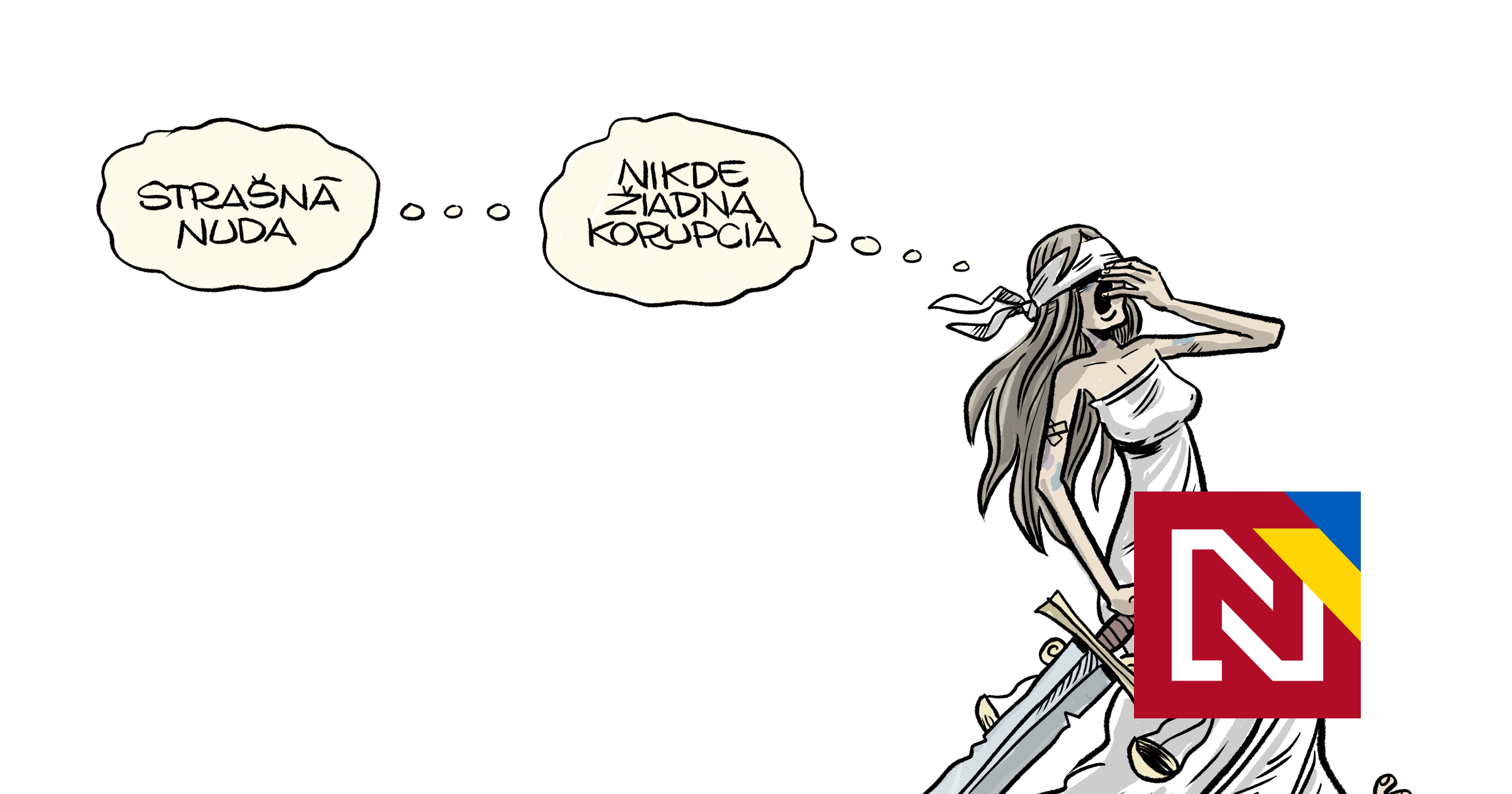
Slovak political commentators and analysts highlighted concerns this week over the state of the rule of law in Slovakia, warning that corruption networks have little incentive to abandon their influence over the current government as long as legal accountability remains weak. Journalists and public figures identified the key event, misstep, and underreported moment of the week, reflecting broader anxieties about the relationship between political power and impunity in the country. The commentary comes amid ongoing scrutiny of Prime Minister Robert Fico's government, a left-nationalist coalition that critics accuse of weakening independent institutions, including the judiciary and anti-corruption bodies. Analysts noted that when laws are routinely undermined or selectively enforced, those who benefit from corrupt arrangements have every reason to keep the ruling coalition intact, creating a self-reinforcing cycle of political protection and legal impunity. The discussion reflects a persistent fault line in Slovak politics between reformist and accountability-focused voices on one side, and a government that has repeatedly clashed with prosecutors, courts, and civil society organizations on the other.

|
Domestic Politics

Slovakia's Pohoda Festival Under Threat as Ministry Seeks to Control Speech at Event

Michal Kaščák, the founder and director of Pohoda, one of Slovakia's largest and most internationally recognized music and arts festivals, has warned that the festival's future may be at risk due to government interference in what can be said on its stages. Kaščák stated that the ministry led by Ľubomír Kaliňák — a senior figure in the ruling Smer-SD party, the left-nationalist party of Prime Minister Robert Fico — is attempting to dictate what speakers and performers at Pohoda are allowed to say publicly. He said the situation must be resolved within a week, or organizers will be forced to implement a contingency 'Plan B,' though he expressed hope that it would not come to that and that the festival would not have to end. Pohoda, held annually at an airport near the western Slovak city of Trenčín, has long served as a platform not only for music but also for civic debate and free expression, making it a culturally and politically significant event in Slovakia. The dispute reflects broader tensions in Slovakia under the Fico government, which critics have accused of pressuring independent cultural institutions and media. Any restriction on programming at Pohoda would be seen as a significant blow to freedom of expression in the country.

|
Domestic Politics

Police Investigate Interior Ministry's Youth Roadshow Featuring Influencer's Husband

Slovak police are reviewing a government-funded youth roadshow that featured the husband of Nikol Plačková, a well-known Slovak influencer. The event was organized under the auspices of the Interior Ministry, which oversees national police and public security. No charges have been filed so far as investigators examine the circumstances surrounding the program. The case raises questions about the use of public funds and the appropriateness of involving social media personalities in official ministry-backed youth initiatives.

|
Domestic Politics

SaS Leader Accuses Rival Politician of Playing Both Sides of Political Divide

Richard Gröhling, leader of the liberal opposition party Freedom and Solidarity (SaS), has publicly accused László Gubík of political opportunism, saying he shifts his allegiances depending on the circumstances. Gröhling criticized Gubík for appearing alongside opposition leader Michal Šimečka at a press conference one day, then holding talks with Robert Šutaj Eštok — a senior figure in the ruling coalition — the next. Šutaj Eštok serves as Slovakia's Interior Minister and is a leading member of Hlas-SD, one of the parties in the governing coalition led by Prime Minister Robert Fico. Gröhling challenged Gubík to make clear which side of Slovakia's political divide he stands on. Gubík is associated with representing the interests of Slovakia's Hungarian-speaking minority, but Gröhling argued that a separate political party is not necessary to address the concerns of Hungarians living in Slovakia, suggesting existing parties are capable of doing so. SaS is a center-right, pro-European opposition party that has been a vocal critic of the current Fico-led government.

|
Domestic Politics

Slovak Tax Authority Dismantles Cigarette Smuggling Ring, Losses Exceed €2.54 Million

Slovak financial authorities have broken up an organized cigarette smuggling group, detaining five suspects and uncovering losses to the state exceeding €2.54 million. The operation, codenamed 'Hrom' (Thunder), was carried out by the Financial Administration of Slovakia, the agency responsible for customs enforcement and tax crime investigations. The group is believed to have been involved in the illegal trade of cigarettes, which deprives the state of excise tax and VAT revenue. Cigarette smuggling remains a significant problem across Central and Eastern Europe, where high tobacco taxes create strong incentives for black market activity. The five detained individuals now face criminal prosecution.

|
Domestic Politics

Slovak Constitutional Court Rules Against Publisher Torden, Returns It to Conspiracy Media List

Slovakia's Constitutional Court has ruled that the publisher Torden must be reinstated on the government's list of disinformation and conspiracy-linked media outlets. The court's decision reverses a previous removal of the publisher from the list, placing it once again among entities officially flagged by Slovak authorities for spreading harmful or misleading content. Torden has also been linked to the distribution of works by Russian authors who appear on European Union sanctions lists, raising additional concerns about the outlet's ties to pro-Russian influence operations. The government's conspiracy media list is a register maintained by Slovak authorities to publicly identify sources deemed to spread disinformation or conspiracy theories, and inclusion on it carries significant reputational and potentially legal consequences for listed entities.

|
Domestic Politics

Pro-Government Influencer Reportedly Paid €45 Per Hour Under Environment Ministry Contract

Miriam Šramová, a social media influencer known for supporting Slovakia's ruling government, reportedly held a contract with the Ministry of the Environment paying her €45 per hour, according to information that has emerged about the arrangement. Šramová is said to have worked for the ministry under a scheme funded through Slovakia's Recovery and Resilience Plan — the national program channeling European Union post-pandemic reconstruction funds into public projects. The ministry is currently led by Tomáš Taraba, a politician from the far-right Slovak National Party (SNS), which is part of Prime Minister Robert Fico's three-party ruling coalition. The revelation raises questions about the use of EU recovery funds to engage political allies, as the Recovery and Resilience Plan is subject to strict EU oversight and is intended to finance legitimate reform and investment projects rather than political communications work.

|
Domestic Politics

Trial Over Fatal Slovak School Attack Continues With Video Evidence

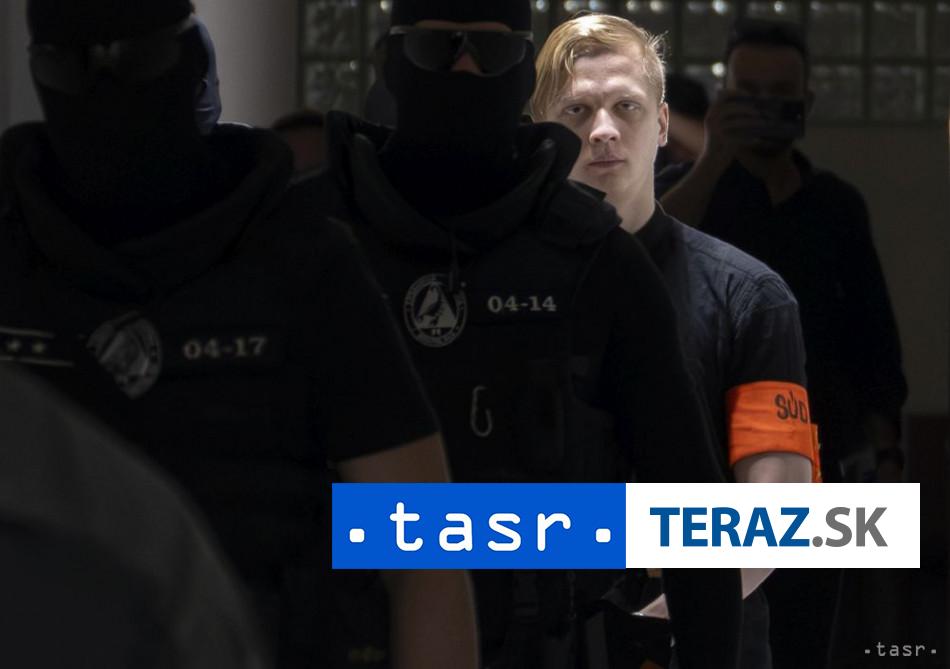
A court in Slovakia is continuing proceedings in the trial over a deadly attack at a secondary school, with video footage being played as part of the evidence presented. The attack, which took place on January 16, 2025, at a gymnasium — a type of academic secondary school — left two people dead: the school's deputy principal and a student. A third student was wounded in the assault. The case has drawn significant public attention in Slovakia as one of the most serious incidents of school violence in the country's recent history. The trial is now in an evidentiary phase, with the court examining recorded footage related to the attack.

|
Domestic Politics

Commentary: Fear, Not Courts, Is the Only Check on Slovakia's Fico Government

Slovakia's ruling coalition is considering changes to the country's constitutional law on budgetary responsibility, a development that critics warn will further weaken already limited fiscal oversight mechanisms. The constitutional law on budgetary responsibility is a legal framework designed to enforce fiscal discipline on governments, setting binding rules on public debt and spending. According to political commentator Martin Behul, writing in Aktuality, the Fico government — led by Prime Minister Robert Fico, whose Smer-SD party heads the current ruling coalition — has shown little regard for meaningful fiscal accountability. Behul argues that any coalition-backed revision of the law is likely to make it even less enforceable, more procedural in form, and ultimately toothless in practice. The commentary reflects broader concerns about fiscal governance in Slovakia, where the Constitutional Court, the country's highest authority on constitutional matters, has proven unable or unwilling to compel responsible budgetary behavior from the government. Behul concludes that political fear — the prospect of electoral or financial consequences — remains the only realistic force capable of moderating the coalition's approach to public finances.

|
Domestic Politics

Slovak Defence Ministry Awarded €1M Pilot Training Contract Without Tender to Unlicensed Firm

Slovakia's Defence Ministry awarded a contract worth more than one million euros for pilot training without holding a public procurement competition, according to an investigation by the Institute for Central European Justice and Knowledge (ICJK), a Slovak investigative journalism centre. The contract was granted to a private company that reportedly lacks both a flight simulator and the required licence to conduct pilot training, raising serious questions about the legitimacy of the procurement process. The ministry is led by Robert Kaliňák, a senior figure in Smer-SD, the ruling social-democratic party of Prime Minister Robert Fico. Kaliňák has previously served as interior minister and is one of the most influential members of the current government. The decision to bypass competitive tendering — a standard requirement under EU and Slovak public procurement rules designed to ensure transparency and value for public funds — has drawn sharp criticism from the investigative outlet. The case adds to broader concerns about procurement practices within Slovak state institutions under the current government. Bypassing public tenders can violate EU regulations governing the use of public funds, and such irregularities may attract scrutiny from the European Commission. Critics argue the contract raises questions about possible conflicts of interest and the misuse of defence spending.

|
Domestic Politics

Opposition Accuses Slovak Digital Ministry of Spending Thousands on Food and Drinks for Officials

Slovakia's Ministry of Investments, Regional Development and Informatization (MIRRI), which oversees digital transformation and cybersecurity policy, is facing criticism over its spending habits. Opposition politician Veronika Remišová has called on the ministry's minister to cut expenditures, alleging that thousands of euros are being spent on food and drinks for ministry officials. The accusations come in the context of MIRRI's role in training schools and public offices on cybersecurity — a priority area for public funding. Remišová, a former deputy prime minister and founder of the opposition party Za Ľudí (For the People), demanded that the ministry reduce what she characterized as wasteful spending on hospitality. The controversy raises broader questions about the use of public funds at a ministry responsible for managing significant EU-backed digital investment programs in Slovakia.

|
Domestic Politics

Slovak Labor Inspectors Break Silence, Writing to Minister Over Pay, Chaos, and Alleged Favoritism

Labor inspectors across Slovakia have written directly to Labor Minister Erik Tomáš, declaring they can no longer stay silent about conditions within the country's labor inspection system. The inspectors — civil servants responsible for enforcing workplace safety and employment law — say the situation has reached a critical point, citing inadequate salaries, organizational chaos, and controversial remarks attributed to ministry leadership about so-called "fixers," a term implying that inspections or decisions are being arranged through personal connections rather than proper procedure. The open letter signals deep discontent within a government body that plays a key role in protecting workers' rights. Low pay has long been a structural problem in Slovak public administration, but the inspectors' decision to formally address the minister suggests frustration has escalated beyond routine grievance. The reference to "vybavovači" — a Slovak colloquial term for people who use informal influence to get things done — implies inspectors feel the integrity of their work is being undermined or publicly questioned by those above them. Minister Tomáš is a member of the ruling Hlas-SD party, a center-left grouping that split from the formerly dominant Smer-SD and now governs in coalition. The inspectors' public challenge to the minister adds pressure to a government coalition that has faced repeated scrutiny over the management of state institutions. Whether the ministry responds with concrete reforms to salaries and governance, or dismisses the concerns, is likely to determine how quickly discontent within the labor inspectorate escalates further.

|
Domestic Politics

Slovak Interior Ministry Prepares Legislative Changes to Crisis Management Framework

Slovakia's Interior Ministry is moving forward with plans to amend several laws governing crisis management, the ministry announced. The proposed legislative changes are intended to update and revise the legal framework that guides how Slovakia responds to emergencies and crises. The ministry has made the information about the planned amendments publicly available, though specific details of the proposed changes have not yet been fully disclosed. Crisis management legislation governs the coordination of state institutions, emergency services, and local authorities during situations such as natural disasters, security threats, or other large-scale emergencies.

|
Domestic Politics

Slovakia's Matovič Open to Conservative Alliance, Calls Fico 'Enemy' While Backing Šimečka

Igor Matovič, leader of the opposition Hnutie Slovensko (Slovakia Movement) party, has signaled openness to forming a unified conservative electoral list with two other opposition parties — the Christian Democratic Movement (KDH) and the Hungarian Alliance — while stopping short of actively pursuing the idea for now. In a candid interview, Matovič said he is waiting to see what Michal Šimečka, leader of the liberal-progressive opposition party Progresívne Slovensko, is capable of delivering politically. Despite describing Prime Minister Robert Fico — whose Smer-SD party leads the current ruling coalition — as an "enemy," Matovič expressed a degree of indirect support for Šimečka's efforts, saying he is helping him "wake up." Matovič also pledged that if a future coalition required his party's votes, he would move to block what he called "perversions," a reference to socially progressive policies, even as he simultaneously criticized other conservatives for what he described as a distorted hierarchy of values and excessive scaremongering about progressivism. Matovič, a polarizing and controversial figure in Slovak politics who previously served as prime minister before his own coalition collapsed in 2021, also claimed that journalists had assisted his former coalition partner Richard Sulík and what he referred to as "the mafia" — an allegation consistent with his long history of inflammatory public statements. The remarks reflect the fragmented state of Slovakia's opposition, which is seeking to unite ahead of future elections against Fico's entrenched government, but remains divided by ideological tensions and personal rivalries.

|
Domestic Politics

Twenty Years of Fico: Five Defining Moments of Slovakia's Longest-Serving Political Force

This week marks exactly 20 years since Robert Fico's Smer party first won parliamentary elections in Slovakia, a milestone that underscores the enduring dominance of one of Central Europe's most consequential political figures. Fico, who currently serves as Slovakia's prime minister, founded Smer — which translates as 'Direction' — as a social-democratic movement in 1999, before steering it toward an increasingly nationalist and pro-Russian orientation over the following two decades. The party's first election victory in 2006 launched Fico into the premiership for the first of what would become multiple terms in government. Over 20 years, Fico has navigated a series of pivotal moments that reshaped Slovak politics, including coalition controversies, corruption scandals, the 2018 murder of investigative journalist Ján Kuciak and his fiancée — which triggered mass protests and temporarily forced Fico from office — and his return to power in 2023 following elections in which Smer again placed first. His latest term has been marked by sharp tensions with European Union partners over his government's stance on the war in Ukraine and his efforts to reform the country's justice and media institutions. Whether celebrated as a defender of Slovak sovereignty or criticized as an authoritarian populist, Fico's two-decade grip on Slovak political life makes him a defining, and deeply divisive, figure of the post-communist era in Central Europe.

|
Domestic Politics

Slovak Morning Briefing: Government Faces Tough Challenges Ahead

Slovakia's government is set to confront a series of difficult political and legislative hurdles after completing routine procedural formalities, according to the country's morning news agenda. Separately, Russia's capital Moscow has felt the impact of long-range Western sanctions, which are increasingly affecting the Russian economy and daily life in the city. The briefing, a daily news digest produced by the Slovak newspaper SME, highlights these as the leading stories of the day for Slovak readers.

|