Dávka - Your daily dose of Slovak news
Last refreshed: 27/06/2026 10:37 · 44 articles added
Stories are refreshed at 05:30, 10:30, 15:30, and 21:30 UTC.

Domestic Politics

View all2774 stories
Domestic Politics

Matovič Offers to Help KDH If Opposition Unity Talks Fail

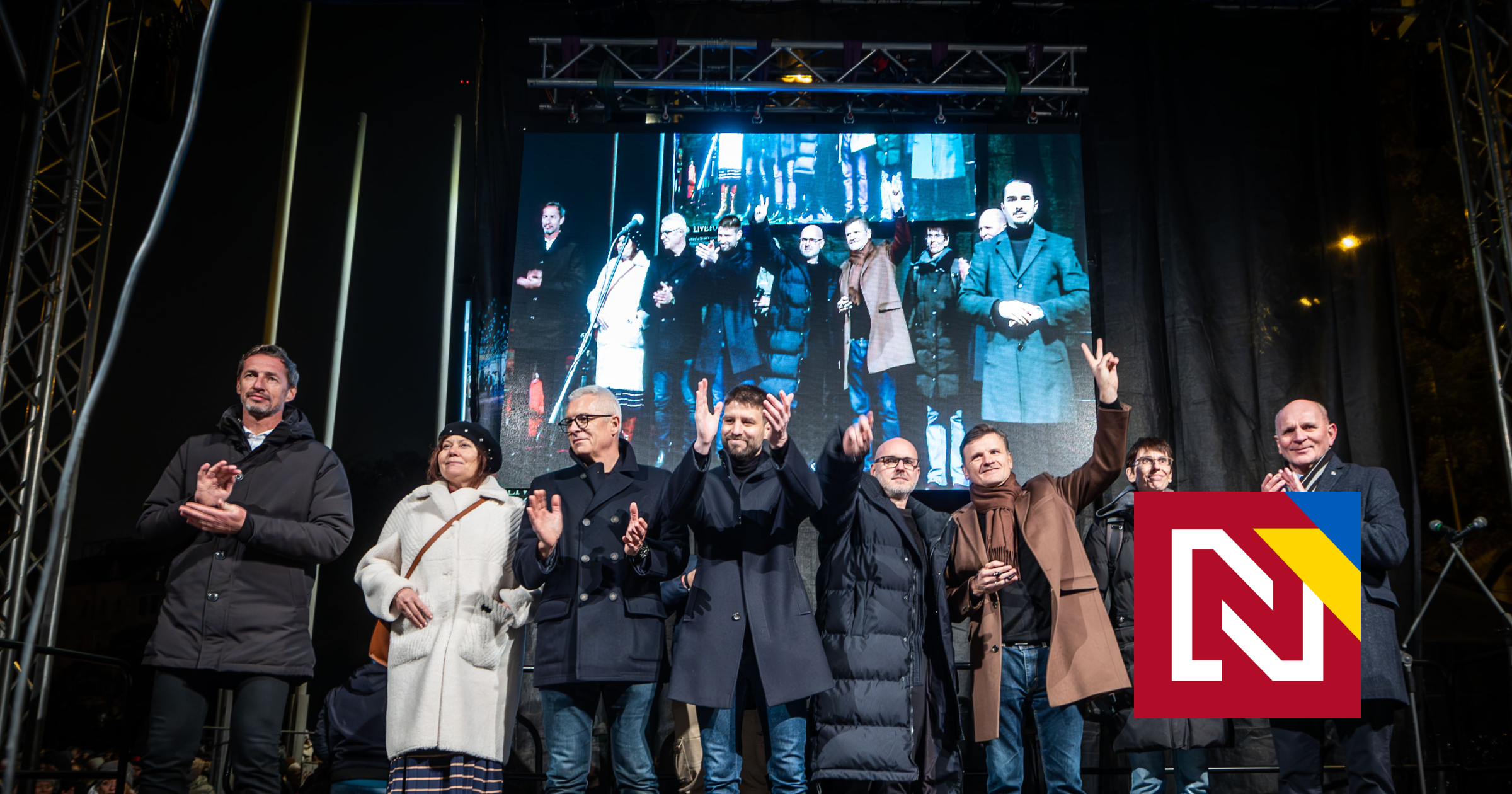
Igor Matovič, leader of the opposition movement Slovensko, has signaled willingness to throw a political lifeline to the Christian Democratic Movement (KDH) if efforts by fellow opposition leader Michal Šimečka to unite opposition parties fall through. Matovič made the offer despite his party having been excluded from what he referred to as 'Šimečka's foursome' — a grouping of four opposition parties attempting to coordinate ahead of future elections. KDH, a center-right Christian democratic party, is one of the parties involved in those unity discussions. Šimečka leads the liberal Progressive Slovakia party, currently the largest opposition force in Slovakia's National Council, the country's parliament. The statement underscores ongoing tensions within Slovakia's fragmented opposition, which is attempting to present a unified front against the ruling coalition led by Prime Minister Robert Fico's Smer-SD party. Matovič, a polarizing figure who previously served as prime minister before his government collapsed in 2021, has had a complicated relationship with other opposition parties, making his offer of support notable even if it comes with political strings attached.

|
Domestic Politics

Key Witness Peter Tóth Set to Testify in Ján Kuciak Murder Case

Peter Tóth, a former private investigator, is scheduled to testify in the ongoing trial related to the murder of Slovak investigative journalist Ján Kuciak. Tóth has claimed that Marián Kočner, a controversial Slovak businessman and the central figure in the case, tasked him with surveilling journalists, including Kuciak. Kuciak was shot dead along with his fiancée, Martina Kušnírová, at their home in the village of Veľká Mača in February 2018. The murders shocked Slovakia and triggered some of the largest street protests the country had seen since the fall of communism, ultimately contributing to the resignation of then-Prime Minister Robert Fico. Kočner, who had a well-documented history of disputes with Kuciak and other journalists, was charged with ordering the killing. Tóth's testimony is considered significant because it could shed further light on the surveillance operation allegedly conducted against Kuciak in the period before his murder, helping establish the chain of events and potential motive behind the killing. Kočner was acquitted of ordering the murder by the Special Court in 2020, but the case has continued through the Slovak judicial system, with prosecutors appealing the verdict.

|
Domestic Politics

Slovak Political Parties to Share €14.3 Million in State Funding Based on 2023 Election Results

Eight political parties and one electoral coalition in Slovakia will divide nearly €14.3 million in state budget funding this year, allocated on the basis of their performance in the 2023 parliamentary elections. Under Slovak law, parties that surpassed the three-percent vote threshold in elections to the National Council — Slovakia's parliament — are entitled to receive annual public financing tied to their electoral results. The funding reflects a standard mechanism used across many European democracies to provide political parties with stable financial support from the state, reducing dependence on private donors. A total of nine political groupings qualified for the payments in this cycle.

|
Domestic Politics

Slovak NGO Head Calls for Economic Debate on Migration, Criticizes Fear-Based Politics

The head of a Slovak refugee integration organization says the country's political discourse on migration relies on fear rather than facts, and that economic arguments in favor of accepting refugees are being ignored. Michaela Pobudová, who leads Mareena, a civic association focused on refugee integration in Slovakia, argues that every government finds refugees a convenient and cheap political topic to exploit. Despite widespread public anxiety about migration — fueled by political rhetoric — many Slovaks still actively help refugees in practice, she says. Pobudová is calling for a more grounded national conversation that takes into account the economic contributions refugees can make, rather than one driven by scaremongering. Migration has been a recurring political flashpoint in Slovakia, where the ruling coalition led by Prime Minister Robert Fico's Smer-SD party — a left-leaning nationalist movement — has consistently taken a hard line against refugee resettlement and used migration as a mobilizing issue with its voter base.

|
Domestic Politics

Slovak Commentators: Bad Government and Europe's Highest Costs

Slovak political commentators have raised sharp criticism of the current government, arguing that Slovaks not only suffer poor governance but also face some of the highest costs of living relative to wages in Europe. In a podcast discussion on Denník N, a leading Slovak independent newspaper, editor and commentator Oliver Brunovský and Napunk editor-in-chief Zoltán Szalay debated the state of Slovak politics, with the pair noting that an upcoming visit by Cypriot observers would give outsiders a revealing look at the realities of political life in Slovakia. The remarks reflect growing public frustration with the ruling coalition led by Prime Minister Robert Fico's Smer-SD party, which critics accuse of democratic backsliding and mismanagement of public finances.

|
Domestic Politics

How Hungary's Orbán Became a Political Blueprint for Slovakia's Fico

Slovak Prime Minister Robert Fico's relationship with Hungarian Prime Minister Viktor Orbán has evolved from historical nationalist rivalry into a close political alliance, with Orbán's methods of governance serving as a direct model for Fico's own approach to power. Despite a fraught history rooted in long-standing ethnic and territorial tensions between Slovakia and Hungary — including disputes over the rights of the Hungarian minority in Slovakia — Fico grew increasingly drawn to Orbán's ability to dominate public opinion, control media, and reshape state institutions to consolidate political power. Over time, the ideological distance between the two leaders narrowed considerably, and Orbán became what sources describe as a source of inspiration and a political template for Fico. Orbán, who leads Hungary's ruling Fidesz party and has governed Hungary since 2010, has been widely criticized by the European Union for undermining democratic norms, curtailing press freedom, and weakening judicial independence. Fico, who leads Smer-SD — a dominant left-nationalist party that returned to power in Slovakia in 2023 — has drawn similar criticism from EU institutions and Slovak civil society. The relationship between the two leaders extends beyond personal admiration: Orbán is reported to have actively engaged in Slovak electoral affairs, raising concerns among opposition figures and democratic watchdog organizations about foreign political interference within an EU member state.

|
Domestic Politics

Slovak News Outlet Publishes Serialized Book Examining Fico's Two Decades in Power

Slovak news website Aktuality has begun publishing a serialized book titled 'Fico – Obsessed with Revenge,' offering a critical examination of Prime Minister Robert Fico's political career as the 20th anniversary of his first election victory approaches. The fifth installment focuses on Fico's relationship with Hungarian Prime Minister Viktor Orbán and his alleged involvement in electoral affairs. Fico, the leader of Smer-SD — a left-nationalist party currently heading Slovakia's ruling coalition — first came to power in 2005 and is now serving as prime minister for a fourth time. The book, published in installments by Aktuality, aims to hold Fico accountable by reflecting back on his record, challenging what the outlet describes as his repeated insistence that he bears no responsibility for controversial developments during his tenures in office. The serialized publication comes at a politically charged moment in Slovakia. Fico, who survived an assassination attempt in May 2024, has steered the country toward a more pro-Russian foreign policy stance and has clashed repeatedly with the European Union and domestic opposition. Critical media coverage of his leadership has intensified as he consolidates his grip on government for a historic fourth term.

|
Domestic Politics

Slovak Political Week in Review: Radačovský's Diplomatic 'Exile' by the Sea

Slovak political satire site Aktuality published its weekly roundup of the most notable political events through a humorous meme-based format. The highlight of the week centered on Ľuboš Radačovský, a Slovak politician, being described as having been quietly 'dispatched' to a seaside diplomatic posting — a tongue-in-cheek reference to what critics characterize as a comfortable foreign assignment serving as a political removal from the domestic scene. The weekly meme review is a regular feature offering satirical commentary on Slovak political developments.

|
Domestic Politics

Analyst: Fico's Swift Response to Constitutional Court Debt Brake Ruling Limits Media Fallout

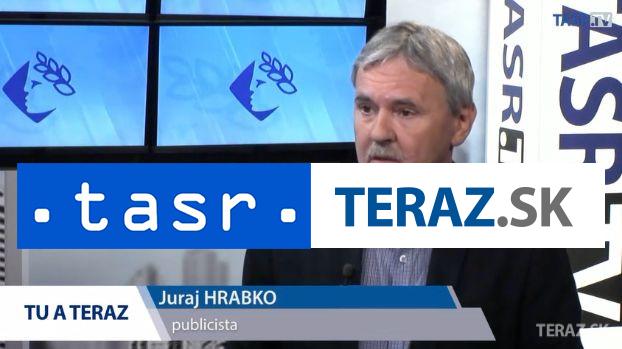
Slovak Prime Minister Robert Fico moved quickly to respond to a ruling by the Constitutional Court of Slovakia — the country's highest authority on constitutional matters — concerning the so-called debt brake, a constitutional mechanism designed to automatically trigger fiscal austerity measures when public debt exceeds certain thresholds. Political analyst Juraj Hrabko, commenting on TASR TV, the public news agency's television platform, said Fico's rapid reaction was a deliberate strategic move. By addressing the issue swiftly, the government limited the amount of time the story could gain traction in the media cycle. The Constitutional Court's interpretation of the debt brake rule had the potential to create political difficulties for the government, which is already navigating significant budgetary pressures. Hrabko suggested that by getting ahead of the story, Fico effectively shortened the window in which the issue would resonate with the public and journalists.

|
Domestic Politics

Fico Abandons Boarding School Plan for Roma Children, Shifts Approach

Slovak Prime Minister Robert Fico has dropped a proposal to establish boarding schools for Roma children, opting instead for a different strategy to address educational challenges within the country's large Roma minority. Fico had previously floated the idea of residential schools as a means of improving educational outcomes for Roma children, who consistently face significant disadvantages in Slovakia's school system due to poverty, segregation, and social exclusion. The Roma population, estimated at several hundred thousand people, is one of the largest in Central Europe and has long been the subject of contentious government policy debates in Slovakia. Critics of the boarding school proposal had raised concerns about forced separation of children from their families and potential human rights implications. The change in approach reflects ongoing difficulties Slovak governments have faced in crafting effective and rights-compliant integration policies, with results described as poor when political will or resources are lacking.

|
Domestic Politics

Slovakia's Constitutional Court Rebukes Government Over Interpretation of 'Immediate' Orders

Slovakia's Constitutional Court has ruled against the government in a dispute over the meaning of legally binding orders requiring immediate action. The court found that the government had been ignoring what was broadly understood — that 'immediately' means without delay — effectively rebuking the cabinet for failing to comply with rulings or directives in a timely manner. The ruling underscores ongoing tensions between Slovakia's judiciary and the executive branch led by Prime Minister Robert Fico's government, which has faced repeated criticism from legal and constitutional bodies over its approach to the rule of law. The Constitutional Court, which serves as the ultimate arbiter of constitutional matters in Slovakia, sent a clear signal that the government cannot redefine or sidestep the plain meaning of legal obligations imposed upon it.

|
Domestic Politics

Slovak Economist Beblavý: Fico's Party Banks on Voters No Longer Caring About Corruption

Slovak economist and former politician Miroslav Beblavý argues that Smer-SD, the ruling populist party led by Prime Minister Robert Fico, is betting that its core voters have become indifferent to the privileged behavior of the political elite. Beblavý, 49, is an economist, investor, and author of the book 'The New Nobility: Political Elitism from Mečiar to Matovič,' which examines how Slovakia's political class has long enjoyed special privileges and perks at public expense — a phenomenon Slovaks call 'papaláštvo,' roughly meaning high-handed or elitist conduct by those in power. In an interview with Denník N, Beblavý — who previously served in the center-right parties SDKÚ, Sieť, and Spolu before withdrawing from politics after 2020 — discusses whether the culture of political privilege in Slovakia is changing, and draws distinctions between recent controversies involving the family members of prominent politicians, including the mother of Michal Šimečka, leader of the liberal opposition party Progresívne Slovensko, and the son of Prime Minister Fico. Beblavý spent years working on conflict-of-interest issues in Slovak public life and his analysis reflects longstanding concerns about accountability and ethical standards among Slovakia's political leadership.

|
Domestic Politics

Slovak Daily Digest: Contract Controversy and Moscow Explosion Aftermath

Slovak news outlet Aktuality published its daily news roundup highlighting two notable developments: a contract between Miriam Šramová and the ministry headed by Minister Taraba, and ongoing reactions to an explosion in Moscow. The contract story touches on potential conflicts of interest within Slovak government procurement, while the Moscow explosion aftermath reflects continued international tensions with domestic resonance in Slovakia. Insufficient detail was provided in the source material to fully elaborate on the specifics of either story.

|
Domestic Politics

Expert Witness: Mother Accused of Killing Daughters in Bratislava Suburb Suffers from Depression

A forensic expert testified before a court in Pezinok that a mother charged with murdering her daughters in the Ružinov district of Bratislava suffers from depression. The psychiatric assessment was presented as part of ongoing trial proceedings in the case, which involves a mother accused of killing her own children. Pezinok, a town near Bratislava, is home to a regional court that handles serious criminal cases from the greater Bratislava area. The defendant's mental health condition is expected to be a significant factor in the court's deliberations over her culpability and sentencing.

|
Domestic Politics

Slovak PM Fico Targets NGOs While Defense Ministry Faces Scrutiny Over Undisclosed Contracts

Slovak Prime Minister Robert Fico has been publicly criticizing non-governmental organizations, describing them as one of the country's most serious problems, even as his own government faces questions over financial transparency at the Defense Ministry. The ministry has been accused of spending large sums of money while failing to publish the corresponding contracts — a legal obligation under Slovak transparency rules. The contrast has drawn sharp criticism from observers who argue that Fico is deflecting attention from accountability failures within his own administration. Fico, who leads Smer-SD, a left-nationalist party that returned to power in 2023, has repeatedly framed NGOs — many of which receive Western or EU funding — as foreign-influenced entities working against Slovak national interests. Critics, however, point to the Defense Ministry's opaque spending as a more pressing governance concern, noting that undisclosed public contracts undermine the very transparency standards Slovakia is obligated to uphold as an EU member state.

|
Domestic Politics

Slovakia's Government Risks Constitutional Court Action If It Fails to Balance Budget, Expert Warns

Slovakia's Constitutional Court has confirmed that the government cannot indefinitely delay its obligations under the country's debt brake law, a leading constitutional expert has warned. The ruling, issued this week, reinforces what legal scholars have long argued: the government is legally required to act when national debt reaches certain thresholds, and deliberate delays are not permissible. Constitutional law expert Marián Giba stated that if the government fails to present a balanced budget in the autumn, the Constitutional Court could strike it down. Slovakia's debt brake is a legal mechanism that automatically triggers mandatory fiscal measures — including budget cuts or revenue increases — when public debt exceeds set limits relative to the size of the economy. The current government, led by Prime Minister Robert Fico's Smer-SD party, has faced criticism for what opponents describe as a failure to take the required corrective fiscal steps. The Constitutional Court's position significantly raises the stakes for the government's upcoming budget process, as non-compliance could result in the court annulling the budget entirely — a move that would create serious political and financial instability in the country.

|
Domestic Politics

Progressive Slovakia Party Urged to Take Firmer Stance Against Conservative Opposition

Progressive Slovakia, the main liberal opposition party in Slovakia, is being called upon to adopt a more assertive political posture — not only toward the ruling Smer-SD party of Prime Minister Robert Fico, but also toward the conservative wing of the opposition. The party, led by European Parliament President Róbert Mestský, has made strides in sharpening its opposition to Fico's government, which critics accuse of democratic backsliding and pro-Kremlin leanings. However, analysts argue that Progressive Slovakia remains inconsistent in its approach, having yet to take an equally firm stance against conservative opposition parties with whom it may need to cooperate to unseat the current government. The challenge reflects a broader strategic dilemma for Slovakia's liberal opposition: how to maintain ideological clarity while building the broad coalitions necessary to win power in a deeply polarized political landscape.

|
Domestic Politics

Slovak Lawmaker's Daughter Linked to Oil Pipeline Firm at Center of Corruption Investigation

A daughter of a Smer-SD parliamentary deputy has been connected to financial transactions routed through Transpetrol, Slovakia's state-controlled oil pipeline company that has become the focus of a major corruption investigation. The lawmaker in question is a member of Smer-SD, the ruling left-nationalist party led by former Prime Minister Robert Fico, which has dominated Slovak politics for much of the past two decades. Transpetrol, which operates Slovakia's main oil transit infrastructure, has come under scrutiny over allegations that the company was used to channel funds benefiting politically connected individuals. The latest revelations trace a network of financial links that extend to a villa in Croatia owned by Prime Minister Robert Fico, raising questions about whether state assets were exploited for personal enrichment by figures close to the ruling party. The findings add to mounting pressure on the Fico government over governance and anti-corruption standards. Slovakia's ruling coalition has faced repeated criticism from domestic opposition parties and European Union institutions over perceived backsliding on the rule of law, and cases involving state-owned enterprises have been a recurring flashpoint in that debate.

|
Domestic Politics

Slovak Weekend Political Talk Shows: Guest Lineup

Slovak public broadcaster and news outlets have announced the guest schedules for weekend political discussion programs, offering audiences a chance to hear from politicians and public figures on current affairs.

|
Domestic Politics

Workers at Slovak Defense Contractor Faced Financial Hardship Despite Firm Holding €140 Million Military Contract

Employees of Way Industries, a Slovak defense company based in Krupina, were left struggling financially even as their employer held a major €140 million contract with Slovakia's Defense Ministry — headed by Minister Robert Kaliňák. Workers had reportedly not received their full wages, creating serious financial difficulties for staff at the company. After the Slovak daily SME raised questions about the situation, Way Industries began paying the outstanding wages owed to its employees. The company's failure to meet payroll obligations came despite its lucrative position as a defense contractor benefiting directly from state military spending. The case raises questions about the oversight of major state contracts and worker protections within companies that profit from government defense expenditure. Robert Kaliňák, who leads the Defense Ministry and whose ministry is the source of the contract, leads Slovakia's defense policy under the government of Prime Minister Robert Fico — a administration that has faced repeated scrutiny over the management of public funds and state procurement. The episode highlights a broader concern about whether companies awarded large government contracts are meeting their basic obligations to their own workforce.

|