Dávka - Your daily dose of Slovak news
Last refreshed: 27/06/2026 05:38 · 21 articles added
Stories are refreshed at 05:30, 10:30, 15:30, and 21:30 UTC.

Domestic Politics

View all2768 stories
Domestic Politics

Legal Scholars Argue Parliament Should Not Reward Government's Constitutional Breach With Confidence Vote

Slovak legal commentators have raised serious questions about parliamentary accountability after the government was granted a confidence vote despite allegedly violating a constitutional law on budgetary responsibility. Critics argue that in a functioning rule-of-law state, a parliament would not reward deliberate breaches of constitutional obligations by confirming a government's mandate. The constitutional law in question governs fiscal discipline and places binding obligations on the executive — obligations the government is accused of intentionally disregarding. Legal analysts note the severity of the breach by pointing to a stark comparison: had Slovakia's president violated the constitution with the same degree of apparent intent, it would constitute grounds for criminal prosecution under Slovak law. The episode highlights ongoing tensions in Slovakia over the rule of law and the separation of powers, raising broader concerns about whether constitutional mechanisms are being applied consistently and impartially across different branches of government.

|
Domestic Politics

Businessman Artúr Benes Announces Candidacy for Mayor of Prešov

Artúr Benes has announced his candidacy for mayor of Prešov, the fourth-largest city in Slovakia, located in the country's northeast. Benes, a businessman running as an independent candidate, is making his second bid for the mayoral post, having previously campaigned for the position without success. He is presenting his business background as a key qualification, arguing that it gives him a practical, grounded approach to city management. Benes says he is more confident in his prospects this time around, and is emphasizing his independence from political parties and a managerial style of leadership as the cornerstones of his campaign.

Domestic Politics

Slovakia Weekly Roundup: Faster Trains, Pressure on Russia, and State Firm Questions

The past week in Slovakia brought a mix of domestic and international developments, including discussions around improvements to rail services, diplomatic pressure on Russia, and questions surrounding the management and transparency of state-owned enterprises. The week also saw continued tensions in the Middle East add to an already complex international news cycle.

|
Domestic Politics

Hungarian Alliance to Field Candidates in Two Slovak Regional Elections

The Hungarian Alliance, a party representing Slovakia's ethnic Hungarian minority, will put forward candidates in two of Slovakia's eight regional gubernatorial races. The party's Republican Council, its senior governing body, approved the nominations at a recent meeting. In the Banská Bystrica region in central Slovakia, the party is backing Ondrej Lunter, the incumbent regional governor, while in the Bratislava region it is supporting Juraj Droba, the current governor there. Both Lunter and Droba are established regional leaders seeking re-election, and the Hungarian Alliance's endorsements signal a cross-ethnic coalition-building strategy ahead of the regional elections. The Council's meeting also addressed the issue of the Beneš decrees — post-World War II presidential decrees issued by Czechoslovakia that stripped ethnic Germans and Hungarians of property and citizenship, a historically sensitive topic that remains a recurring point of concern for Hungarian minority parties in Slovakia.

|
Domestic Politics

Slovak Christian Democrats to Run Alone in Local Elections

The Christian Democratic Movement (KDH), one of Slovakia's established center-right opposition parties, has announced it will contest this year's municipal and regional elections independently, without forming electoral alliances with other parties. KDH leader Milan Majerský confirmed the decision, stating the party's goal is to achieve the strongest possible result on its own. The announcement came as the party also discussed the current state of the country and its healthcare system. Local and regional elections in Slovakia determine the composition of town councils, mayoral offices, and regional governments across the country, making them a key test of party strength outside the national parliament.

|
Domestic Politics

Poll: Smer-SD Would Win June Election, Followed by PS and KDH

A new opinion poll shows that if parliamentary elections were held in June, the ruling Smer-SD party would come out on top, followed by the progressive opposition party Progresívne Slovensko (PS) and the Christian democratic KDH. The survey, conducted between June 1 and 5 on a sample of 1,020 respondents, reflects the current political landscape in Slovakia, where Smer-SD — the social-democratic party led by Prime Minister Robert Fico — governs as the dominant force in a coalition government. Progresívne Slovensko, a liberal pro-European party, has positioned itself as the main opposition force, while KDH (Christian Democratic Movement) represents a centre-right, socially conservative alternative. Polling data of this kind is closely watched in Slovakia as an indicator of public sentiment toward the government, particularly given ongoing tensions over foreign policy, the rule of law, and Slovakia's relationship with the European Union. Smer-SD has faced sustained criticism from opposition parties and civil society groups over its domestic and international positions, including its stance on the war in Ukraine.

|
Domestic Politics

Slovakia's Justice Ministry to Complete First Wave of Court Building Renovations Within Days

Slovakia's Ministry of Justice has confirmed that the first phase of a court building renewal program will be completed on schedule within the coming days. The investment covers the purchase and renovation of new buildings for three courts: the Bratislava III and Bratislava IV City Courts, and the Žilina District Court. The project is part of a broader effort to modernize the physical infrastructure of Slovakia's judicial system, which has long faced criticism over aging and inadequate facilities. The timely completion of this first wave signals the government's intent to follow through on judicial infrastructure commitments, with further investment phases expected to follow.

|
Domestic Politics

Slovak Opposition Party Makes Zemplín Motorway a Condition for Any Future Coalition Deal

Slovakia's liberal opposition party Freedom and Solidarity (SaS) has declared that completing the motorway network to the Zemplín region in eastern Slovakia must be a binding commitment in any future government's policy program — and a precondition for the party joining any governing coalition. SaS representatives stated that the eastern region suffers from chronic unemployment and low wages, problems they directly attribute to poor transport infrastructure that leaves the area poorly connected to the rest of the country. Completing the motorway link to Zemplín, they argue, is essential to attracting investment and improving living standards for residents of one of Slovakia's most economically disadvantaged areas. SaS, a centre-right, pro-European party currently in opposition, is positioning the infrastructure demand as a firm red line ahead of future coalition negotiations. Slovakia's eastern regions have historically lagged behind the more developed west of the country in economic output, wages, and employment opportunities, and infrastructure connectivity has long been cited as a key factor in that disparity. By making the motorway a formal condition for government entry, SaS is seeking to leverage its potential coalition value into a concrete commitment for a region that has often felt neglected by Bratislava-based governments.

|
Domestic Politics

Zemplín Motorway Must Be Included in Next Government Program, Lawmakers Demand

Regional politicians and advocates are pushing for the planned motorway to the Zemplín region in eastern Slovakia to be written into the next government's official policy program. The Zemplín area, located in the far east of Slovakia near the Ukrainian and Hungarian borders, is one of the country's most economically disadvantaged regions, and its residents have long called for better road infrastructure to improve connectivity and attract investment. A government program declaration is the formal document in which a newly formed Slovak government outlines its priorities and policy commitments for its term in office — making inclusion in such a document a key step toward securing funding and political commitment for major infrastructure projects. Supporters of the motorway argue that without a firm government pledge, the project risks being delayed indefinitely, deepening the economic gap between eastern Slovakia and the more developed western regions of the country.

|
Domestic Politics

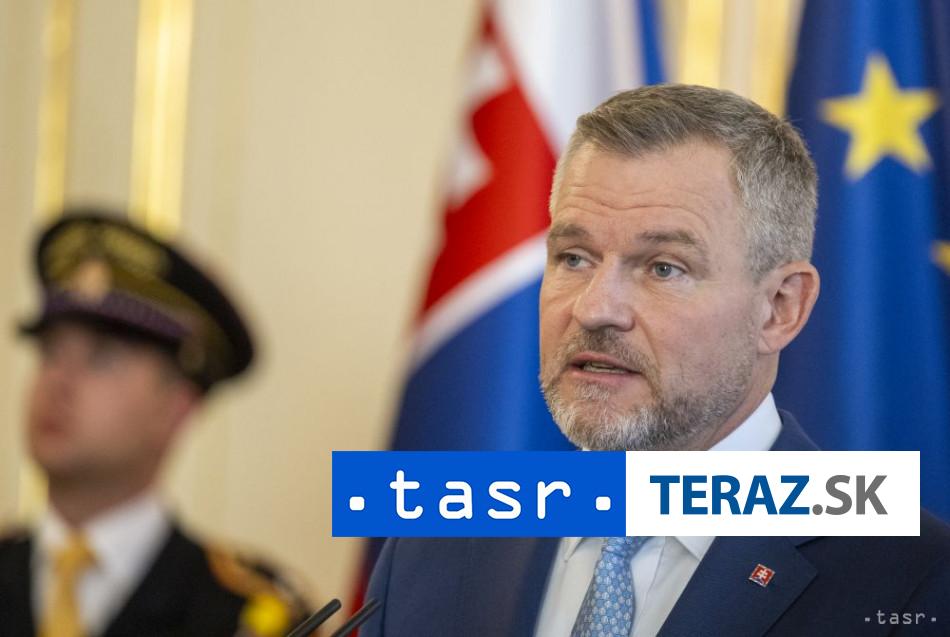
Political Scientist: Pellegrini's First Two Years as Slovak President Have Been Stable

Slovak President Peter Pellegrini has completed two years in office in a manner described by political analysts as stable, according to a political science assessment of his presidency. Pellegrini, who took office in 2024 after winning the presidential election, has focused on positioning himself as a so-called "third force" in Slovak politics — a mediating presence distinct from both the ruling coalition and the opposition. According to political scientist Darina Malová, this approach has been primarily verbal and symbolic, aimed at calming tensions between feuding politicians and bridging divisions in an increasingly polarized Slovak society. Slovakia has experienced significant political turbulence in recent years, marked by sharp divisions between the government of Prime Minister Robert Fico — whose Smer-SD party holds a dominant position in the ruling coalition — and a fragmented opposition, as well as deep societal splits over issues including the country's relationship with the European Union and the war in Ukraine. Pellegrini, himself a former prime minister and one-time Smer-SD member who later founded his own centrist party Hlas-SD, occupies a constitutionally limited but symbolically important role as head of state, making his balancing act between political camps a defining feature of his presidency.

|
Domestic Politics

Government Ally Dismisses Talk of Replacing Culture Minister Šimkovičová as Conspiracy

A Slovak government official has pushed back against speculation that Culture Minister Martina Šimkovičová could be removed from her post, calling such claims conspiratorial. Tomáš Michelko, an ally of the ruling coalition, dismissed the rumors circulating in political discussion programs, insisting there are no plans to replace the minister. Šimkovičová, a member of the Slovak National Party (SNS), a junior partner in Prime Minister Robert Fico's coalition government, has been a controversial figure since taking office, drawing criticism over her management of cultural institutions and public broadcasting. The dismissal of replacement talk suggests the coalition intends to maintain its current cabinet lineup despite ongoing public debate over the minister's tenure.

|
Domestic Politics

Slovak NGOs Self-Censoring Over Fear of Government Pressure, Amnesty International Warns

Some non-governmental organizations in Slovakia have stopped applying for public funding out of fear, according to a new Amnesty International report that documents growing pressure and intimidation against civil society groups in the country. The report describes an increasingly hostile environment for NGOs, with organizations choosing to forgo state financing rather than risk scrutiny or retaliation from authorities. The trend points to a chilling effect on civil society, where the mere threat of government pressure is enough to alter the behavior of independent organizations without any direct action being taken against them. The findings come amid broader concerns about the state of democratic institutions in Slovakia under the government of Prime Minister Robert Fico, whose Smer-SD party — a left-nationalist grouping that returned to power in 2023 — has repeatedly clashed with NGOs and independent media. Fico's government has rhetorically targeted civil society organizations, particularly those receiving foreign funding, framing them as foreign agents or political opponents. Amnesty International's assessment adds international weight to warnings from domestic critics who argue that the space for independent civic activity in Slovakia is shrinking significantly.

|
Domestic Politics

Hospital Operator Agel Misused €10 Million in EU Recovery Funds in Levice, Police Investigating

Slovak private hospital operator Agel improperly used €10 million from Slovakia's Recovery Plan — the country's allocation of post-pandemic EU reconstruction funds — at its facility in Levice, a town in southwestern Slovakia, in violation of the program's rules. Police have opened an investigation into the case. The Recovery Plan, formally known as the Recovery and Resilience Plan, channels billions of euros from the European Union to member states for investment in areas such as healthcare, education, and infrastructure. Strict EU and national rules govern how these funds may be spent, and misuse can trigger demands for repayment and jeopardize future disbursements. Agel is one of the largest private healthcare providers operating in Slovakia, running multiple hospital facilities across the country. The case carries broader implications for Slovakia's management of EU funds, an area where the country has faced scrutiny in the past. Any confirmed misuse of Recovery Plan money could prompt the European Commission to withhold future tranches of funding, affecting the government's ability to finance planned reforms and investments.

|
Domestic Politics

Smer Officials Accused of Handing State Positions to Family Members and Partners

Slovakia's ruling Smer party is facing fresh accusations of nepotism, with relatives and romantic partners of party members allegedly receiving appointments to significant public positions. The claims form part of a broader pattern of patronage politics that critics say has deepened under Prime Minister Robert Fico's government. Among the specific allegations, sons and girlfriends of Smer figures are said to have been placed in state roles, while both Fico and Richard Raši — a senior Smer politician — are accused of making false public statements. In a separate but related item, Slovak National Party (SNS) leader Andrej Danko, whose party is part of the ruling coalition, has reportedly been using artificial intelligence to set his poetry to music. Smer-SD is Slovakia's dominant ruling party, led by Prime Minister Robert Fico, and holds a broadly left-nationalist, sovereigntist ideological orientation. It heads a coalition government that took power following the 2023 parliamentary elections. Accusations of cronyism and the placement of party loyalists in state institutions have been a recurring criticism of Smer administrations, raising concerns among opposition parties and civil society groups about the integrity of public institutions and the rule of law in Slovakia.

|
Domestic Politics

Matovič Offers to Help KDH If Opposition Unity Talks Fail

Igor Matovič, leader of the opposition movement Slovensko, has signaled willingness to throw a political lifeline to the Christian Democratic Movement (KDH) if efforts by fellow opposition leader Michal Šimečka to unite opposition parties fall through. Matovič made the offer despite his party having been excluded from what he referred to as 'Šimečka's foursome' — a grouping of four opposition parties attempting to coordinate ahead of future elections. KDH, a center-right Christian democratic party, is one of the parties involved in those unity discussions. Šimečka leads the liberal Progressive Slovakia party, currently the largest opposition force in Slovakia's National Council, the country's parliament. The statement underscores ongoing tensions within Slovakia's fragmented opposition, which is attempting to present a unified front against the ruling coalition led by Prime Minister Robert Fico's Smer-SD party. Matovič, a polarizing figure who previously served as prime minister before his government collapsed in 2021, has had a complicated relationship with other opposition parties, making his offer of support notable even if it comes with political strings attached.

|
Domestic Politics

Key Witness Peter Tóth Set to Testify in Ján Kuciak Murder Case

Peter Tóth, a former private investigator, is scheduled to testify in the ongoing trial related to the murder of Slovak investigative journalist Ján Kuciak. Tóth has claimed that Marián Kočner, a controversial Slovak businessman and the central figure in the case, tasked him with surveilling journalists, including Kuciak. Kuciak was shot dead along with his fiancée, Martina Kušnírová, at their home in the village of Veľká Mača in February 2018. The murders shocked Slovakia and triggered some of the largest street protests the country had seen since the fall of communism, ultimately contributing to the resignation of then-Prime Minister Robert Fico. Kočner, who had a well-documented history of disputes with Kuciak and other journalists, was charged with ordering the killing. Tóth's testimony is considered significant because it could shed further light on the surveillance operation allegedly conducted against Kuciak in the period before his murder, helping establish the chain of events and potential motive behind the killing. Kočner was acquitted of ordering the murder by the Special Court in 2020, but the case has continued through the Slovak judicial system, with prosecutors appealing the verdict.

|
Domestic Politics

Slovak Political Parties to Share €14.3 Million in State Funding Based on 2023 Election Results

Eight political parties and one electoral coalition in Slovakia will divide nearly €14.3 million in state budget funding this year, allocated on the basis of their performance in the 2023 parliamentary elections. Under Slovak law, parties that surpassed the three-percent vote threshold in elections to the National Council — Slovakia's parliament — are entitled to receive annual public financing tied to their electoral results. The funding reflects a standard mechanism used across many European democracies to provide political parties with stable financial support from the state, reducing dependence on private donors. A total of nine political groupings qualified for the payments in this cycle.

|
Domestic Politics

Slovak NGO Head Calls for Economic Debate on Migration, Criticizes Fear-Based Politics

The head of a Slovak refugee integration organization says the country's political discourse on migration relies on fear rather than facts, and that economic arguments in favor of accepting refugees are being ignored. Michaela Pobudová, who leads Mareena, a civic association focused on refugee integration in Slovakia, argues that every government finds refugees a convenient and cheap political topic to exploit. Despite widespread public anxiety about migration — fueled by political rhetoric — many Slovaks still actively help refugees in practice, she says. Pobudová is calling for a more grounded national conversation that takes into account the economic contributions refugees can make, rather than one driven by scaremongering. Migration has been a recurring political flashpoint in Slovakia, where the ruling coalition led by Prime Minister Robert Fico's Smer-SD party — a left-leaning nationalist movement — has consistently taken a hard line against refugee resettlement and used migration as a mobilizing issue with its voter base.

|
Domestic Politics

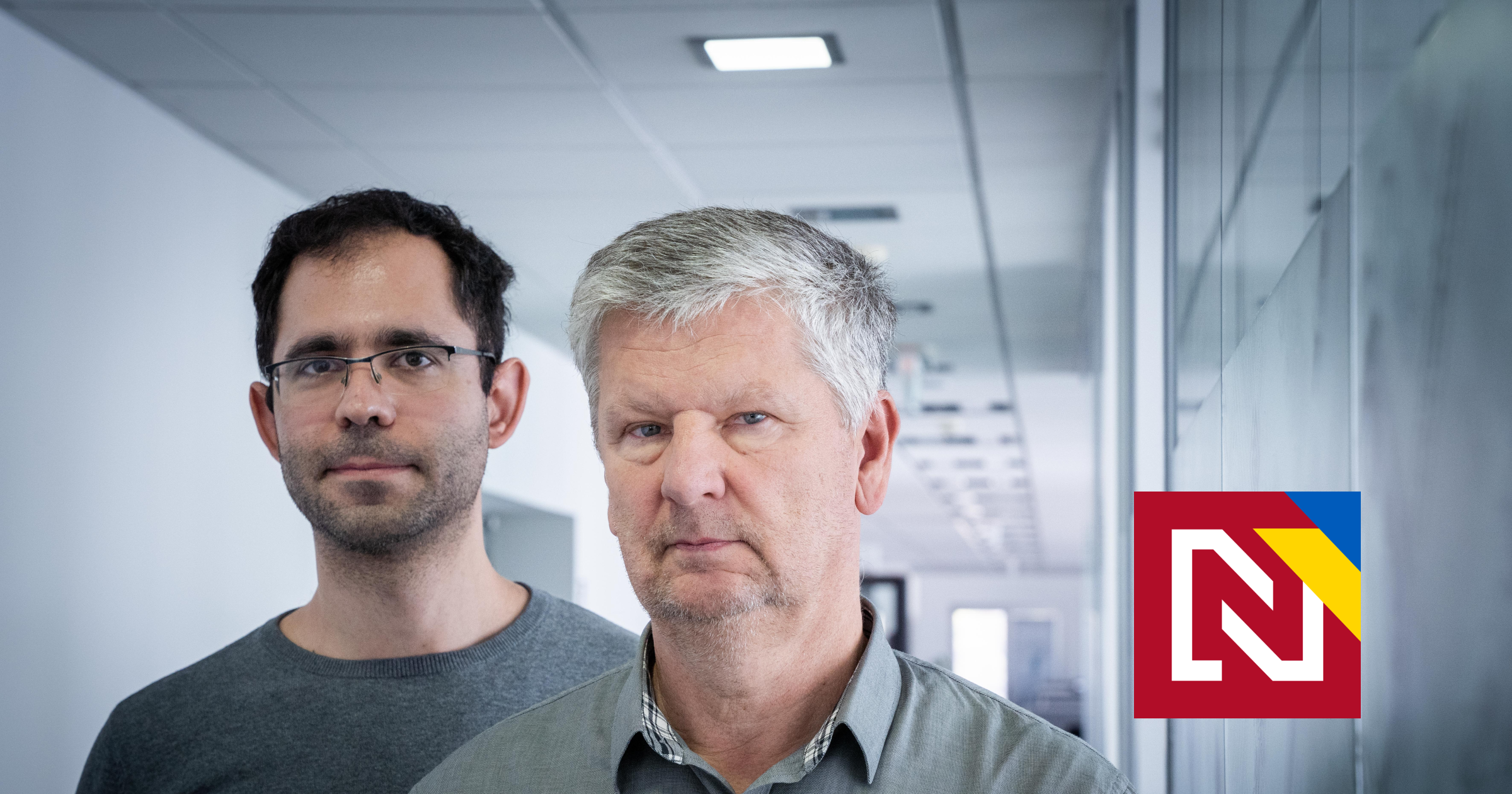
Slovak Commentators: Bad Government and Europe's Highest Costs

Slovak political commentators have raised sharp criticism of the current government, arguing that Slovaks not only suffer poor governance but also face some of the highest costs of living relative to wages in Europe. In a podcast discussion on Denník N, a leading Slovak independent newspaper, editor and commentator Oliver Brunovský and Napunk editor-in-chief Zoltán Szalay debated the state of Slovak politics, with the pair noting that an upcoming visit by Cypriot observers would give outsiders a revealing look at the realities of political life in Slovakia. The remarks reflect growing public frustration with the ruling coalition led by Prime Minister Robert Fico's Smer-SD party, which critics accuse of democratic backsliding and mismanagement of public finances.

|
Domestic Politics

How Hungary's Orbán Became a Political Blueprint for Slovakia's Fico

Slovak Prime Minister Robert Fico's relationship with Hungarian Prime Minister Viktor Orbán has evolved from historical nationalist rivalry into a close political alliance, with Orbán's methods of governance serving as a direct model for Fico's own approach to power. Despite a fraught history rooted in long-standing ethnic and territorial tensions between Slovakia and Hungary — including disputes over the rights of the Hungarian minority in Slovakia — Fico grew increasingly drawn to Orbán's ability to dominate public opinion, control media, and reshape state institutions to consolidate political power. Over time, the ideological distance between the two leaders narrowed considerably, and Orbán became what sources describe as a source of inspiration and a political template for Fico. Orbán, who leads Hungary's ruling Fidesz party and has governed Hungary since 2010, has been widely criticized by the European Union for undermining democratic norms, curtailing press freedom, and weakening judicial independence. Fico, who leads Smer-SD — a dominant left-nationalist party that returned to power in Slovakia in 2023 — has drawn similar criticism from EU institutions and Slovak civil society. The relationship between the two leaders extends beyond personal admiration: Orbán is reported to have actively engaged in Slovak electoral affairs, raising concerns among opposition figures and democratic watchdog organizations about foreign political interference within an EU member state.

|