Dávka - Your daily dose of Slovak news
Last refreshed: 27/07/2026 17:42 · 75 articles added
Stories are refreshed at 05:30, 10:30, 15:30, and 21:30 UTC.

Economy

View all1892 stories
Economy

Slovak Traditional Pastry from Brhlovec Village Earns EU Protected Designation

A traditional Slovak pastry known as 'Brhlovské podlievané buchty' has received a protected geographical designation from the European Commission, recognizing it as a product with distinct regional heritage. The pastry originates from Brhlovec, a small village in Slovakia, and has now been granted protected status under the EU's system for safeguarding traditional food products — a framework that prevents producers outside the designated region from using the name commercially. The European Commission determined that the product is closely tied to local traditions and knowledge passed down through generations, and that it remains an important part of the region's food culture for both local residents and visitors. The protected designation places the pastry alongside other recognized European regional specialties, offering producers legal protection and potentially boosting tourism and local economic activity.

|
Economy

Slovak Chamber of Commerce Conducted 11 Trade Missions Abroad in First Half of 2025

The Slovak Chamber of Commerce and Industry (SOPK), the country's primary organization representing business interests and facilitating trade relations, conducted 11 trade missions abroad in the first half of the year, according to Chamber President Mihók. At the same time, Slovakia received 12 incoming trade missions from foreign partners. The Chamber also provided 671 advisory and consultancy services to businesses during the same period. The figures reflect ongoing efforts by Slovak business institutions to expand international commercial ties and support domestic companies in accessing foreign markets.

|
Economy

Slovak Grain Harvests Expected to Vary Sharply by Region This Year

Slovak farmers are warning that this year's grain harvests will be exceptionally uneven in both quantity and quality, depending on the region. Harvesting is currently underway in the southern and southwestern lowland areas of Slovakia, which are the first to be collected due to their lower elevation and warmer conditions. The wide variation is attributed to differences in rainfall intensity during critical weeks of the growing season, meaning some regions received adequate moisture while others did not. As a result, farmers expect significant disparities in yields across the country, complicating projections for overall national grain output this year.

|
Economy

British American Tobacco to Cut One-Fifth of Its Workforce

British American Tobacco (BAT), one of the world's largest tobacco companies, announced plans to reduce its global workforce by approximately 9,000 positions — roughly one-fifth of its total employees. The cuts are part of a broader restructuring effort as the company navigates declining cigarette sales and shifts investment toward next-generation products such as e-cigarettes and heated tobacco devices. BAT has a manufacturing presence in Slovakia, making the announcement of potential relevance to the local labor market, though the company has not specified which locations or divisions will be most affected.

|
Economy

Slovak Industry Groups Warn Against Government Interference in Economy

Slovakia's Chamber of Commerce and Industry has raised alarm over what it describes as arbitrary political interference in the country's economy, warning that such interventions contradict the interests of ordinary citizens and the business community alike. The chamber, which represents a broad cross-section of Slovak industrial and commercial enterprises, argued that heavy-handed government involvement in economic affairs is counterproductive and risks undermining business confidence and investment. The group did not specify individual measures by name, but its criticism points to a broader tension between the ruling coalition's economic policy approach and the priorities of the private sector. The warning reflects growing unease among Slovak business leaders about the direction of economic governance under the current government led by Prime Minister Robert Fico's Smer-SD party, a left-leaning nationalist movement that returned to power in 2023. Critics from the business community have repeatedly argued that politically motivated interventions distort markets and create uncertainty for investors, both domestic and foreign, at a time when Slovakia's export-driven economy faces broader challenges from slowing European demand.

|
Economy

Miloš Bikár Appointed New Chairman of Slovakia's Energy Regulatory Council

Miloš Bikár has been appointed as the new chairman of the Regulatory Council of ÚRSO, Slovakia's Regulatory Office for Network Industries, the body responsible for overseeing pricing and regulation in sectors such as electricity, gas, heat, water, and postal services. Bikár replaces Sylvia Kubinec Beňová, who previously led the council. ÚRSO plays a central role in Slovak energy and utility policy, setting tariffs and ensuring fair market conditions for both consumers and network operators. The leadership change at the council's helm could influence regulatory decisions affecting household energy costs and utility pricing across the country.

|
Economy

Slovak Tax Authority to Audit Social Enterprises Over Reduced VAT Claims

Slovakia's Financial Administration, the country's tax and customs authority, has announced it will conduct inspections of social enterprises to verify whether they are correctly applying reduced VAT rates. The checks are designed to ensure that only eligible businesses are benefiting from the lower tax rate, which is reserved for enterprises meeting specific social criteria under Slovak law. Social enterprises — businesses that prioritize social goals such as employing disadvantaged workers over profit — may qualify for preferential VAT treatment, but authorities want to confirm compliance with the rules governing such claims.

|
Economy

Slovak Entrepreneur Launches OK Riders, a Digital Assistant App for Drivers

Slovak entrepreneur and innovator Pavel Ciprys has launched OK Riders, a mobile platform aimed at drivers that goes beyond simple discount offers. Ciprys, who has a background in marketing, technology, and community building, describes the app as a comprehensive digital assistant for motorists rather than a conventional deals aggregator. He began developing his business experience during university studies, when he worked on projects in the energy sector. OK Riders is positioned to combine practical tools and services for drivers in one digital environment, though specific features and launch details were not fully disclosed.

|
Economy

Fuel Prices Hit Four-Month Low in Slovakia as Heatwave and Gulf Tensions Weigh on Outlook

Fuel prices in Slovakia have fallen to their lowest levels since March, offering some relief to drivers amid an ongoing extreme heatwave. Petrol averaged €1.65 per liter in mid-June, while diesel dropped to €1.53 per liter. However, renewed hostilities in the Persian Gulf — with attacks from both Iranian and American sides over the weekend — risk disrupting the fragile calm in global oil markets that has helped push prices down. Slovakia is also bracing for two more days of extreme heat, which analysts note tends to suppress worker productivity. Separately, the Slovak capital Bratislava may lose access to its Porsche Cayenne vehicles, though full details of that development were not elaborated in available reporting.

|
Economy

Porsche Plans to Move Cayenne Production from Slovakia to Germany, Reports Say

Porsche is planning to relocate production of its Cayenne SUV from Slovakia to its factory in Leipzig, Germany, according to the German newspaper Frankfurter Allgemeine Zeitung (FAZ). The move is aimed at increasing capacity utilization at the Leipzig plant. However, the transfer is conditional — it will only proceed if workers at the German facility agree to accept wage reductions. The Cayenne is currently assembled at Volkswagen's plant in Bratislava, which is one of Slovakia's most significant industrial employers and a major contributor to the country's manufacturing economy. A potential production shift would have considerable consequences for output levels and employment at the Slovak facility.

|
Economy

Human Adaptability Identified as Logistics Sector's Biggest Challenge

Technology can significantly accelerate day-to-day operations in the logistics sector, but the industry's greatest challenge remains people's willingness to embrace change, according to insights from practitioners in the field. Real-world examples demonstrate that while digital tools and automation offer substantial efficiency gains in supply chain and warehousing operations, successful implementation depends heavily on workforce adaptation and organizational culture. The logistics sector, a critical component of Slovakia's export-driven economy, has faced growing pressure to modernize in the wake of global supply chain disruptions and rising labor costs.

|
Economy

AI-Generated Fake Insurance Claims on the Rise, Insurer Warns

Artificial intelligence is enabling fraudsters to create increasingly convincing fake insurance claims, according to UNIQA, one of Slovakia's major insurance providers. The company says AI tools are being used to fabricate or manipulate evidence of damage — such as images and documents — making fraudulent claims harder to detect. In response, UNIQA says it is continuously monitoring the development of AI-generated content and regularly updating its own detection models to identify and flag suspicious claims. The trend reflects a broader challenge facing the insurance industry globally, as advances in generative AI lower the technical barrier for fraud, potentially driving up costs for insurers and, ultimately, for policyholders.

|
Economy

Slovak Toy Retailer Dráčik Posts Worst Results in a Decade, Closing Stores and Laying Off Staff

Slovak toy retail chain Dráčik is closing stores and cutting jobs after recording its weakest financial performance in ten years. The company, one of Slovakia's well-known toy and children's goods retailers, is scaling back its physical presence as it struggles with deteriorating sales. The move reflects broader pressures facing brick-and-mortar retail in Slovakia, where consumer spending on non-essential goods has been squeezed in recent years by inflation and rising living costs.

|
Economy

Slovak State Firm to Begin Demolition of Former Mining Complex in Handlová

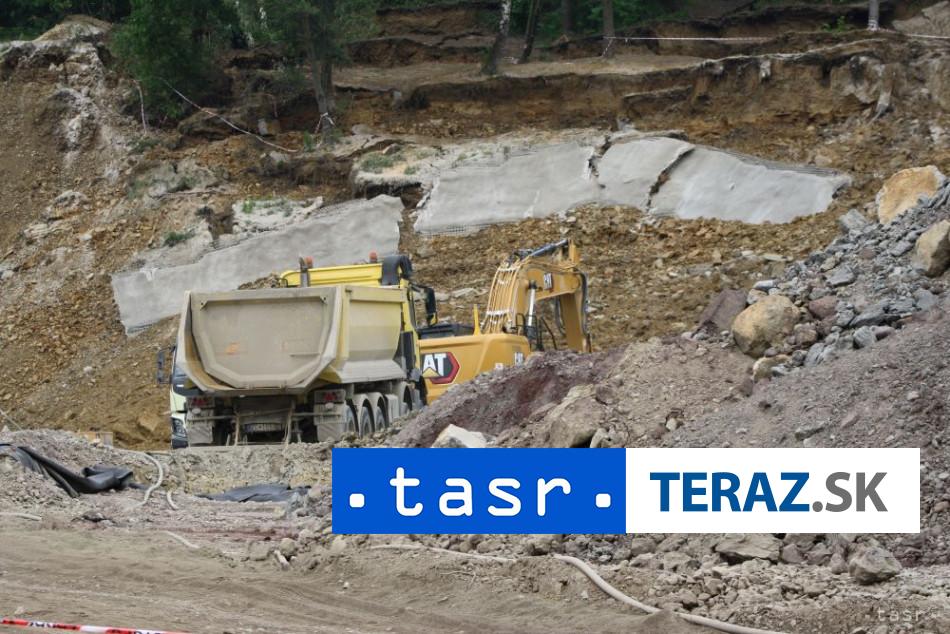
MH Invest, a Slovak state-owned investment company, has completed the process of selecting a contractor to demolish all structures and paved surfaces at the lower terrace of a former mining site in Handlová, a town in central Slovakia historically associated with coal mining. The demolition work marks the beginning of a broader transformation of the industrial area, which the company intends to redevelop. Handlová was long a center of brown coal extraction, and the redevelopment of its former mining infrastructure reflects Slovakia's gradual shift away from fossil fuel dependency. The clearance of the site's lower terrace is the first phase of the project, with further redevelopment expected to follow once demolition is complete.

|
Economy

Cash-on-Delivery Remains Costliest Payment Method for Slovak Online Retailers

Cash-on-delivery — a payment method where customers pay for purchases only upon receiving them — remains the most expensive option for Slovak e-commerce businesses, creating a financial burden that retailers are struggling to manage. While the method is popular among Slovak consumers who are cautious about prepaying for online orders, it generates significant costs for merchants, including handling fees, return logistics, and delayed cash flow. Eliminating cash-on-delivery entirely, however, risks alienating a substantial portion of customers who prefer or rely on the option, particularly those less comfortable with digital payments. Slovak online retailers are therefore under pressure to find a balance between accommodating customer preferences and maintaining financial viability, as abandoning the service could drive shoppers to competitors who still offer it.

|
Economy

Ryanair to Automatically Seat Children Next to Parents at No Extra Charge

Ryanair is changing its seating policy to automatically assign seats that keep families with children together, eliminating the need to pay extra for adjacent seats. The budget airline, one of Europe's largest low-cost carriers, says the new system will automatically allocate seats so that children are seated next to their parents or guardians without an additional fee. Ryanair has assured that the change will not negatively affect its revenues. The move addresses long-standing criticism that budget airlines effectively force families to pay optional fees to avoid being separated on flights.

|
Economy

Automation and Economic Shifts, Not AI, Pose Greater Threat to Slovak Jobs, Experts Warn

The most immediate threat to Slovak workers is not artificial intelligence but more conventional economic and structural forces that are steadily eroding job security, with the risk growing day by day. While public debate in Slovakia and across Europe has focused heavily on AI as the defining future disruption to the labor market, analysts point to more immediate pressures — such as industrial automation, shifting global supply chains, and economic slowdowns — as the factors most likely to cost Slovak workers their livelihoods in the near term. Slovakia's economy is heavily dependent on manufacturing, particularly the automotive sector, which employs a significant share of the workforce and is already undergoing painful restructuring driven by the transition to electric vehicles and cost-cutting by major producers. These changes are unfolding faster than workforce retraining programs can respond, leaving many workers vulnerable. The warning reflects a broader concern that Slovakia may be underprepared for economic disruption that is already underway, rather than a distant technological future.

|
Economy

European Stocks Fall as Bank, Auto, and AI Shares Drop

European stock markets declined broadly, dragged down by losses across the banking, automotive, and artificial intelligence sectors. Shares in Volkswagen, the German automotive giant, fell sharply following reports that the company may cut up to 100,000 jobs. The potential workforce reduction, if confirmed, would represent one of the largest layoffs in the automaker's history and reflects deepening pressure on the European car industry, which has been struggling with slowing demand, rising production costs, and the costly transition to electric vehicles.

|
Economy

Oil Prices Drop Sharply, But Fuel Costs at the Pump Remain Stubbornly High

Global crude oil prices have fallen sharply, with diesel returning to levels last seen before the outbreak of conflict in the Middle East, yet Slovak motorists are seeing only slow and limited reductions at the petrol pump. While diesel prices have tracked the decline in crude markets more closely, petrol prices have been falling at a significantly slower pace, raising questions about why the drop in raw material costs is not being passed on more quickly to consumers. The gap between falling wholesale oil prices and retail fuel costs is a recurring issue in many European markets, often attributed to refinery margins, distribution costs, taxes, and the pricing strategies of fuel retailers. For Slovak drivers, who rely heavily on personal vehicles due to limited public transport outside major cities, fuel prices have a direct and meaningful impact on household budgets.

|
Economy

Slovakia's Investment Ministry to Fund Only Minimum Projects From Digital Call, Jeopardizing Recovery Plan Targets

Slovakia's Ministry of Investment will support only a bare minimum of projects from a digital funding call, leaving the remaining applicants without financial backing. The decision risks undermining a key milestone tied to Slovakia's Recovery and Resilience Plan — the country's post-pandemic roadmap funded by the European Union that sets specific spending and reform targets Slovakia must meet to receive EU funds. By funding only enough projects to technically satisfy the milestone requirement while rejecting the rest, the ministry is meeting the letter but not the spirit of its commitments under the plan. The move raises concerns about Slovakia's ability to effectively absorb EU recovery funds and deliver on its digital transformation goals, which are central to the country's long-term economic modernization strategy.

|