Dávka - Your daily dose of Slovak news
Last refreshed: 28/07/2026 05:39 · 38 articles added
Stories are refreshed at 05:30, 10:30, 15:30, and 21:30 UTC.

Economy

View all1893 stories
Economy

Slovak Job Market Under Pressure: 36 Applicants Competing for Every Vacancy

Slovakia's labor market is showing significant signs of strain, with an average of 36 applicants competing for each advertised job position, according to data from Profesia, the country's leading online job portal. The surge in competition reflects growing pressure on job seekers as the number of available positions tightens relative to the pool of candidates. Adding to the shift in hiring dynamics, artificial intelligence is increasingly being used to screen and process CVs, changing how employers filter applicants before human recruiters ever review a candidate's profile. The trend signals a tougher environment for Slovak workers seeking employment, particularly in sectors where AI-driven screening tools may disadvantage applicants unfamiliar with how to tailor their documents for automated systems.

|
Economy

Bolt Holds First Driver Forum in Slovakia, Gathering Partner Drivers from Across the Country

Ride-hailing platform Bolt brought together 20 of its partner drivers from across Slovakia last week in Bratislava for the company's first Driver Forum in the country. The event was designed to give drivers a direct channel to communicate their concerns and experiences to the company, covering topics ranging from earnings and safety to the terms of their working relationship with the platform. Bolt, which operates as a gig-economy service where drivers work as independent contractors rather than employees, used the forum to gather firsthand feedback on what drivers find most challenging and what they value about working with the app. The initiative reflects growing attention across Europe to the working conditions and rights of platform-based drivers, as regulators and companies alike grapple with questions about pay, flexibility, and legal status in the gig economy.

|
Economy

Slovakia's Mortgage Reforms May Do Little for Young Buyers Without Adequate Incomes, Expert Warns

Planned changes to mortgage rules in Slovakia are unlikely to open up home ownership for most young people, according to financial experts. While the reforms are intended to make it easier for younger buyers to access higher loan-to-value mortgages — potentially covering up to 90 percent of a property's purchase price — banks cannot be compelled to actually offer such products. Without sufficient income, many young Slovaks would still be unable to afford even a small studio apartment. The core problem, experts argue, lies not in lending rules but in the gap between property prices and the wages that young workers typically earn, meaning that regulatory changes alone will not solve the underlying affordability crisis.

|
Economy

Slovak Pensions Among the Lowest in the Region — Yet Still Criticized as Too High

Slovak retirees receive some of the lowest pension payments in Central and Eastern Europe, yet the country's pension system faces persistent criticism that it is unsustainable and overly generous. Among neighboring and nearby countries, only Ukrainian pensioners receive less. Slovakia's pension levels lag significantly behind those in neighboring Austria, Czech Republic, and Poland when measured in absolute terms. However, critics — including economists and fiscal watchdogs — argue that pension spending as a share of the national economy is disproportionately high given Slovakia's demographics and the long-term pressure on public finances. This apparent contradiction stems from the gap between the low nominal value of individual pensions and the large number of pensioners drawing from the system relative to active workers contributing to it. Slovakia, like much of Europe, faces an aging population, meaning fewer working-age people are supporting a growing number of retirees. This demographic imbalance places mounting strain on the pay-as-you-go pension system, in which current workers' contributions directly fund current retirees' payments. The tension between keeping pensions affordable for the state and adequate for recipients is a central issue in Slovak social and fiscal policy, with no easy resolution in sight.

|
Economy

Rheinmetall Shares Plunge Nearly 20% After Last-Minute Contract Loss

Shares in Rheinmetall, the German defense and industrial giant, suffered their steepest single-day decline on record, falling nearly 20 percent on the stock exchange after the company lost a major contract at the last moment. The dramatic drop wiped billions from the company's market value, marking an unprecedented fall for a firm that had previously been riding high on surging European defense spending. Rheinmetall had been one of the biggest beneficiaries of increased NATO-linked defense investment across Europe following Russia's invasion of Ukraine in 2022, with its stock price climbing sharply over recent years as governments rushed to boost military procurement. The sudden loss of the contract reversed much of that investor confidence in a single trading session, underscoring how dependent the company's valuation had become on securing large-scale defense deals.

|
Economy

Slovak Train Drivers Threaten Mass Resignations Over Planned Cockpit Cameras

A dispute between locomotive drivers and Slovakia's Ministry of Transport has intensified over government plans to install surveillance cameras inside train cabs. Trade unions representing drivers are firmly opposed to the measure, and the head of a petition committee has warned that the policy could trigger a wave of resignations among experienced senior drivers. Transport Minister Ráž has signaled he has no intention of backing down from the plan. The potential loss of veteran drivers is seen as particularly serious because older, experienced locomotive operators play a critical role in the hands-on training of new recruits. A mass departure of this group could therefore deepen an existing shortage of qualified train drivers and undermine efforts to bring new personnel into the profession. The standoff reflects a broader tension in Slovak transport policy between management oversight — which the ministry argues is necessary for safety and accountability — and workers' rights concerns over privacy and surveillance in the workplace. With neither side showing willingness to compromise, the dispute risks disrupting rail operations in a country where train travel is a significant mode of public transport.

|
Economy

Slovakia Rolls Out Mandatory Electronic Invoicing System From January

Slovakia is introducing a mandatory electronic invoicing system that will replace traditional paper invoices and PDF attachments sent by email for domestic business transactions starting in January. The new system, known as eFaktúra, will require businesses and self-employed individuals to be able to receive electronic invoices even if they are not required to issue them. To ensure non-profit organizations can participate in the system, the state will automatically assign them a tax identification number without requiring an application. The ruling coalition made last-minute amendments to the VAT law to address technical problems identified with the rollout. To ease the transition, Slovakia's Financial Administration — the tax authority responsible for collecting taxes and enforcing compliance — will not issue fines for errors until the end of March 2027, giving businesses and organizations time to adapt to the new requirements.

|
Economy

Slovak Rail Procurement Office Clears Path for Billion-Euro Railway Modernization Tender

Slovakia's Public Procurement Office has dismissed complaints challenging the outcome of a major railway modernization tender, allowing the billion-euro project to move forward. The complaints were filed by an unsuccessful consortium led by Austrian construction giant Strabag, which had contested the winning bidder's qualifications — specifically questioning whether the winner had sufficient experience in railway tunnel construction. The procurement office ruled the objections were unfounded. The tender was issued by Železnice Slovenskej republiky (ŽSR), Slovakia's national railway infrastructure company, and covers the modernization of a rail line between Liptovský Hrádok and Paludza, a stretch in the Liptov region of central Slovakia. The project is part of broader efforts to upgrade Slovakia's aging rail network, often funded with European Union co-financing. The rejection of the complaints clears a significant legal obstacle and signals that the procurement process can advance toward a contract award. Disputes over large public tenders are common in Slovakia, where losing bidders frequently use the complaints mechanism to delay or reverse decisions, making the procurement office's ruling a notable step toward the project's eventual implementation.

|
Economy

Czech Energy Giant ČEZ Establishes New Slovak Subsidiary to Consolidate Energy Operations

ČEZ, the Czech state-controlled energy company and one of Central Europe's largest electricity producers, has established a new subsidiary in Slovakia designed to bring together its distribution, sales, and energy services operations under a single corporate umbrella. The move is part of a broader reorganization of the company's Slovak business activities. ČEZ has long maintained a significant presence in Slovakia's energy market, operating across multiple segments including electricity distribution networks and retail energy sales. The creation of the new subsidiary reflects a trend among major European utilities to streamline operations and consolidate related business functions, potentially improving efficiency and reducing administrative costs. The restructuring comes at a time when European energy companies are navigating significant market pressures, including volatile energy prices and the ongoing transition toward renewable energy sources. By consolidating its Slovak operations into a unified structure, ČEZ aims to strengthen its competitive position in the Slovak market.

|
Economy

Slovak-Owned Firms Outperformed Foreign Companies in Profitability, Data Shows

Domestically owned companies in Slovakia have outperformed their foreign-owned counterparts in recent financial assessments, with Slovak firms reaching a peak profit level of 2.785 billion euros in 2023. The findings suggest that locally owned businesses demonstrated greater resilience and competitiveness when measured against key economic benchmarks. The result is notable in a small, open economy like Slovakia's, which has long been heavily reliant on foreign direct investment — particularly in the automotive and manufacturing sectors — making the relative strength of domestic firms a significant economic development worth monitoring.

|
Economy

Slovak Economic Commentary: Macroeconomic Certainties

A commentary piece on macroeconomic conditions in Slovakia has been published by Denník N under the column 'Danglár.' The article, which appears to be an opinion or analysis piece, addresses macroeconomic certainties affecting the Slovak economy. However, the full content of the article is not available for detailed reporting.

|
Economy

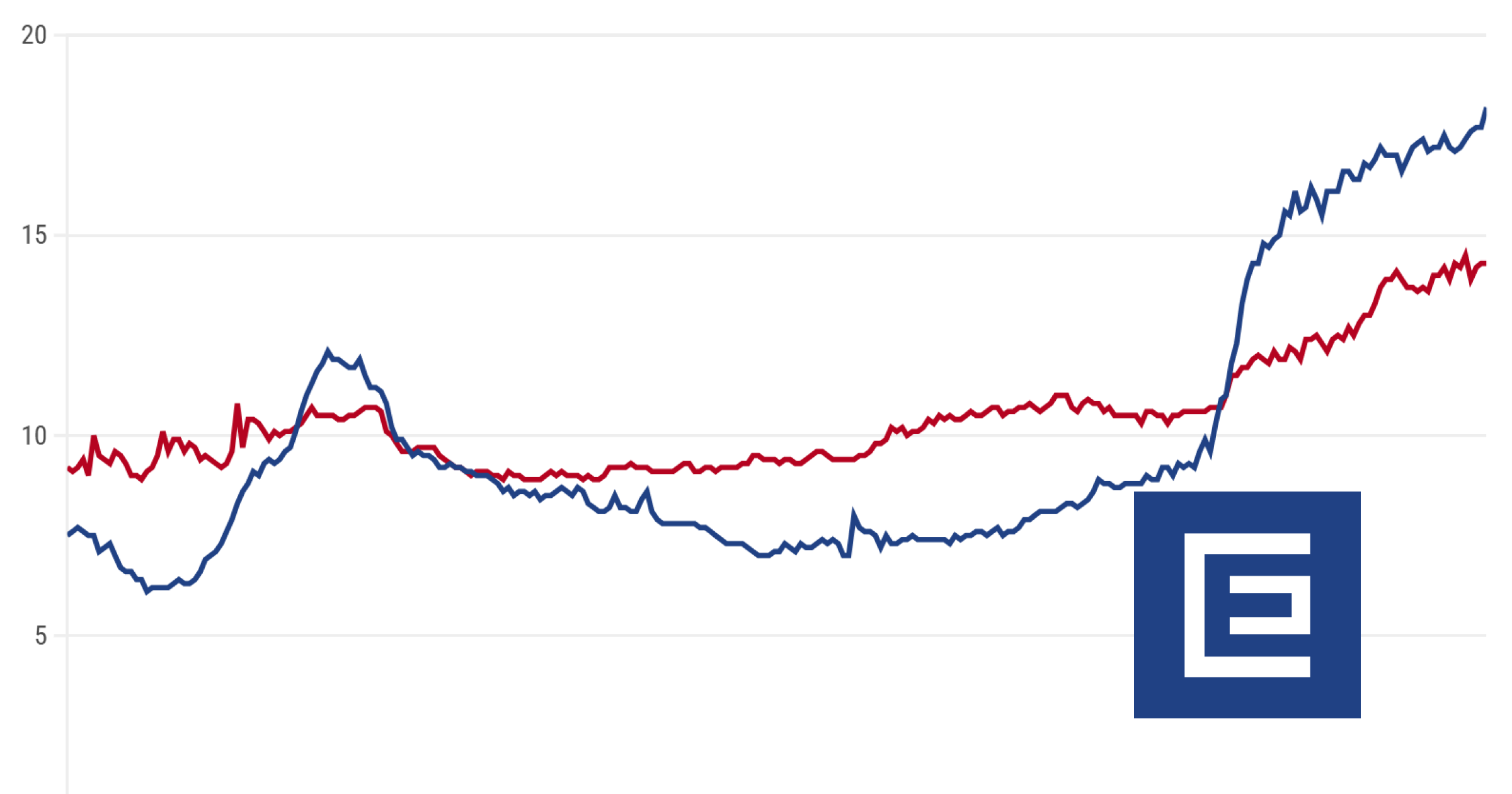
Renting Beats Buying in Bratislava as Apartment Prices Surge 14% in May

Renting an apartment in Bratislava has become financially more attractive than taking out a mortgage, as Slovak property prices continued their sharp upward climb in May, rising 14 percent year-on-year. While rental prices have increased only modestly, the cost of purchasing a home has surged dramatically, pushing property values increasingly out of step with household incomes and the broader economic reality facing Slovak families. Analysts note that in the short term at least, renting offers a more affordable path to housing for many residents of the Slovak capital. The widening gap between soaring purchase prices and stagnant wage growth raises concerns about housing affordability in Slovakia, particularly in Bratislava, where demand for urban housing remains high. The trend mirrors patterns seen across Central Europe, where post-pandemic property booms have put homeownership out of reach for growing numbers of middle-income earners.

|
Economy

Slovak Infrastructure Minister Prioritizes Road Planning Before Setting New Priorities; Zemplín Motorway Project Advances

Slovakia's infrastructure minister has said he wants to complete the preparation phase for road projects before setting new investment priorities, adding that the planned motorway to the Zemplín region in eastern Slovakia is progressing on schedule. The minister stated the project has not been delayed by a single day. The Zemplín region, one of the least developed areas of Slovakia, has long awaited improved motorway connections to the rest of the country, with better road infrastructure seen as critical to attracting investment and reducing the economic gap between western and eastern Slovakia. No new timeline or specific milestones were announced.

|
Economy

Slovakia's Central Bank Sees First Signs of Cooling Mortgage Market

Slovakia's housing loan market is showing early signs of slowing down, the National Bank of Slovakia has reported. The central bank noted that a number of households took advantage of a period of falling interest rates to take out or refinance mortgages, driving a surge in demand. However, that wave of activity now appears to be tapering off, with the bank identifying the first indicators that the mortgage market is beginning to cool. The National Bank of Slovakia serves as the country's central banking authority, responsible for monetary stability and financial market oversight.

|
Economy

Slovakia's Investment Property Market Faces Risk of Sharp Price Drop

Investment properties in Slovakia may no longer be the reliable wealth-building asset they once were, with analysts warning that an oversupply of available units could trigger a rapid and sudden fall in prices. Unlike gradual market corrections, a supply glut in the real estate sector tends to produce sharp, abrupt price declines, potentially catching investors off guard. Slovakia's property market has seen strong investment activity in recent years, with many buyers purchasing apartments and commercial spaces as a hedge against inflation or as rental income sources. However, if the volume of properties available for sale exceeds demand — a scenario increasingly discussed among market observers — the value of those assets could drop steeply in a short period, undermining their status as a safe long-term investment.

|
Economy

Santander Bank to Cut 3,000 Jobs as AI Replaces Workers

Spanish banking giant Santander is offering early retirement to approximately 3,000 employees as the bank accelerates its adoption of artificial intelligence. The voluntary departure program reflects a broader trend across the financial sector, where banks are increasingly turning to AI-driven automation to handle tasks previously performed by human staff. Santander, one of the largest banks in the eurozone with operations across Europe and Latin America, has framed the program as voluntary, meaning affected employees will be offered incentives to leave rather than being dismissed outright. The move underscores growing concerns among labor groups about AI's long-term impact on white-collar employment in the financial industry.

|
Economy

Gold Price Falls Below $3,100 per Troy Ounce as Dollar Strengthens

Gold prices dropped below $3,100 per troy ounce as the U.S. dollar gained strength, pushing down the value of the precious metal. Gold and the dollar typically move in opposite directions, as a stronger dollar makes gold more expensive for buyers using other currencies, reducing demand and driving prices lower.

|
Economy

Slovakia Lags Behind EU Peers — and Even Ukraine — in Tech Innovation, Former Finance Minister Warns

Slovakia is falling further behind its European neighbors in technology and innovation, with conditions for tech companies ranking among the worst in the European Union, former Finance Minister Ivan Mikloš has warned. Writing in Denník N, Mikloš pushed back against claims by Education Minister Tomáš Drucker that Slovak science is progressing, arguing that the reality is far more troubling. Slovakia has no so-called 'unicorns' — privately held startup companies valued at over one billion dollars — while neighboring Romania, as well as Ukraine and Belarus, have already produced such firms. Mikloš noted that Slovakia ranks second-worst in the EU for conditions facing technology companies, and that the country's gap with its peers is widening rather than closing. The critique carries weight given Mikloš's background: he served as finance minister and is widely regarded as one of the architects of Slovakia's post-communist economic reforms in the early 2000s. The absence of high-value innovative firms is a significant concern for Slovakia's long-term economic competitiveness, particularly as EU economies increasingly shift toward digital and knowledge-based industries. The disagreement between Mikloš and Minister Drucker highlights a broader debate within Slovakia about whether the country's investment in research and development is producing meaningful results.

|
Economy

Slovak Law Requiring Cashless Payments Backfires as Banks Fail to Connect to New System

A new Slovak government regulation requiring businesses to accept cashless payments has created an unexpected burden for honest merchants, after the state failed to integrate all banks into the new payment system. The case of one small business owner, referred to as Iveta, illustrates the problem: attempting to comply with the law, she ended up losing 88 euros — the result of a technical gap between the legal obligation imposed on merchants and the incomplete infrastructure the state put in place to support it. While businesses are now legally required to offer customers a non-cash payment option, not all banks have been connected to the new system, leaving some merchants caught between a legal mandate they cannot fully fulfill and financial losses they did not anticipate. The situation highlights a broader issue in Slovak public administration: regulations are introduced without ensuring that the technical and institutional groundwork is fully in place. For small business owners operating on tight margins, the consequences are not abstract — they translate directly into lost time, wasted energy, and real financial damage.

|
Economy

Škoda Unveils Peaq, Its Largest-Ever SUV, Featuring Physical Controls and Extended Range

Czech automaker Škoda has introduced the Peaq, the largest SUV in the brand's history, targeting buyers with a combination of physical buttons and long driving range. The model, which sits at the top of Škoda's SUV lineup, will be available in Slovakia, though the entry-level, least powerful variant will not be offered in the Slovak market. Škoda, part of the Volkswagen Group, has been expanding its electric and hybrid SUV offerings in recent years as competition in the large SUV segment intensifies across Europe.

|