Dávka - Your daily dose of Slovak news
Last refreshed: 28/06/2026 21:39 · 34 articles added
Stories are refreshed at 05:30, 10:30, 15:30, and 21:30 UTC.

Domestic Politics

View all2796 stories
Domestic Politics

Slovakia's coalition government considers postponing postal voting ban amid internal disagreements

Slovakia's ruling coalition is struggling to reach agreement on proposed changes to electoral law, with the nationalist SNS party now suggesting the elimination of postal voting from abroad should be delayed until September. The coalition, led by the social-democratic Smer-SD party, has been unable to secure consensus among its partners during the first week of parliamentary sessions in May. An SNS representative indicated they would propose to Smer that the postal voting changes be postponed to allow more time to persuade coalition partners that other electoral reforms beyond just postal voting are also important. The disagreement highlights ongoing tensions within the three-party coalition government, which also includes the populist Hlas party, over electoral legislation that opposition parties and international observers have criticized as potentially restricting voting rights for Slovak citizens living abroad.
|
Domestic Politics

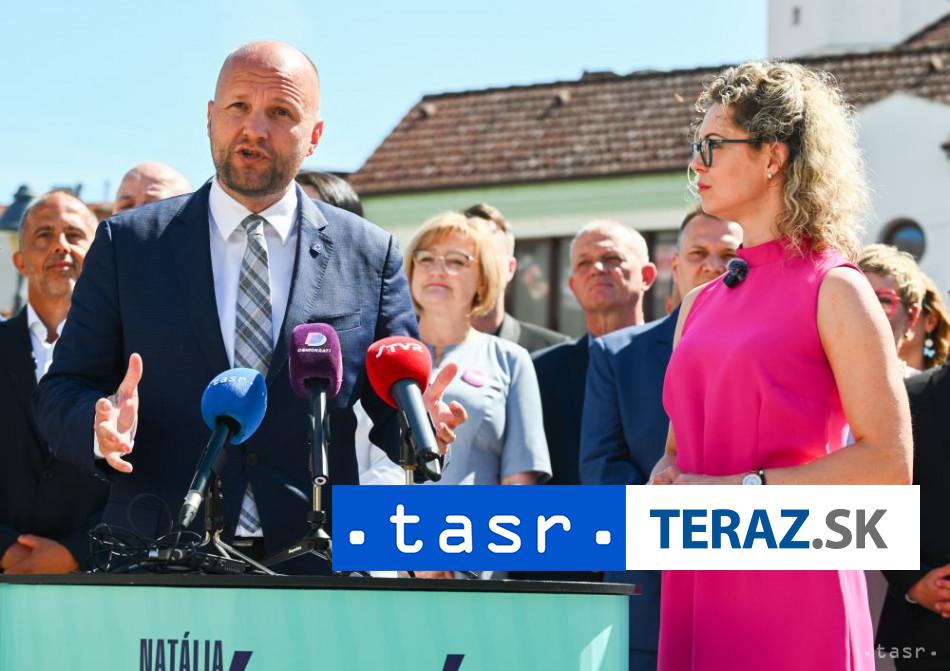
Svítková to Run for Trenčín Region Governor

Natália Svítková announced her candidacy for governor of Trenčín Region in Slovakia's upcoming regional elections. Her campaign priorities include maintaining regional presence across all parts of the region and keeping regional hospitals under direct regional government control rather than transferring them to private companies or other entities. The Trenčín Region, located in western Slovakia, is one of eight self-governing regions that oversee healthcare, education, and infrastructure at the regional level.

|
Domestic Politics

Political Commentary Analyzes Parliamentary Procedure Testing

A political commentary by J. Hrabko examines the significance of testing procedures involving A. Hlina, suggesting these tests serve to gauge reactions from parliamentary session chairs. The commentary appears to focus on parliamentary dynamics and procedural aspects within Slovakia's National Council, the country's parliament.

|
Domestic Politics

Majority of Slovaks Call for Parliamentary Speaker Gašpar to Resign, Poll Shows

Growing public pressure is mounting on parliamentary speaker Peter Gašpar to step down from his leadership position, according to a new opinion poll conducted by Ipsos agency for Denník N newspaper. The survey reveals that a majority of the Slovak public supports Gašpar's departure, with calls for his resignation extending even to a portion of voters from his own party, Smer-SD. Smer-SD is Slovakia's ruling social-democratic party, which leads the current government coalition. The poll results indicate declining confidence in Gašpar's leadership of the National Council, Slovakia's parliament, suggesting potential political challenges ahead for the ruling party as public opinion turns against one of its key figures.

|
Domestic Politics

Real oversight of Slovakia's intelligence service does not exist, opposition MP claims

Opposition lawmaker Mária Kolíková from the liberal Freedom and Solidarity (SaS) party argued that effective oversight of Slovakia's intelligence service does not exist. Kolíková, speaking about existing legislation governing the Slovak Information Service (SIS), said the current legal framework allows for very formal interpretation that undermines meaningful supervision. Her comments highlight ongoing concerns about accountability mechanisms for Slovakia's main intelligence agency, which handles national security matters including counterintelligence and protection of state secrets.

|
Domestic Politics

Slovak Parliament Debates Energy Bill to Tighten Preferential Power Supply Rules

The National Council, Slovakia's parliament, is reviewing proposed amendments to energy legislation aimed at tightening rules for preferential electricity and gas supply arrangements. The parliamentary session on Friday follows the traditional format of debate without voting, with proceedings scheduled to conclude at 4 PM. The proposed changes would impose stricter regulations on companies and institutions that currently benefit from favorable energy tariffs, though specific details of the restrictions were not immediately disclosed.

|
Domestic Politics

Opposition Parties Criticize Government Support for Major Companies

Two opposition parties in Slovakia's parliament raised concerns about government assistance to major corporations during Tuesday's political proceedings. Freedom and Solidarity (SaS), a liberal opposition party, criticized government support for Slovnaft, the country's largest oil refinery owned by Hungary's MOL Group. Meanwhile, Progressive Slovakia (PS), another opposition party, questioned aid provided to Váhostav, a major Slovak construction company. The criticisms came as the National Council, Slovakia's parliament, held its regular session, with opposition parties using the platform to challenge the ruling coalition's economic policies toward large businesses.

|
Domestic Politics

Slovak Opposition Leader Calls SaS Members 'Useful Idiots', Sparking Coalition Crisis

Igor Matovič, leader of the Ordinary People party (OĽaNO), escalated tensions within Slovakia's opposition by calling two members of the liberal Freedom and Solidarity party (SaS) "useful idiots." The verbal attack has deepened divisions among opposition parties, which have struggled to present a unified front against the ruling government led by Robert Fico's Smer-SD party. Progressive Slovakia (PS), another opposition party, has now called for Matovič to withdraw from politics entirely. The conflict highlights ongoing instability within Slovakia's fragmented opposition, which has been weakened by internal disputes since losing power in 2023. Matovič previously served as prime minister from 2020 to 2021 but has remained a controversial figure known for inflammatory rhetoric that has alienated potential coalition partners.

|
Domestic Politics

Slovak Police Chief Denies Daily Contact with Prime Minister Fico

Slovak Police President Ľubomír Gašpar denied having daily contact with Prime Minister Robert Fico or meeting with him privately. Gašpar made the comments while discussing the upcoming television program "Očistec" (Purgatory), where he said the focus would be on addressing biased investigations rather than their content. The statement comes amid ongoing scrutiny of the relationship between Slovakia's police leadership and the government of Fico's ruling Smer-SD party, which has faced criticism over its handling of law enforcement and judicial independence since returning to power.

|
Domestic Politics

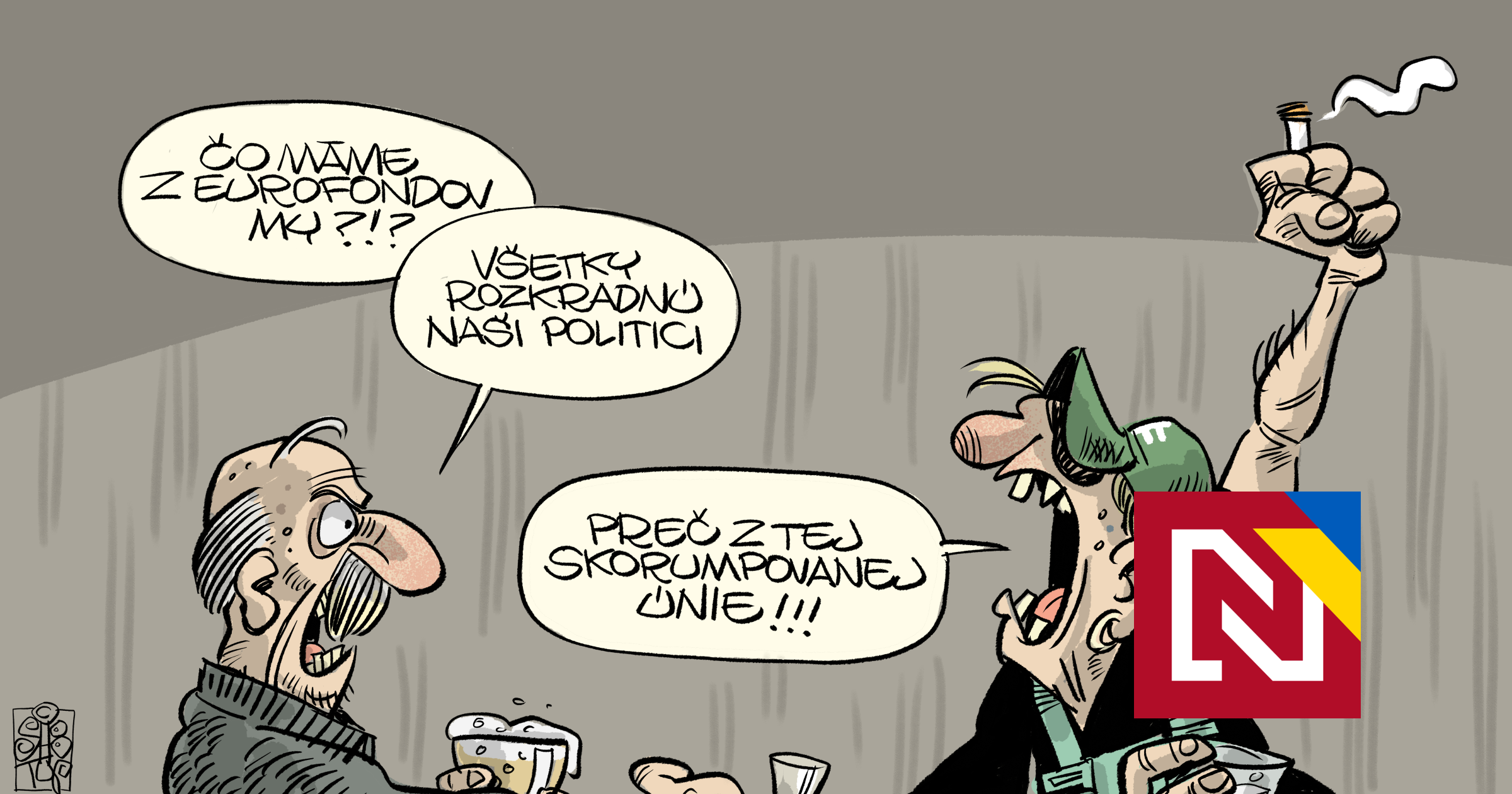
Slovak Commentary Warns Country May Not Survive EU Fund Mismanagement Despite Historical Resilience

A Slovak commentary has drawn attention to the country's historical resilience, noting that while Slovakia survived major historical challenges including Mongol invasions, Ottoman rule, Magyarization policies, fascism, and communism, it may not survive the mismanagement of European Union funds. The commentary suggests Slovakia needs to abandon what it calls an "algorithm of certainty" and find an "algorithm of courage" to address current challenges. The piece highlights concerns about Slovakia's ability to properly utilize EU funding mechanisms, suggesting this represents a more fundamental threat to the country's future than the various foreign occupations and authoritarian regimes it has endured throughout its history.

|
Domestic Politics

Commentary: Slovakia Must Replace 'Algorithm of Certainty' with 'Algorithm of Courage'

A Slovak commentary piece argues that while the country has survived historical challenges including Tatar invasions, Turkish rule, Magyarization policies, fascism, and communism, it may not survive its current relationship with European Union funding. The piece suggests Slovakia needs to abandon what it calls an 'algorithm of certainty' and instead embrace an 'algorithm of courage' to address contemporary challenges.

|
Domestic Politics

Slovak Parliament Concludes Session with Heated Debate Over National Progress Report

Slovakia's National Council ended its parliamentary session with a contentious discussion about the country's progress report, which was marked by mutual accusations between political factions. The debate highlighted ongoing tensions in Slovak politics as lawmakers scrutinized the government's performance and policy achievements. The session also addressed fiscal projections showing that Slovakia's public finance deficit is expected to decline more slowly than previously anticipated in the coming years, indicating potential challenges for the country's budgetary targets and economic planning.

|
Domestic Politics

New EU Funds Project Launched Under Agriculture Minister Takáč

Slovakia's Agriculture Ministry under Minister Richard Takáč has initiated a new major European Union funding project, according to recent reports. The development comes amid broader concerns about political discourse and the effectiveness of proposed initiatives. Political analysts have noted declining standards in public debate, with misinformation affecting basic principles of political decency. A recent survey also indicated that certain proposed projects lack viability and may not materialize as planned.

|
Domestic Politics

New EU Funds Scandal Emerges as Political Standards Deteriorate

A new large-scale misuse of European Union funds is being launched, according to Slovak media reports. The development comes as political discourse in Slovakia continues to deteriorate, with lies becoming increasingly common and undermining basic standards of decency in public life. Slovakia receives billions of euros in EU structural and cohesion funds, which are meant to support economic development and infrastructure projects but have been repeatedly subject to corruption scandals involving political figures and connected businesses.

|
Domestic Politics

Slovak Prime Minister's University Discussion Linked to Student Exam Access in Košice

A controversy has erupted at a university faculty in Košice over claims that students were required to attend a discussion with Prime Minister Robert Fico before being allowed to take their exams. While the dean of the Košice faculty maintains that attendance at the meeting with the prime minister was not a condition for exam participation, students have alleged that those who refused to attend the discussion with Fico faced having their exams cancelled. The incident highlights tensions over academic independence and potential political pressure within Slovakia's higher education system.

|
Domestic Politics

Slovak Government Funds Flow to Media Outlet with Problematic Reputation

Multiple Slovak government ministries are directing public funds to a media portal that has attracted controversy, according to reports. The outlet has been securing public advertising contracts from various state departments. The flow of government advertising money to media organizations is a sensitive issue in Slovakia, where concerns about media independence and the potential for political influence through selective funding allocation have been ongoing topics of debate. Such arrangements can raise questions about editorial independence and the appropriate use of taxpayer money for government communications.

|
Domestic Politics

Progressive Slovakia MP Eyes Finance Ministry, Promises to Scrap Transaction Tax

Progressive Slovakia lawmaker Štefan Kišš has openly declared his ambition to become finance minister, outlining sweeping tax reforms he would implement if his opposition party comes to power. Kišš said scrapping the controversial transaction tax would be among the first legislative priorities of a new government, alongside changes to income tax and value-added tax. He argued that Slovakia is losing more than one billion euros annually in tax collection compared to when the current government took office, attributing this decline to poor tax policy implementation. Progressive Slovakia is the largest opposition party in the National Council, Slovakia's parliament, and has positioned itself as a liberal alternative to the ruling coalition led by the populist Smer-SD party. The transaction tax, introduced by the current government, has been criticized by businesses and opposition parties as harmful to economic competitiveness.

|
Domestic Politics

Slovak Parliament to Vote on Environment Minister's Dismissal June 1

Slovakia's parliament will debate a no-confidence motion against Environment Minister Tomáš Taraba on June 1 at 9 AM. The opposition party Progressive Slovakia (PS) has called for Taraba's dismissal, accusing him of failures in his ministerial duties and endangering EU funding for Slovakia. The vote represents the latest challenge to the current government coalition, which has faced multiple opposition attempts to remove individual ministers from office. Taraba, who serves in the coalition government led by Prime Minister Robert Fico's Smer-SD party, would need to survive a majority vote in the National Council, Slovakia's parliament, to remain in his position.

|
Domestic Politics

Slovak State Subsidizes Pro-Russian Website with Košice Connections

The Slovak government is providing subsidies to a pro-Russian website, according to reports. The publication has connections to Košice, Slovakia's second-largest city in the eastern part of the country, and its publisher expects to receive additional funding. The website's operations involve various contributors, with one figure named Garbár described as only an occasional correspondent by someone identified as Sopko. The state funding of media outlets with pro-Russian editorial positions raises questions about government media policy amid broader European concerns about Russian information influence.

|
Domestic Politics

Police Inspection Service Investigates Death of Young Female Police Officer in Western Slovakia

The Office of Police Inspection Service is investigating the circumstances surrounding the death of a young female police officer in Nitriansky Rudno, a village in western Slovakia. Former Interior Minister Roman Mikulec from the opposition party Hnutie Slovensko (Slovakia Movement) reported the incident as a suicide, stating that the officer was allegedly a student at the Police Academy. The Police Inspection Service, which handles investigations into police conduct and incidents involving law enforcement personnel, has launched a formal inquiry into the circumstances of the death.

|