Dávka - Your daily dose of Slovak news
Last refreshed: 26/06/2026 21:40 · 42 articles added
Stories are refreshed at 05:30, 10:30, 15:30, and 21:30 UTC.

Domestic Politics

View all2766 stories
Domestic Politics

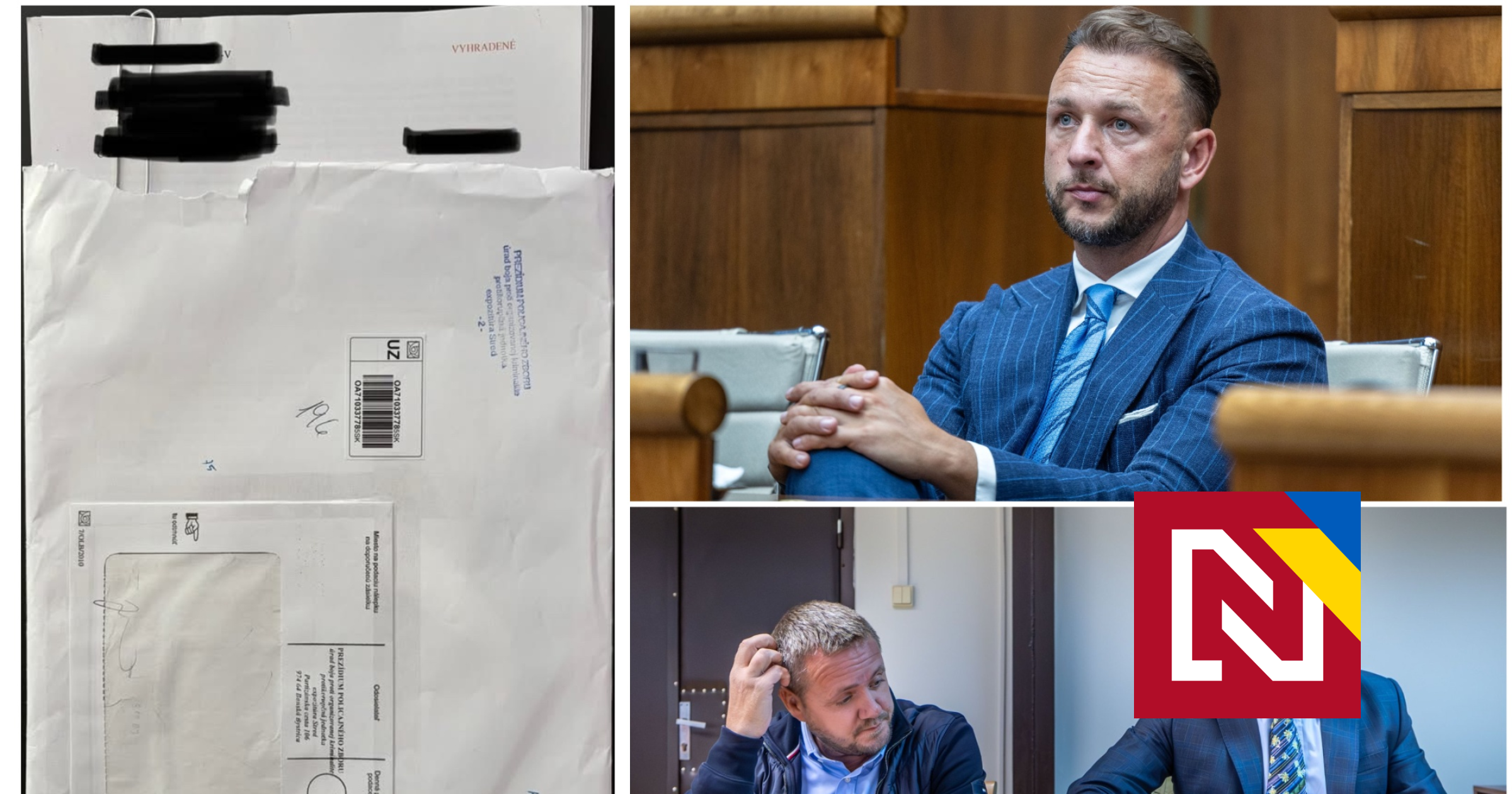
Slovak Police Mailed Classified Information to Suspended Investigators, Lawyer Suspects Possible Trap

Slovakia's police presidium sent packages containing classified information by ordinary mail to a group of suspended investigators and their lawyer, raising questions about whether the incident was an administrative blunder or a deliberate attempt to entrap them. The packages were addressed to the suspended investigators associated with Ján Čurilla — a prominent anti-corruption detective who was removed from his post — and to their defense lawyer Peter Kubina. Kubina publicly disclosed the incident, questioning whether it amounted to a security breach or a calculated trap, since handling classified materials without proper authorization is a criminal offense under Slovak law. Čurilla and the investigators around him were among Slovakia's most high-profile anti-corruption figures before being sidelined in a broader shakeup of the police force under the current government led by Prime Minister Robert Fico. Their removal was widely criticized by the opposition and civil society groups as an attempt to dismantle independent investigative capacity. Kubina, in a public statement, asked whether the mailing was merely an isolated administrative error by an individual, or whether it represented a deliberate intelligence operation designed to place classified documents in his possession and subsequently expose him to criminal liability. The police presidium has not yet publicly explained how the classified materials came to be sent through regular post.

|
Domestic Politics

Slovakia's Constitutional Court Rulings Create Political Headaches Over Electoral Districts

Slovakia's Constitutional Court has been issuing rulings that are complicating the political landscape around the country's electoral district boundaries. The court, which serves as the ultimate arbiter of constitutional matters in Slovakia, has been fulfilling its legal mandate in ways that create friction with political interests — as electoral districts remain a highly sensitive issue that parties guard closely for strategic advantage. The configuration of voting districts can significantly affect which parties gain or lose seats in the National Council, Slovakia's parliament, making any court-driven changes a matter of intense political concern.

|
Domestic Politics

Opinion: Eastern Slovakia's Cycle of Broken Promises and Enriched Insiders

A commentary published in the Slovak daily SME argues that repeated attempts to develop eastern Slovakia have followed a familiar and cynical pattern: efforts are launched, and the primary beneficiaries turn out to be well-connected insiders rather than the broader population of the region. The piece, titled 'Cynical Beast: The Enchanted East,' suggests that eastern Slovakia remains caught in a cycle where political promises of regional development consistently fail to deliver meaningful change for ordinary residents, while certain individuals with the right connections profit from the process. Eastern Slovakia, centered on the city of Košice, has long lagged behind the capital Bratislava in economic development and employment opportunities, making it a recurring subject of policy debate and political pledges.

|
Domestic Politics

Slovakia's Supreme Audit Office to Investigate Audit That Led to Dismissal of Nearly 60 Public Broadcaster Employees

Slovakia's Supreme Audit Office (NKÚ), the country's independent state financial watchdog, has launched an investigation into an audit that resulted in the dismissal of nearly 60 employees at STVR, Slovakia's public broadcaster. The NKÚ's probe will examine the work of the private auditing firm responsible for the report that triggered the mass layoffs, raising questions about the validity and conduct of the original audit. The auditing firm at the center of the controversy has worked on multiple contracts with other state institutions and municipalities, suggesting its reach extends well beyond STVR. The NKÚ's scrutiny could have implications not only for the dismissed broadcaster employees, but potentially for the integrity of audits conducted at other publicly funded bodies. STVR, the Slovak public television and radio broadcaster, has been a focal point of political tension in Slovakia in recent years, with the ruling coalition led by Prime Minister Robert Fico's Smer-SD party making significant changes to public media. The mass dismissals following the disputed audit have drawn criticism from media freedom advocates and opposition figures, who have raised concerns about political interference in public broadcasting. The NKÚ's investigation adds a new layer of institutional scrutiny to a case with significant implications for press freedom and the independence of public institutions in Slovakia.

|
Domestic Politics

Opposition Party Calls for Investigation Into Lawmaker's Asset Declaration Over Undisclosed Apartment

The opposition party Progresívne Slovensko (Progressive Slovakia) has filed a formal complaint calling for an investigation into a member of parliament, Ján Mažgút, over alleged irregularities in his asset declaration. The party is asking the National Council's — Slovakia's parliament — Committee on Incompatibility of Functions to examine the case, accusing Mažgút of failing to disclose an apartment in his official property declaration. In Slovakia, elected officials are legally required to submit detailed asset declarations to ensure transparency and prevent conflicts of interest. The Committee on Incompatibility of Functions is the parliamentary body responsible for reviewing such declarations and investigating potential violations. Failure to accurately disclose assets can constitute a serious breach of public office obligations, and the outcome of the committee's review could have disciplinary or legal consequences for the lawmaker.

|
Domestic Politics

Slovak Police Detain 14 Suspects and Seize Nearly Five Tonnes of Hard Drugs in Operation Urus

Slovak police detained 14 people and seized nearly five tonnes of hard drugs in a major anti-narcotics operation codenamed Urus. The operation represents one of the largest drug busts in recent Slovak law enforcement history, targeting what authorities describe as a significant narcotics trafficking network. Slovakia, situated at the crossroads of central Europe, has long been a transit country for drug smuggling routes connecting Western and Eastern Europe, making large-scale interdiction operations a key priority for national law enforcement agencies.

|
Domestic Politics

Slovak Man from Bratislava Sentenced to 17 Years in U.S. for Running Darknet Marketplace

A man named Adam, a resident of Petržalka — a district of Bratislava, Slovakia's capital — has been sentenced to 17 years in prison by a United States court for operating an illegal marketplace on the darknet, the hidden part of the internet commonly used for anonymous criminal transactions. Darknet markets typically facilitate the sale of illegal goods such as drugs, stolen data, and counterfeit documents, shielded from conventional law enforcement tracking. The case underscores ongoing international cooperation between U.S. authorities and European law enforcement in prosecuting cybercrime originating abroad.

|
Domestic Politics

Opposition MP Brandishes Conflicting Documents Over Damaged Hospital Pillars

A dispute over the structural condition of a hospital construction project in Slovakia has intensified after opposition lawmaker Juraj Naď presented two contradictory official documents — one stating 168 pillars were damaged and another claiming no damage at all. Naď, a member of the opposition and former defence minister, published a contract termination notice served to the original construction consortium, drawing attention to what he alleges are serious inconsistencies in how the project has been managed and documented. The hospital project has become a focal point of political controversy in Slovakia, with opposition figures accusing the ruling coalition of mishandling a major public infrastructure investment. The contradictory documentation raises questions about the integrity of oversight over the construction, which is funded with significant public money. The conflicting records could have legal and financial consequences, potentially affecting liability for any structural defects and the terms under which the original contractor was dismissed from the project.

|
Domestic Politics

Michalovce Mayor Announces Re-election Bid with Ruling Party Support

Miroslav Dufinec, the current mayor of Michalovce, a city in eastern Slovakia, has announced he will seek another term in office. His candidacy has received backing from both Smer-SD and Hlas-SD, two of the three parties that form Slovakia's ruling coalition. Smer-SD is the dominant social-democratic party led by Prime Minister Robert Fico, while Hlas-SD is a center-left party that broke away from Smer in 2020. The joint endorsement from both parties gives Dufinec a significant political advantage heading into the local elections.

|
Domestic Politics

Opposition Party Files Criminal Complaint Over Transport Ministry's PPP Advisory Contract

Slovakia's liberal opposition party Freedom and Solidarity (SaS) has filed a criminal complaint over a government procurement contract awarded by the Ministry of Transport for consulting services related to public-private partnership (PPP) projects. The party alleges the contract raises serious doubts about its economic efficiency and transparency. SaS, a center-right, pro-European opposition party, has questioned whether the procurement process followed proper procedures and whether public funds were spent appropriately. PPP projects involve cooperation between state authorities and private companies to finance and deliver public infrastructure, such as roads or railways, and often involve large sums of public money. The complaint adds to broader tensions between the opposition and Slovakia's ruling coalition government led by Prime Minister Robert Fico's Smer-SD party. The transport sector has been a recurring focus of scrutiny in Slovakia, given the scale of infrastructure investment and the potential for irregularities in public procurement. A criminal complaint in Slovakia triggers a formal review by police and prosecutors, who must assess whether grounds exist for a full investigation.

|
Domestic Politics

Classified Court Ruling Mailed to Čurilla Defense Team, Prompting Criminal Complaints

A classified legal ruling was sent by post to the defense team of Ľudovít Čurilla, a former senior police official facing prosecution, triggering multiple criminal complaints and raising serious questions about a potential security breach. The classified document — a court resolution that should have been handled under strict secrecy protocols — arrived unsolicited through ordinary mail, prompting the defense lawyer, attorney Kubina, to publicly question whether the incident represented a genuine security failure or a deliberate trap set to compromise the defense. Čurilla is a former high-ranking Slovak police officer who became a prominent figure in a wave of prosecutions targeting individuals from the security and political establishment under the previous government. His case is among several high-profile proceedings handled by the Special Prosecutor's Office, the body responsible for investigating serious corruption and organized crime in Slovakia. The unauthorized transmission of classified judicial documents outside secure channels is a serious legal matter under Slovak law, and the filing of criminal complaints signals that multiple parties regard the incident as potentially criminal in nature. The episode adds to ongoing tensions surrounding the handling of sensitive materials in high-profile Slovak prosecutions, where accusations of procedural manipulation and political interference have surfaced repeatedly. Whether the mailing of the classified ruling was an accidental breach or an intentional act — and by whom — is now subject to formal criminal investigation.

|
Domestic Politics

Slovak Court Fines Communists for Displaying Hammer and Sickle Billboards

A Slovak court has convicted and fined members of a communist group for publicly promoting communism through billboards featuring the hammer and sickle symbol. The Specialized Criminal Court — a tribunal established to handle serious crimes including extremism cases — handed down financial penalties in the ruling. Slovakia, like several other post-communist Central European countries, prohibits the public promotion of totalitarian ideologies, including both Nazism and communism, under its criminal code. The hammer and sickle, as the internationally recognized symbol of communist movements, falls under these restrictions when used in a propagandistic context. The case highlights the continued enforcement of Slovakia's anti-extremism laws, which reflect the country's historical experience under Soviet-era communist rule that lasted from 1948 until the Velvet Revolution of 1989.

|
Domestic Politics

Police Detain Another Suspect in Operation Programmer

Slovak police have detained another individual as part of an ongoing operation codenamed 'Programmer,' authorities confirmed. Officers are currently carrying out procedural steps with the detained person. No further details about the suspect's identity or the specific allegations have been released. Operation Programmer is an active law enforcement investigation, though full details of its scope and targets have not been publicly disclosed.

|
Domestic Politics

Opposition Parties Call Revised Energy Aid Scheme Still Wasteful

Two Slovak opposition parties have criticized the government's latest revisions to its household energy assistance program as inadequate, arguing that public funds are still being distributed without proper means-testing. The Christian Democratic Movement (KDH) and the Progressive Slovakia party (PS) — both opposition groups — contend that even after the recent adjustments, between 55 and 115 million euros are estimated to be spent in a non-targeted manner, effectively subsidizing households that do not need financial support. Slovakia's energy aid scheme was introduced to help citizens cope with elevated energy costs, but critics have long argued that blanket payments waste public money by going to wealthier households alongside those genuinely in need. The opposition's concerns highlight an ongoing debate in Slovak politics over how social and economic support should be distributed — whether through universal payments or through targeted programs that assess recipients' financial circumstances. With hundreds of millions of euros at stake across such schemes, the efficiency of public spending remains a politically sensitive issue ahead of future budget discussions.

|
Domestic Politics

Police Accidentally Send Classified Document to Čurillov Defence Team

Slovak police mistakenly sent a classified document to the legal defence team of a high-profile criminal case involving individuals connected to former elite investigator Ján Čurillov, a prominent figure in Slovak law enforcement who led major corruption investigations before becoming embroiled in legal proceedings himself. The document, which carried a security classification, was not intended for the defence lawyers, who do not hold the required security clearance to access such materials. The defence attorney, unable to legally read the document due to the lack of appropriate clearance, immediately handed it over to the National Security Authority — Slovakia's institution responsible for protecting classified information — rather than opening it. The lawyer publicly questioned whether the incident was accidental, raising the possibility that it represented a deliberate intelligence operation designed to compromise or test the defence team. The episode adds a new layer of controversy to a case that has already drawn significant attention in Slovakia, where questions about the conduct of police and intelligence services have been a persistent theme in political and legal debates.

|
Domestic Politics

Slovakia's Interior Ministry Reports 56% Success Rate in Collecting Unpaid Fines

A specialized unit within Slovakia's Interior Ministry has significantly improved the country's ability to collect unpaid fines, Interior Minister announced. The dedicated enforcement division has achieved a 56 percent success rate in recovering outstanding penalties — a figure the minister highlighted as evidence that the specialized approach is delivering results. The unit was established to address a longstanding problem of uncollected fines, which had represented a drain on public finances. A dedicated enforcement structure allows authorities to pursue unpaid penalties more systematically than under previous arrangements, where collection efforts were more fragmented.

|
Domestic Politics

Slovak Minister Accused of Channeling State Funds to Folklore Events Linked to Political Ally

Slovakia's Environment Minister Rudolf Huliak is facing accusations from opposition lawmakers that he is directing state money toward folklore festivals in ways that benefit Roman Malatinec, a political associate. An opposition parliamentarian challenged Huliak over the continued flow of public funds to folklore events in the Banská Bystrica region, suggesting the spending amounts to state-funded campaigning on behalf of Malatinec. Huliak defended the allocations by arguing that the Banská Bystrica region traditionally hosts a higher concentration of folklore events than other parts of the country, and therefore naturally receives more funding of this kind. The controversy is notable because Huliak himself had previously signaled an intention to cut such support, making the continued — and apparently increased — spending difficult to justify on policy grounds alone. Huliak leads the Slovak National Coalition (SNS-NKP), a nationalist grouping that is part of Prime Minister Robert Fico's ruling coalition. Critics argue the pattern of funding raises serious questions about the misuse of ministerial discretion to support political allies ahead of future elections.

|
Domestic Politics

Commentary: Fico's Attack on Opposition Party May Have Done It a Favor

A political commentary published by Aktuality argues that Slovakia's main opposition party, Progresívne Slovensko (Progressive Slovakia), should be grateful that Prime Minister Robert Fico brought renewed attention to the so-called 'Project Forum' affair. The piece, written by Martin Behul, suggests that while current political discussions focus on how to form a stable post-election government as an alternative to Fico's ruling Smer-SD party, the real challenge may lie not only in building coalition partnerships but also in addressing internal problems within Progressive Slovakia itself. Progressive Slovakia, a liberal pro-European party led by President Peter Pellegrini's former rival Michal Šimečka, has emerged as the leading opposition force in Slovak politics. Fico's decision to publicly highlight the Project Forum case — the details of which are debated — may have inadvertently forced the party to confront vulnerabilities in its own ranks before any future election campaign intensifies. The commentary reflects broader anxieties within Slovak opposition circles about whether Progressive Slovakia is fully prepared to present itself as a credible governing alternative to Fico's administration.

|
Domestic Politics

Key Witness Peter Tóth Links Mafia Figure Kočner to Kuciak Murder in Third Trial

A former journalist and Slovak intelligence operative is providing critical testimony in the third criminal trial connected to the 2018 murder of investigative reporter Ján Kuciak. Peter Tóth, who once worked for Slovakia's intelligence service (SIS) and later became a journalist, testified about connections between Marian Kočner — a controversial businessman and the alleged mastermind behind the killing — and associates from criminal circles, referring to a friend from what translates as the 'wet quarter,' a term linked to underworld networks. Kuciak was shot dead along with his fiancée Martina Kušnírová at their home in February 2018 in what became one of the most shocking political crimes in Slovak history. The murder triggered mass street protests and ultimately led to the resignation of then-Prime Minister Robert Fico. Kočner was acquitted of ordering the murder in two previous trials, despite evidence including encrypted messages that prosecutors said demonstrated his role in organizing the killing. Slovak courts have faced intense scrutiny over the case, with critics questioning whether justice has been fully served. The ongoing third trial represents another attempt by prosecutors to secure a conviction in the case, which continues to cast a long shadow over Slovak politics and the rule of law. Tóth's testimony is considered significant because of his dual background in intelligence and journalism, giving him unusual insight into the networks allegedly surrounding Kočner.

|
Domestic Politics

Podcast: Will Putin's Regime Collapse? And What 20 Years of Fico Tell Us About Slovakia

Slovak economists and political analysts Ivan Mikloš and Dalibor Roháč examine two major questions in a new episode of the Slovak political podcast 'Kde je sever?' (Where is North?): the prospects for the collapse of Vladimir Putin's authoritarian regime in Russia, and the lessons to be drawn from two decades of Robert Fico's dominance in Slovak politics. Fico, who leads Smer-SD, the ruling left-nationalist party, has been the central figure in Slovak politics since the mid-2000s, serving multiple terms as prime minister and shaping the country's political landscape. The podcast episode explores the long-term implications of his influence alongside broader geopolitical questions about Russia's political future.

|