Dávka - Your daily dose of Slovak news
Last refreshed: 20/06/2026 15:42 · 49 articles added
Stories are refreshed at 05:30, 10:30, 15:30, and 21:30 UTC.

Culture

View all1585 stories
Culture

Slovakia's Oldest Classical Music Festival Marks 80th Anniversary

Hudobné leto Trenčianske Teplice, regarded as the oldest classical music festival in Central Europe, is celebrating its 80th edition this summer in the Slovak spa town of Trenčianske Teplice. The anniversary festival opens on June 25 with a large orchestral concert featuring Georges Bizet's opera Carmen, performed by the Bohuslav Martinů Philharmonic from Zlín, a Czech ensemble named after the renowned Czech composer. The festival, which has endured for eight decades while countless other cultural events have come and gone, has long served as a multigenerational gathering point for lovers of classical music in the region.

|
Culture

Slovakia Marks 75 Years Since Communist President Gottwald Took Power in Czechoslovakia

A historical retrospective examines the circumstances surrounding Klement Gottwald's rise to the presidency of Czechoslovakia in mid-June 1948, marking the consolidation of communist rule over the country. Gottwald, celebrated in official propaganda as the 'first worker of the republic,' assumed office amid mandatory public celebrations orchestrated by the communist state, which had seized power in a coup earlier that February. Despite beginning his presidency with a ceremonial Catholic mass — a notable gesture in a country with strong religious traditions — Gottwald's regime subsequently moved to suppress and marginalize the Church, reflecting the broader anti-religious policies of Soviet-aligned communist governments across Eastern Europe. The five years of Gottwald's presidency, until his death in 1953, were marked by political purges, show trials, and the forced transformation of Czechoslovak society along Stalinist lines. The period remains a significant and painful chapter in Slovak and Czech collective memory, representing the end of democratic governance that would not be restored until the Velvet Revolution of 1989.

|
Culture

Museum of Ukrainian Culture in Svidník Marks 70th Anniversary with Exhibition

The Museum of Ukrainian Culture in Svidník, a town in northeastern Slovakia, is marking its 70th anniversary with a special exhibition tracing its history, development, and activities over seven decades. The museum, dedicated to preserving the cultural heritage of the Ukrainian minority in Slovakia, is one of the key institutions serving the country's Rusyn-Ukrainian community, which has historically been concentrated in the northeastern regions of the country.

|
Culture

Slovakia's 'The Bachelor' Winner Opens Up About Jealousy and Trust

Sabina Lipková, the winner of the Slovak reality television show 'Ruža pre nevestu' — the local version of the popular dating format 'The Bachelor' — has spoken candidly about the emotional challenges of watching her partner, Adrián, kiss other contestants during filming. Appearing as a guest on the online talk show 'Closer Talks,' Lipková admitted it was difficult to watch those moments, but said she now fully trusts him.

|
Culture

Book Review: 'Cynical Beast' Chronicles Russian Wealth

A Slovak commentary piece titled 'Cynical Beast: Proof of Russian Wealth' offers a brief, sardonic observation on the displays of Russian affluence, summed up in the phrase: 'Well, when they can afford it.' The piece appears to be a short opinion column or caption rather than a full news report, providing little substantive detail beyond the ironic remark.

|
Culture

Slovak Satirical Podcast Takes Aim at Ruling Party Smer

Slovak news outlet SME has released a new episode of its satirical podcast 'Piatoček,' which focuses on cases linked to members and associates of Smer-SD, the ruling social-democratic party led by Prime Minister Robert Fico. The podcast, whose title translates roughly as 'Little Friday,' uses satire to comment on political affairs in Slovakia.

|
Culture

Pohoda Festival 2026 Sells Out 33,000 Tickets in Record Time

Slovakia's Pohoda music festival has sold out all 33,000 tickets for its 2026 edition, setting a new record for the earliest sellout in the event's history. Organizers confirmed that all festival passes were snapped up with less than three weeks remaining before the event opens. Pohoda, held annually at an airfield in Trenčín in western Slovakia, is the country's largest and most internationally recognized music and arts festival, drawing audiences from across Europe.

|
Culture

Slovak Debut Film 'Last Season' to Premiere at Košice Festival Before Nationwide Release

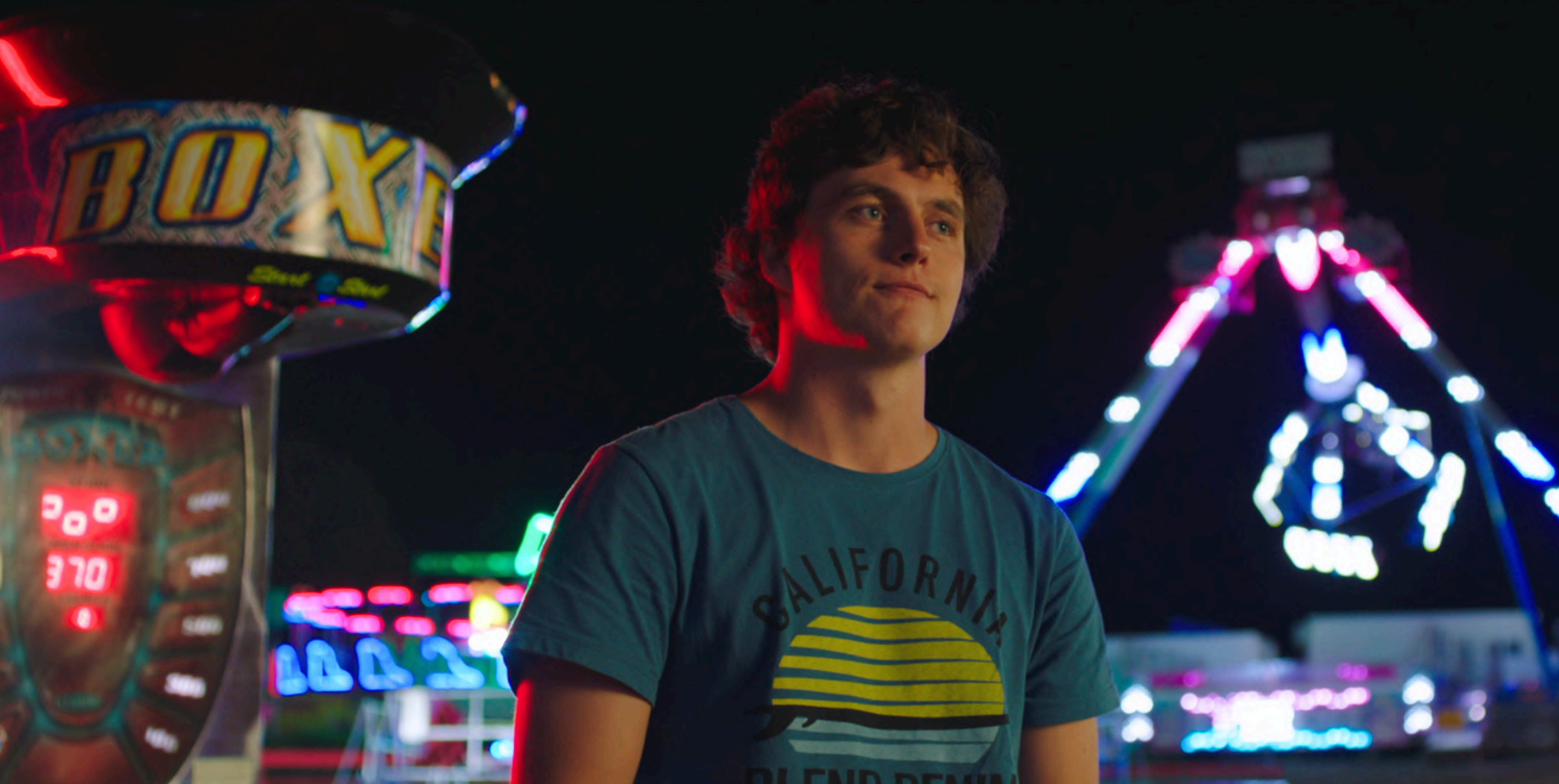
A new Slovak feature film, 'Posledná sezóna' (Last Season), is set to make its debut at the Art Film Fest festival in Košice before heading to cinemas across Slovakia in September. The film, directed by Pavol Hirjak and produced by Vladimír Sabadoš, tells the story of two young outsiders and was shot on location at Zemplínska Šírava, a popular reservoir and recreational area in eastern Slovakia. The project also serves as the filmmakers' graduation work from FAMU, the prestigious Prague-based Film and TV School of the Academy of Performing Arts, one of Central Europe's most respected film academies. Art Film Fest, held annually in Košice — Slovakia's second-largest city — is one of the country's leading film festivals, providing a prominent platform for emerging Slovak and international cinema.

|
Culture

Gelnica Concert by Kelly Family Draws Weak Ticket Sales Ahead of Scheduled Show

The eastern Slovak town of Gelnica is struggling to fill seats for an upcoming concert by the Kelly Family, the Irish-German musical group that became enormously popular across Central Europe in the 1990s. Ticket sales have been so slow that organizers have already moved the event from the town's stadium to the smaller amphitheater venue. It remains to be seen whether nostalgia for the band — whose folk-pop style made them a cultural phenomenon in Slovakia and neighboring countries during that decade — will be enough to draw crowds in time for the show.

|
Culture

Slovak Webcomic 'Shooty' Publishes New Strip

Slovak news outlet Denník N has published a new installment of its satirical webcomic 'Shooty,' titled 'Zhýralci' — roughly translated as 'Debauchees' or 'Libertines.' The comic strip is a regular feature of the publication, which uses humor and satire to comment on Slovak society and current affairs.

|
Culture

High Tatras Tourism Spot Wins Silver at International Festival

A three-minute promotional video for the High Tatras, Slovakia's most iconic mountain resort region, has won a silver award at an international festival, drawing global attention to the destination. The short film, produced to showcase the natural beauty and appeal of the High Tatras, impressed international judges and earned recognition among competing tourism campaigns from around the world. The High Tatras, a mountain range straddling the border between Slovakia and Poland and home to some of the country's most visited national parks and ski resorts, are a central pillar of Slovak tourism. The award highlights growing efforts by Slovak regional authorities and tourism bodies to market the country's natural landscapes to international visitors.

|
Culture

Innsbruck: A Spring Travel Guide to Austria's Alpine Capital

Innsbruck, the capital of Austria's Tyrol region and often called the capital of the Alps, offers visitors a striking combination of medieval architecture and mountain scenery. The city's most iconic landmark, the Golden Roof — a late Gothic oriel window decorated with 2,657 fire-gilded copper tiles, built in the 15th century — sits at the heart of the historic old town. In spring, the surrounding Nordkette mountain range, which rises directly above the city, remains capped with snow, creating a dramatic backdrop visible from street level. Cable cars departing from the city center carry visitors up into the alpine terrain within minutes. The city also offers a lively café culture, open-air markets, and shopping, all set against the Inn River, which flows rapidly through the urban landscape. Innsbruck is accessible from several Central European countries, making it a practical destination for a spring city break.

|
Culture

Bratislava Shelter Theatre Revives With New Stories After Turbulent History

A Bratislava theatre space known as the Azylový dom — Slovak for 'asylum house' — is drawing attention again with new productions and colourful behind-the-scenes stories, including its quirky coexistence with a persistent pigeon population. The venue, which operates as an independent theatre, has had a turbulent past linked to prominent Slovak figures including businessman Marian Kočner, who is known for his alleged involvement in the 2018 murder of investigative journalist Ján Kuciak, and a Russian national whose identity has not been fully specified in available reporting. An actor associated with the theatre described arriving to find the space in a state of neglect, littered with pigeon droppings and bones, noting with dry humour that the birds were there first. Kočner, one of Slovakia's most controversial public figures, was acquitted of ordering Kuciak's assassination by Slovak courts, though he has faced other criminal convictions. The theatre's ability to survive its association with such turbulent figures and continue producing work has made it a subject of public curiosity in Slovakia's cultural scene.

|
Culture

32nd Art Film International Film Festival Set to Draw Global Cinema Talent

The 32nd edition of the IFF Art Film festival is set to take place across seven days in a single Slovak host city, bringing together filmmakers, actors, and cinema enthusiasts for a week of screenings and industry events. Art Film Fest is one of Slovakia's most prominent international film festivals, dedicated to auteur and artistic cinema, and regularly attracts notable figures from the European and international film world. The festival serves as a key cultural gathering point on the Slovak arts calendar, offering audiences rare opportunities to engage with acclaimed directors and performers.

|
Culture

How Communist Czechoslovakia Used Political Prisoners as Forced Labor in Soviet Uranium Mines

After the United States demonstrated the destructive power of atomic weapons by bombing the Japanese cities of Hiroshima and Nagasaki in 1945, the Soviet Union launched an urgent drive to develop its own nuclear arsenal — a program that would have devastating consequences for thousands of political prisoners in Czechoslovakia. To secure the uranium needed for Soviet nuclear weapons, Communist authorities in postwar Czechoslovakia deliberately manufactured pretexts to imprison citizens, filling labor camps with a captive workforce that could be sent to toil in uranium mines under brutal conditions. Political show trials, fabricated charges, and mass arrests were used as tools not only of repression but of economic conscription, supplying the Soviet nuclear program with the raw material it required. The uranium mined by these forced laborers formed a key part of the supply chain for the Soviet atomic bomb, meaning that the suffering of Czechoslovak political prisoners contributed directly to one of the defining weapons programs of the Cold War. The practice stands as one of the darker chapters of Communist rule in Central Europe, illustrating how ideological repression and Soviet imperial demands combined to reduce ordinary people to instruments of a foreign military agenda.

|
Culture

South Bohemia: A Czech Region of Castles, Scenic Towns and Famous Beer

The South Bohemia region of the Czech Republic, nestled between the Vltava River, a network of historic fishponds and the forests of the Šumava mountains, offers travelers a rich mix of cultural and natural attractions capable of filling a weekend or a full week's itinerary. The area is known for its well-preserved castles, picturesque towns that evoke a film-set quality, and the home of Budvar — the Czech beer brand recognized worldwide. The region represents one of Central Europe's more accessible yet underappreciated travel destinations for visitors seeking history, architecture and outdoor scenery within easy reach of both Prague and the Austrian border.

|
Culture

Editorial Cartoon: Fly, Dove of Peace, Fly

Slovak daily SME published an editorial cartoon by illustrator Györe, titled 'Fly, Dove of Peace, Fly.' The cartoon, part of the publication's regular cartoon series, uses the traditional symbol of the dove of peace as its central image, reflecting on current themes of conflict and diplomacy.

|
Culture

Spielberg's New Film 'The Tether' Disappoints Despite Bold Premise on Extraterrestrial Life

Steven Spielberg's latest film, 'Day of Discovery,' raises a compelling question — how would humanity react upon learning it is not alone in the universe — but ultimately fails to deliver on its promise, according to critics. The film, directed by the Hollywood legend known for alien-themed classics such as 'E.T.' and 'Close Encounters of the Third Kind,' devolves into a straightforward battle between good and evil, pitting shadowy government institutions against ordinary people, rather than exploring the philosophical depths its premise suggests. Spielberg has publicly stated his belief that extraterrestrial life exists on Earth, a claim that scientists continue to treat with deep skepticism, emphasizing that no verified evidence of alien presence has been established. The film's release has nonetheless renewed public debate about the possibility of extraterrestrial life and how human institutions might respond to such a discovery.

|
Culture

Slovak Actress Monika Hilmerová on Her Role in TV Series 'Dunaj'

Slovak actress Monika Hilmerová has spoken about her experience filming the popular television series 'Dunaj,' saying the post-war period depicted in the show will not be an easy time for her character. Hilmerová also noted that she finds filming in winter conditions easier to cope with than shooting in summer heat.

|