Dávka - Your daily dose of Slovak news
Last refreshed: 25/06/2026 21:40 · 57 articles added
Stories are refreshed at 05:30, 10:30, 15:30, and 21:30 UTC.

World

View all3782 stories
World

Moldovan President Signs Laws to Exit Commonwealth of Independent States

Moldova's president has signed legislation to withdraw the country from the Commonwealth of Independent States, a post-Soviet organization that includes Russia and several former Soviet republics. Parliament approved the withdrawal law last week. The Commonwealth of Independent States was established in 1991 as a loose confederation of former Soviet republics, with Russia as its dominant member. Moldova's decision to exit the organization reflects the country's ongoing efforts to distance itself from Russian influence and align more closely with Western institutions, particularly as it pursues European Union membership.

|
World

Ecuador withdraws ambassador from Colombia over president's remarks

Ecuador has recalled its ambassador from Colombia in response to statements made by Colombian President Gustavo Petro. According to Ecuador's foreign ministry, Petro's comments constituted interference in Ecuador's internal affairs. The diplomatic move represents an escalation in tensions between the two South American neighbors, though the specific nature of the Colombian president's controversial remarks was not detailed.

|
World

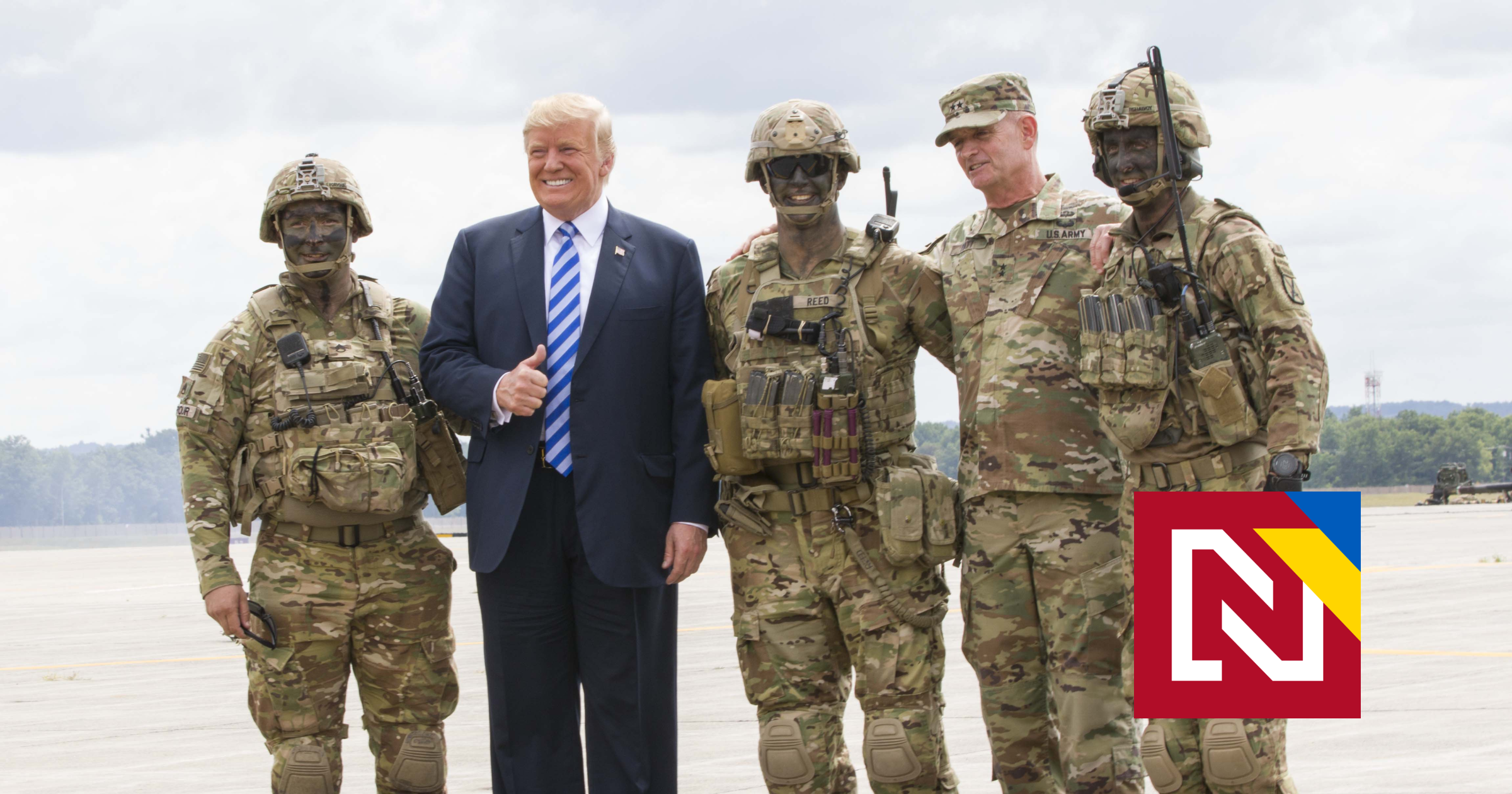
Analysis Outlines Five Scenarios for Trump's Potential Exploitation of War

A Slovak analysis has outlined five potential scenarios through which Donald Trump could exploit wartime conditions to consolidate power, describing him as an "aspiring dictator." The analysis suggests that by understanding these scenarios in advance, threats can be recognized and any coup attempts turned against Trump himself. The piece appears to focus on democratic safeguards and preparation against authoritarian overreach during crisis situations.

|
World

Slovak Commentary Questions Trump's Strategic Thinking on Iran

A Slovak media outlet has published commentary questioning the strategic coherence of Donald Trump's approach to Iran, describing Trump and strategic thinking as a "monstrous contradiction." The piece, titled "Where is the asymmetry in Iran?", appears to critique Trump's foreign policy reasoning regarding Iranian affairs, though it provides limited detail on specific policy positions or developments.

|
World

France Launches Massive Military Modernization Program Worth 36 Billion Euros

France has announced its largest military modernization program in decades, committing an additional 36 billion euros by 2030 to upgrade its armed forces. The investment will increase annual defense spending to 76 billion euros as security threats prompt the government to prioritize military capabilities over budget deficit concerns. The unprecedented funding boost represents France's response to mounting security challenges, marking a significant shift in government priorities as defense spending takes precedence over traditional fiscal constraints. The modernization effort aims to enhance France's military readiness amid an evolving threat landscape. The investment program reflects broader European trends toward increased defense spending following recent geopolitical tensions. France's commitment to substantially expand its military budget signals the country's determination to maintain its position as a major military power while addressing contemporary security challenges that require advanced capabilities and modern equipment.

|
World

UN Secretary-General's Special Envoy Arrives in Iran

A special envoy representing United Nations Secretary-General António Guterres has traveled to Iran amid ongoing regional tensions. The envoy, Arnault, is a French diplomat with extensive experience within the UN system who was appointed as Guterres' personal representative for the Iran conflict in March. The visit comes as the UN seeks to engage diplomatically with Iranian authorities on various regional security issues and conflicts involving the country.

|
World

Russia Welcomes Ceasefire Between United States and Iran

Russia has welcomed a ceasefire between the United States and Iran, according to a Kremlin spokesperson. Moscow expressed hope that both the US and Iran will be able to defend their national interests through diplomatic negotiations rather than military action. The Russian position reflects the country's broader diplomatic approach of encouraging dialogue between major powers in regional conflicts.

|
World

US-Iran War Cost America Tens of Billions, Lost Aircraft and Advanced Radar Systems

A military conflict between the United States and Iran resulted in tens of billions of dollars in costs for America, which lost several aircraft and important radar systems while depleting large stockpiles of Patriot and Tomahawk missiles. Israel killed 250 leaders of the Iranian regime during the conflict, and Iran lost substantial weapons stockpiles, had ships sunk, and suffered destruction of military infrastructure. Despite the extensive military losses inflicted on Iran, the campaign failed to achieve regime change in the country.

|
World

Iran Launches Missile Strikes on Kuwait and UAE Despite Regional Ceasefire

Iran fired rockets and drones at targets in Kuwait and the United Arab Emirates in the Persian Gulf, defying a fragile ceasefire in the region. Tehran justified the strikes as retaliation for an attack on its strategic oil refinery on Lavan Island. The escalation raises concerns about the potential expansion of regional conflict at a time when diplomatic efforts are focused on maintaining the delicate truce that had brought temporary calm to the volatile area.

|
World

Greece to Ban Social Media for Users Under 15, Calls for EU-Wide Action

Greece announced it will ban social media access for individuals under 15 years of age, describing the measure as difficult but necessary. The Greek government plans to ask the European Union to adopt similar restrictions across all member states. The move represents one of the strictest approaches to regulating youth social media access in Europe, as concerns grow about the impact of digital platforms on children's mental health and development.

|
World

Trump-backed candidate wins Georgia congressional special election

A Republican candidate endorsed by Donald Trump won a special election for a U.S. House of Representatives seat in Georgia. The victory by Fuller gives Republicans 217 seats in the House compared to 214 for Democrats, slightly expanding the GOP's narrow majority. Despite the loss, Democratic strategists noted their candidate achieved a notably strong performance in the traditionally Republican district.

|
World

Czech Police Arrest Seven People in European Union Subsidy Fraud Investigation

Czech police have detained seven individuals on suspicion of fraud involving European Union subsidies, including two high-ranking officials from the Czech Ministry of Industry. The arrests were part of a broader investigation that included 13 searches of homes and businesses, including the ministry building itself. The European Public Prosecutor's Office (EPPO) reported that authorities seized significant evidence during the operation, including two million euros frozen in bank accounts. The case highlights ongoing efforts by European authorities to combat fraud involving EU funding programs, which provide billions of euros annually to member states for various development and infrastructure projects.

|
World

Hungarian PM Orbán Appeals to Diaspora Voters as Parliamentary Elections Approach

Hungarian Prime Minister Viktor Orbán has called on Hungarians living abroad to support his ruling Fidesz party as the country prepares for parliamentary elections on Sunday. Speaking during the campaign period, Orbán told supporters that the Hungarian nation faces an important decision, warning of unspecified dangers that he claimed the country had not previously encountered. The appeal to diaspora voters represents part of Fidesz's broader election strategy as Orbán seeks to maintain his party's hold on power. Fidesz has governed Hungary since 2010, with Orbán positioning himself as a defender of Hungarian sovereignty while facing criticism from EU institutions over democratic backsliding and rule of law concerns.

|
World

Iraq Reopens Airspace as Regional Tensions Ease After US-Iran Ceasefire

Iraq's civil aviation authority officially reopened the country's airspace on Wednesday following the stabilization of regional tensions. The airspace had been closed for security reasons since the start of military conflict in the region. The decision to resume normal flight operations comes after an announced ceasefire between the United States and Iran helped reduce tensions in the Middle East.

|
World

Japan Plans to Significantly Increase Women in Military by 2036

Japan plans to increase the proportion of women in its military to approximately 13 percent of personnel by March 2036. The initiative comes as military forces globally work to expand female participation, with women currently comprising about 12 percent of armed forces personnel among NATO member countries and partner states as of 2022, according to the European Parliament Research Service.

|
World

Iranian Drone and Missile Attacks Hit Gulf States, Causing Civilian Casualties and Infrastructure Damage

A wave of Iranian drone and ballistic missile attacks struck several Persian Gulf states overnight Tuesday into Wednesday, causing significant material damage and civilian injuries. In Bahrain, shrapnel from the strikes hit residential buildings, injuring civilians in their homes. The United Arab Emirates also suffered major damage as the strategic Habshan gas complex was forced to suspend operations following a fire caused by the Iranian assault. Qatar also reported damage from the nighttime attacks, marking a significant escalation in regional tensions as Iran's military campaign extended beyond its typical targets to affect civilian infrastructure and populations across multiple Gulf Arab nations.

|
World

To Lam Becomes Vietnam's Top Leader After Presidential Election

To Lam has been elected president of Vietnam, effectively making him the country's supreme leader as he now controls both the ruling Communist Party and the state apparatus. The election consolidates significant power in To Lam's hands, positioning him as Vietnam's most influential political figure. Vietnam operates under a single-party system where the Communist Party maintains ultimate authority, and the presidency represents the formal head of state role within this structure.

|