Dávka - Your daily dose of Slovak news
Last refreshed: 08/06/2026 05:40 · 33 articles added
Stories are refreshed at 05:30, 10:30, 15:30, and 21:30 UTC.

Economy

View all1470 stories
Economy

Slovakia's Public Administration Spending Falls Short of Budget by 0.3 Percent

Slovakia's public administration expenditures came in 0.3 percent below the approved budget, according to expert analysis. The Council for Budget Responsibility, Slovakia's fiscal watchdog, had initially overestimated spending by 446 million euros and projected the budget deficit at 5 percent of gross domestic product. The lower-than-expected spending suggests the government's actual fiscal performance was marginally better than the official projections made by the independent body that monitors Slovakia's public finances and budget compliance.

|
Economy

Slovakia's Tax Burden on Labor Among EU's Highest, Budget Council Warns Against Further Increases

Slovakia's tax burden on labor ranks among the fourth or fifth highest in the European Union, leaving no room for further increases in work-related taxes, according to Zuzana Múčka, head of macroeconomic analysis at the country's budget council. Múčka warned that without substantial reduction of this tax burden, Slovakia cannot expect sustained long-term economic growth. Her team analyzed over a thousand possible methods for consolidating public finances and compared them with the government's current fiscal package, finding that fiscal consolidation should focus on reducing spending and increasing consumption taxes rather than further burdening labor. The Slovak budget council serves as an independent fiscal watchdog that monitors government finances and provides economic analysis. The findings highlight ongoing concerns about Slovakia's competitiveness and the government's approach to addressing budget deficits while maintaining economic growth in a country where high labor taxes may be discouraging employment and investment.

|
Economy

Kia EV2 Electric Vehicle Challenges Competitors with Pricing and Features

Kia has introduced the EV2, a compact electric vehicle that aims to reshape the small electric car market through competitive pricing and comprehensive equipment. The vehicle features a substantial battery capacity and comes well-equipped with standard features, positioning it as a strong competitor in the growing small electric vehicle segment. The EV2 represents Kia's strategy to make electric mobility more accessible while maintaining quality and functionality typically found in larger, more expensive electric vehicles.

|
Economy

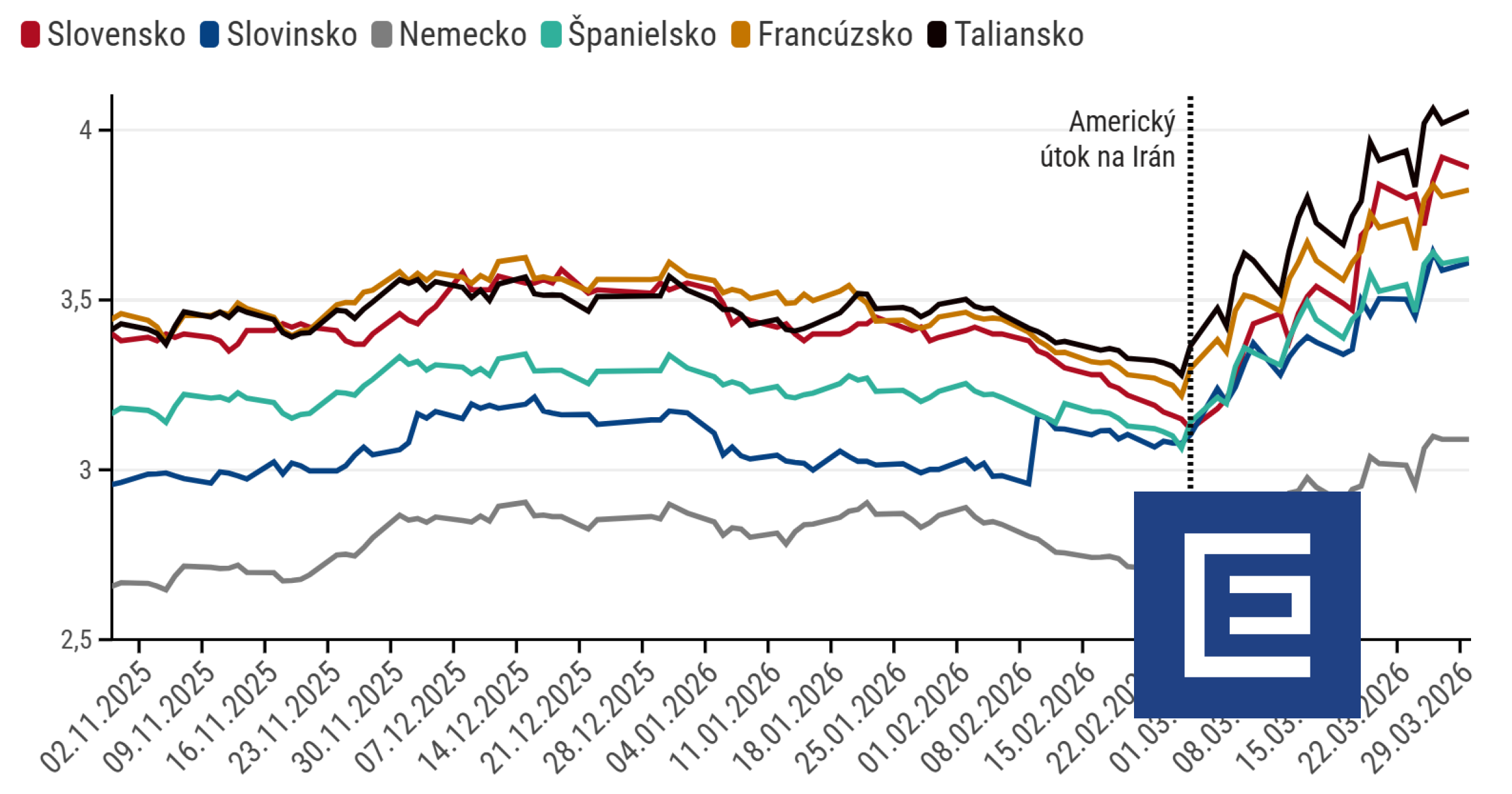
Government Bond Yields Rise Sharply Across Europe as Investors Fear Inflation and Budget Impact

Government bond yields across the eurozone are experiencing sharp increases as investors grow concerned about rising inflation and its potential negative impact on national budgets. Financial markets are pricing in fears that European countries may increase borrowing to cushion households from inflation's effects, similar to pandemic-era fiscal responses. The rising bond yields are creating a dual economic pressure, as higher borrowing costs make government debt more expensive to service while simultaneously pushing up mortgage rates for consumers. This development reflects broader market anxiety about fiscal sustainability as governments face the challenge of supporting citizens through an inflationary period while managing already elevated debt levels from previous crisis interventions.

|
Economy

Slovakia Applies Different Tax Rules for ETC and ETF Investment Funds

Slovakia applies different taxation rules for Exchange-Traded Commodity funds (ETCs) compared to Exchange-Traded Funds (ETFs), with the tax treatment depending on the product structure and whether it trades on a stock exchange. Under Slovak law, investors who hold ETFs for more than one year are exempt from capital gains tax when selling their shares. However, ETC funds require individual assessment to determine whether they qualify as exchange-traded securities eligible for the same tax benefits. Slovakia follows the practice of many countries that encourage long-term investing through a time-based tax test, where investors can receive tax relief on securities sales if they hold investments for a sufficient period.

|
Economy

Opposition SaS Proposes Estonian Tax Model to Boost Slovak Economic Growth

The liberal opposition party Freedom and Solidarity (SaS) has called on the Slovak government to introduce an Estonian-style tax system to support economic growth. According to SaS economics spokesperson Ivan Viskupič, Slovakia will not be able to avoid a recession. The Estonian tax model, which taxes only distributed corporate profits rather than all corporate income, is designed to encourage business investment and reinvestment. SaS, which is part of Slovakia's parliamentary opposition, has previously advocated for business-friendly tax reforms as part of its liberal economic platform.

|
Economy

Slovnaft's Planned Bratislava Waste Incinerator Would Bring 24 Trucks Daily, Opposition Party Claims

The Christian Democratic Movement (KDH), a Slovak opposition party, claims that Slovnaft's proposed new waste incineration facility in Bratislava would result in 24 trucks carrying waste through the capital daily. The party has also raised questions about the environmental impact assessment (EIA) process for the project. Slovnaft, Slovakia's largest oil refinery and a subsidiary of Hungarian energy giant MOL Group, has been planning the waste-to-energy facility as part of its industrial operations in the Bratislava area.

|
Economy

Slovak Investor Takes Control of Bory Mall Shopping Center

A prominent Slovak investor has acquired Bory Mall, one of Bratislava's major shopping centers, marking a significant change in ownership for the retail complex. The shopping center was previously owned by Penta, a prominent investment group, which sold the property to a Czech investment company before the latest ownership transfer. The new Slovak owner already holds a stake in Coop Jednota, one of Slovakia's major retail chains, indicating an expansion of their retail portfolio in the Slovak market.

|
Economy

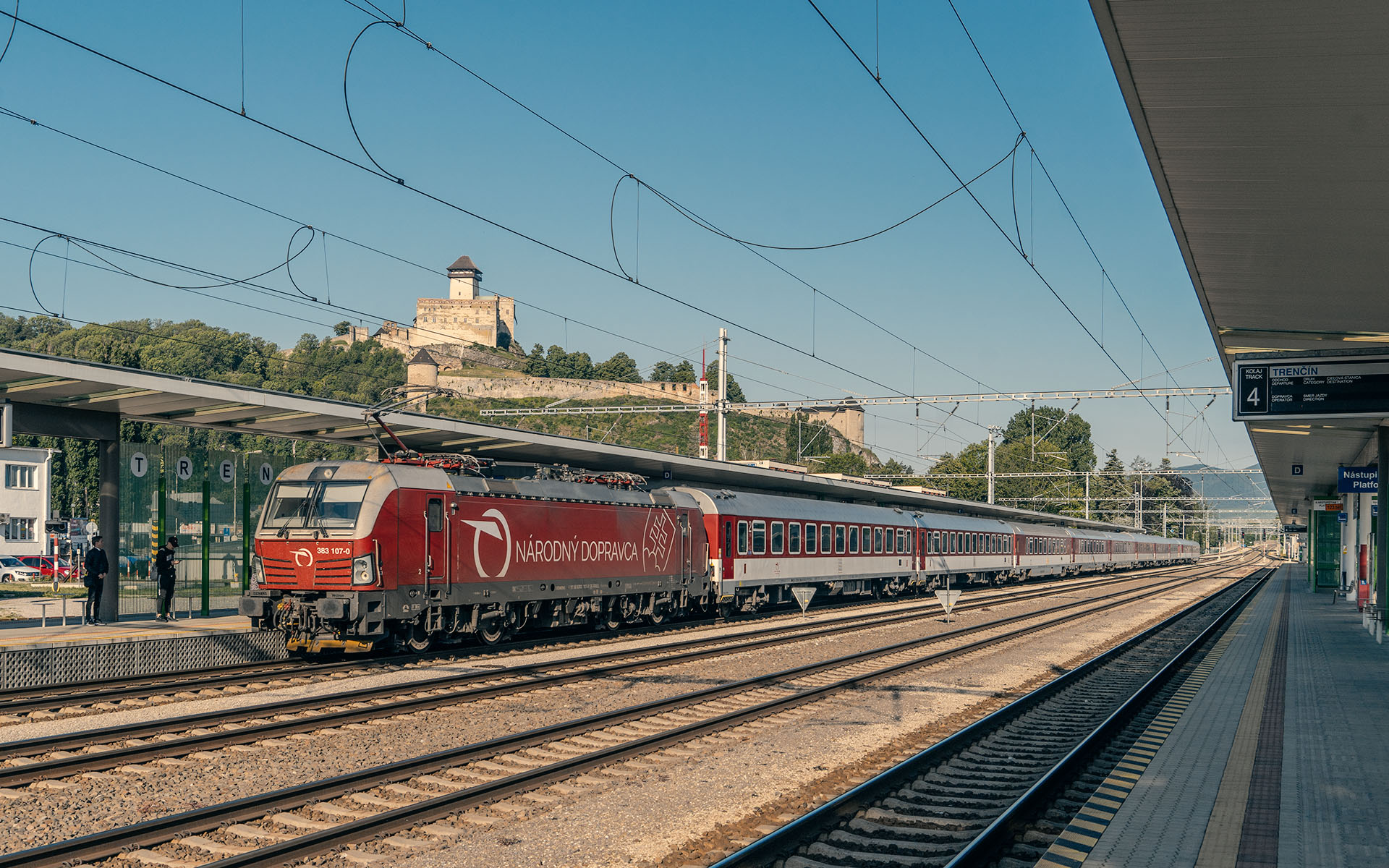
Slovak Railways Increases Service for Easter Holiday Travel

Slovakia's national railway operator ZSSK will boost capacity on selected long-distance routes during the Easter holiday period to accommodate increased passenger demand. The state-owned company expects the heaviest travel on the Bratislava-Žilina-Košice corridor, where it has operated express trains on an hourly schedule since December 2024. ZSSK recommends passengers purchase tickets and seat reservations in advance as Easter traditionally brings high demand for travel to visit family and relatives across the country.

|
Economy

Slovak Government Exempts Low-Income Self-Employed from New Micro-Levy

Slovakia's ruling coalition parties Voice and Slovak National Party announced that small business owners and self-employed individuals earning less than 2,876.90 euros annually will be exempt from a new monthly micro-levy of 131 euros. Labor Minister Erik Tomáš said the exemption would benefit approximately 30,000 of the country's smallest self-employed workers. Voice and SNS are part of the three-party coalition government led by Prime Minister Robert Fico's Smer-SD party. The micro-levy is part of broader changes to social insurance contributions for self-employed workers, though the exemption applies only to those with very low annual incomes.

|
Economy

Slovak Government Seeks Measures to Address Rising Prices as Everything Gets More Expensive

Slovakia is grappling with widespread price increases across the economy, prompting Prime Minister Robert Fico to request action proposals from employers to address the rising costs. The government is seeking measures to combat inflation that is affecting all sectors of the economy. Fico's administration, which returned to power in October 2023 leading a coalition of Smer-SD, Hlas-SD, and the Slovak National Party, is under pressure to respond to economic pressures that are impacting Slovak households and businesses.

|
Economy

Business Group Opposes Regional Chamber's Appeal to Government on High Tatras Zoning

A group of entrepreneurs has rejected an appeal by the High Tatras Regional Chamber of Commerce to the Slovak government regarding zoning plans for the Tatra National Park (TANAP). The Environment Ministry says the proposed zoning aims to establish clear and predictable rules based on sustainable financing for the protected mountain region. The dispute highlights tensions between business interests and environmental protection measures in one of Slovakia's most important natural areas and tourist destinations.

|
Economy

TANAP Zoning Plan Divides High Tatras Business Community Over Tourism Access

A proposed zoning plan for the Tatra National Park (TANAP) has split the business community in the High Tatras region, with some entrepreneurs rejecting their trade association's official position on the matter. The dispute centers around an open letter issued by the business association, which some members claim contains misleading information. TANAP, Slovakia's oldest national park covering the High Tatras mountain range, faces ongoing tensions between conservation efforts and tourism development. The park's zoning regulations determine where commercial activities can operate and how tourists can access different areas of the protected mountain territory.

|
Economy

Former Finance Minister Criticizes Government's Economic Policies

Former Finance Minister Ivan Mikloš has criticized the current Slovak government's economic approach, arguing that the administration is celebrating policies that the business community views as threats. Mikloš, who served as finance minister in previous center-right governments, warned that a country cannot succeed when its government celebrates developments that businesses consider harmful. The commentary reflects ongoing tensions between Slovakia's current ruling coalition, led by the populist Smer-SD party under Prime Minister Robert Fico, and the business sector over economic policy direction. Mikloš's intervention highlights broader concerns about the government's relationship with the private sector and its impact on Slovakia's economic competitiveness.

|
Economy

Former Finance Minister Warns of Growing Business-Government Divide in Slovakia

Former Finance Minister Ivan Mikloš has raised concerns about the deepening disconnect between Slovakia's government and business community, warning that the country cannot prosper when the ruling coalition celebrates policies that the private sector views as threats. Writing in the newspaper SME, Mikloš criticized what he described as the government's tendency to frame controversial measures as historic victories while businesses express alarm about their potential economic impact. The commentary reflects broader tensions between the current government, led by Prime Minister Robert Fico's Smer-SD party, and Slovakia's business sector over economic policy direction. Mikloš, who served as finance minister in previous center-right governments and is known for his pro-market policies, has been a frequent critic of the current administration's approach to economic governance.

|
Economy

Banská Bystrica Collects Record 18.4 Million Euros in Local Taxes Despite Economic Crisis

Banská Bystrica, a major city in central Slovakia, collected over 18 million euros in local taxes and fees in 2023, achieving a 100 percent collection rate without imposing penalties or late payment interest. The record collection occurred despite ongoing economic pressures, and city officials announced they will not raise local taxes and fees for residents. Banská Bystrica serves as the regional capital of central Slovakia and is the country's sixth-largest city, making its tax collection performance a significant indicator of local government fiscal health during challenging economic conditions.

|
Economy

Three New Sections of R2 Highway Near Final Preparation Stage

Three new sections of Slovakia's R2 highway are in the final stages of preparation, with tender announcements expected within weeks, according to Transport Minister Jozef Ráž. The R2 is a major expressway project connecting western and eastern Slovakia, designed to improve transportation links across the country. The announcement signals progress on Slovakia's ongoing highway infrastructure development, which has been a priority for improving domestic connectivity and economic development.

|
Economy

Bolt drivers announce nationwide protest over working conditions

Drivers for the ride-hailing company Bolt have announced a nationwide protest across Slovakia, demanding improved working conditions and better pay. The drivers are seeking changes to their employment terms with the Estonian-based transportation platform, which operates in multiple Slovak cities. Bolt is one of the main ride-hailing services in Slovakia, competing with traditional taxi services and other app-based transportation companies in the country's urban centers.

|
Economy

New Budget Airlines Launch Regular Service Between Bratislava and Warsaw

Budget airlines have launched new regular flight connections between Bratislava and Warsaw, offering passengers a total of twelve flights per week between the two capital cities. The new service provides faster travel connections between Slovakia's capital and Poland's largest city, expanding air travel options in the region. The launch of these routes represents an increase in low-cost carrier operations connecting Central European capitals, giving travelers more affordable alternatives to ground transportation between the neighboring countries.

|
Economy

First Flight Departs Warsaw on New Air Route to Bratislava

The inaugural flight of a new air connection between Warsaw and Bratislava departed from the Polish capital, marking the launch of expanded service between the two cities. Budget airlines WizzAir and Ryanair will operate a combined 12 flights per week on the route starting Sunday. The new service strengthens air connectivity between Slovakia's capital and one of Central Europe's major aviation hubs, providing travelers with more frequent options for business and leisure travel between the neighboring countries.

|