Dávka - Your daily dose of Slovak news
Last refreshed: 29/06/2026 10:39 · 57 articles added
Stories are refreshed at 05:30, 10:30, 15:30, and 21:30 UTC.

Domestic Politics

View all2805 stories
Domestic Politics

STVR Accused of Serving Government Interests

Slovakia's public broadcaster STVR is facing criticism for allegedly acting as a servant to the ruling government. Critics claim the broadcaster's management deliberately allows politicians to treat programming as their personal property. The accusations suggest STVR has compromised its editorial independence by giving ruling party officials excessive influence over its content and programming decisions. STVR is Slovakia's state-funded public television and radio service, which is supposed to maintain journalistic independence from political interference under media law. The controversy highlights ongoing concerns about media freedom in Slovakia, where critics have long argued that public broadcasters face political pressure from whichever party controls the government.

|
Domestic Politics

Slovak Court Rules on Controversial Monument in Dunajská Streda

A Slovak court has issued a ruling in the case of the Monument of Belonging in Dunajská Streda, a structure that has sparked controversy due to its visual similarity to monuments from the era of Horthy's Hungarian Kingdom. The legal proceedings centered on whether the monument could be classified as extremist in nature. Dunajská Streda is located in southern Slovakia, a region with a significant ethnic Hungarian minority, making the monument's historical references particularly sensitive given the complex history between Slovakia and Hungary during the interwar period when Admiral Miklós Horthy ruled Hungary.

|
Domestic Politics

Supreme Court upholds acquittal of businessman Sisák in EU funds case

Slovakia's Supreme Court has confirmed the acquittal of businessman Sisák in a case involving the misuse of European Union funds. The verdict of innocence remains in effect following the highest court's decision. The Supreme Court, Slovakia's highest judicial authority, serves as the final appellate court for criminal cases and its ruling cannot be further appealed. EU funds cases typically involve allegations of fraud or misappropriation of development money provided by the European Union to Slovakia for various projects and programs.

|
Domestic Politics

1946 Elections in Slovakia Featured Communist-Catholic Competition and Violent Rallies

On May 19, 1946, approximately 30,000 people gathered in central Žilina for a Democratic Party rally led by party founder and Deputy Prime Minister Ján Ursíny, one week before crucial parliamentary elections. The demonstration on the main square was disrupted when communist sympathizers threw leaflets from nearby rooftops and clashed with attendees. The 1946 elections marked a pivotal moment in post-war Czechoslovak politics, as communist parties actively courted Catholic voters while political rallies frequently ended in violent confrontations between opposing factions. These elections would prove decisive in shaping the political direction of post-war Czechoslovakia, with the Democratic Party and communist forces competing for control in a deeply polarized society still recovering from World War II.

|
Domestic Politics

Constitutional Court Rules Owners of Disconnected Apartments Don't Have to Pay Fixed Heating Fees

Slovakia's Constitutional Court ruled on May 6 that apartment owners who are not connected to central heating systems do not have to pay fixed fees for communal heating costs. The court declared that part of the Economy Ministry's regulation on heating cost allocation is unconstitutional. The ruling affects property owners who have disconnected from central heating and use alternative heating methods, such as their own boilers. Property managers are now uncertain about how to calculate housing costs for 2025 following the decision. The Constitutional Court, Slovakia's highest authority on constitutional matters, determined that requiring disconnected apartment owners to contribute to shared heating expenses violates constitutional principles.

|
Domestic Politics

Interior Minister Šutaj Eštok Undergoes Surgery in Bratislava Hospital

Slovak Interior Minister Matúš Šutaj Eštok underwent surgery at a hospital in Bratislava, with his ministry confirming his hospitalization. The minister has completed the operation and is currently recovering. No details were provided about the nature of the medical procedure or the minister's current condition.

|
Domestic Politics

Opposition Leader Šimečka Takes Campaign to Slovak Pubs Amid Family Corruption Controversy

Michal Šimečka, leader of the opposition Progressive Slovakia party, has launched a campaign tour taking him from Bratislava studios to pubs across Slovakia as he seeks to connect with voters outside the capital. The tour comes as Šimečka faces political pressure over a corruption investigation involving his mother, a controversy that has dominated recent political discourse. During pub visits, Šimečka and his supporters are working to convince voters that the family scandal will not derail his political leadership or the party's opposition activities. Progressive Slovakia is the largest opposition party in parliament, positioning itself as a pro-European liberal alternative to the ruling coalition led by Robert Fico's Smer-SD party. The pub campaign represents an effort to broaden the party's appeal beyond its traditional urban, educated base to reach voters in smaller towns and rural areas.

|
Domestic Politics

Slovak Commentary Examines Political Extremism and Public Perceptions

A Slovak media commentary has explored the perceived differences between far-left and far-right extremism, questioning why left-wing extremists may be viewed as more acceptable neighbors than fascists. The piece examines what it describes as an asymmetry in how different forms of political extremism are perceived by the public. The commentary appears to challenge conventional assumptions about political radicalism and social tolerance, suggesting that far-left ideology may pose greater dangers than right-wing extremism despite public attitudes that seem more tolerant of leftist positions.

|
Domestic Politics

Progressive Slovakia and Democrats Would Lead Polls as Joint Bloc, Survey Shows

A hypothetical pre-election coalition between Progressive Slovakia and the Democrats party would produce a clear election winner, according to a new poll, while standard polling shows Progressive Slovakia and the ruling Smer-SD party separated by just tenths of a percentage point. Progressive Slovakia, led by Michal Šimečka, is the main opposition party in Slovakia's parliament, while the Democrats are a smaller liberal party headed by Jaroslav Naď. Despite the polling advantage of a joint ticket, neither party has publicly discussed forming a pre-election coalition. The survey highlights the potential impact of opposition coordination in Slovakia's fragmented political landscape, where small margins between parties could determine the next government.

|
Domestic Politics

Slovak Interior Minister Hospitalized for Spinal Surgery

Slovak Interior Minister Matúš Šutaj Eštok has been hospitalized and underwent surgical intervention due to ongoing spinal health complications. The minister, who leads the Ministry of Interior responsible for domestic security, police, and public order, required medical treatment for persistent back problems that necessitated surgical care.

|
Domestic Politics

Environment Minister Taraba Denies Reports of SNS Calling for His Dismissal

Environment Minister Tomáš Taraba has strongly rejected reports that the Slovak National Party (SNS) has requested his removal from office. The minister responded on social media to statements from SNS headquarters, saying he takes the media reports with great skepticism and considers them to be gossip. Taraba stated he does not believe there was any actual request for his dismissal and that he will not participate in what he characterized as rumor-mongering. The Slovak National Party is part of the ruling coalition government led by Prime Minister Robert Fico's Smer-SD party. Internal tensions within coalition parties over ministerial positions are common in Slovak politics, though such disputes are typically resolved through party negotiations rather than public statements.

|
Domestic Politics

Slovak Opposition Leader Says EU Parliament Only Partially Right in Criticizing Slovakia

Viliam Karas, deputy chairman of the Christian Democratic Movement (KDH), stated that the European Parliament is only partially correct in its criticism of Slovakia. The opposition politician argued that the current ruling coalition has weakened the state's ability to fight crime by dissolving all elite police teams. Karas also claimed that Prime Minister Robert Fico is allowing his coalition partner Hlas to struggle with problems while waiting for the party to fail. The KDH leader expressed concerns about potential EU sanctions against Slovakia related to constitutional changes that his party supported alongside Fico's Smer-SD party. KDH is a center-right Christian democratic party currently in opposition, while Smer-SD leads the ruling coalition alongside Hlas and the Slovak National Party. The comments reflect ongoing tensions between Slovakia's government and EU institutions over rule of law issues and domestic policy changes.

|
Domestic Politics

Slovak Opposition MP Calls Party Leader an Easy Target for Prime Minister

Július Jakab, a member of parliament for the opposition Movement for Slovakia party, stated that party leader Michal Šimečka represents an "easy target" for Prime Minister Robert Fico. The 36-year-old Jakab, who serves as deputy chairman of the party, made the comments in an interview discussing internal opposition dynamics. Jakab has worked with former Prime Minister Igor Matovič's political movement since 2011, serving in various roles including as general manager of the Ordinary People party from 2016 and head of the government office from 2020 to 2023. Movement for Slovakia operates as part of the opposition coalition against Fico's ruling government, which returned to power following elections last year.

|
Domestic Politics

Law professor loses department head position day after speaking at anti-corruption festival

Jozef Čentéš, a professor at Bratislava's Faculty of Law, was unexpectedly removed from his position as department head by Dean Eduard Burda. The dismissal came just one day after Čentéš spoke at an anti-corruption festival where he publicly discussed threats to Slovakia's justice system. The timing of the removal has raised questions about whether Čentéš's public criticism of the state of Slovak justice led to his dismissal from the administrative position.

|
Domestic Politics

Slovak Parliament Faces Corruption Questions as European Parliament Takes Action

Slovakia continues to grapple with corruption issues as questions arise about accountability and consequences for wrongdoing. While corruption appears to persist without significant penalties in Slovak politics, the European Parliament has taken a firmer stance against such practices. The developments highlight ongoing concerns about integrity in public office and differing approaches to addressing corruption at national versus European levels. These contrasting responses underscore Slovakia's ongoing struggle to match European standards in combating political misconduct and ensuring accountability among elected officials.

|
Domestic Politics

Slovakia's Ruling Coalition Shows Signs of Internal Strain Despite Maintaining Unity

Political tensions within Slovakia's governing coalition led by Prime Minister Robert Fico have intensified, according to commentary from Slovak media. Despite internal disagreements and public disputes between coalition partners, the government continues to function and maintain its parliamentary majority. The ruling alliance, which includes Fico's Smer-SD social-democratic party along with coalition partners, has weathered various political crises since taking power. However, analysts suggest that while the coalition remains resilient in the face of mounting pressures, its long-term stability faces ongoing challenges from both internal divisions and external political opposition.

|
Domestic Politics

Agricultural entrepreneur Diego Roda sentenced to fine for decade-old offenses

Agricultural businessman Diego Roda received a fine of 1,000 euros for criminal offenses committed ten years ago. The relatively light sentence was made possible by recent amendments to Slovakia's Criminal Code, which reduced penalties for certain categories of crimes. The case represents one of the first applications of the revised criminal legislation that has modified sentencing guidelines for older offenses.

|
Domestic Politics

Slovak Defense Minister Faces Audit and Potential Dismissal Over No-Tender Hospital Contract

Slovakia's Supreme Audit Office and Public Procurement Office will investigate Defense Minister Robert Kaliňák's decision to award a 259 million euro construction contract for a military hospital in Prešov without any public tender. The opposition is considering a parliamentary motion to dismiss Kaliňák over the procurement decision, with the Christian Democratic Movement already collecting signatures for an extraordinary parliamentary session. The controversy centers on Kaliňák's choice to bypass standard competitive bidding procedures for the substantial hospital construction project. Slovakia's Supreme Audit Office oversees government spending and procurement practices, while the Public Procurement Office ensures transparency in state contracts. The investigation represents a significant challenge to Kaliňák, who serves in the ruling coalition government, as opposition parties seek to hold him accountable for what they view as improper use of public funds.

|
Domestic Politics

Coalition Crisis as SNS Leader Danko Asks Prime Minister Fico to Dismiss Environment Minister

Slovakia's ruling coalition faces internal tensions as Andrej Danko, leader of the Slovak National Party (SNS), has requested Prime Minister Robert Fico to dismiss Environment Minister Tomáš Taraba. The dispute highlights growing friction within the SNS, one of the three parties in Fico's governing coalition. The Slovak National Party, a nationalist party that has been a key coalition partner since the government was formed after last year's parliamentary elections, is experiencing internal conflicts that have escalated to demands for ministerial changes. The crisis underscores the challenges facing Fico's coalition government, which relies on cooperation between his Smer-SD party, the SNS, and the Hlas party to maintain its parliamentary majority.

|
Domestic Politics

Slovak Interior Ministry Event Features Controversial Performance by Comedian René Rendy

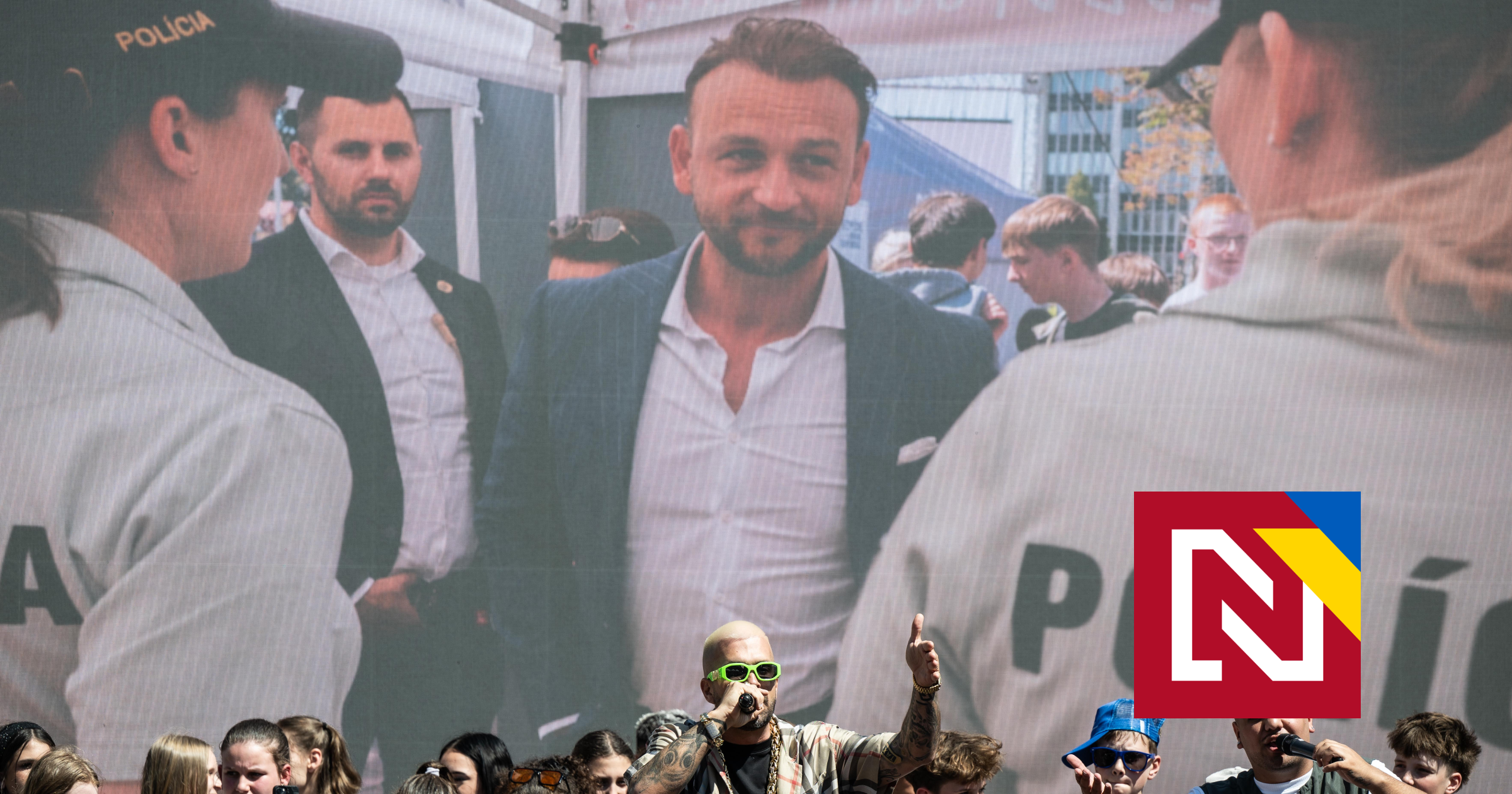
Comedian René Rendy performed at an event organized by Slovakia's Interior Ministry, delivering material that included explicit sexual content and vulgar language. The performance featured a fictional dialogue between a taxi driver and a female passenger involving crude sexual propositions, with the driver demanding the passenger expose herself in exchange for transportation. The comedian's appearance at the ministry event has drawn attention given the explicit nature of his routine, which contrasts with the formal setting of a government institution. Rendy defended his performance style, stating he does not sing about "vodka at the bar" and that "vodka can also be from the tap," apparently referencing his preference for edgier comedy material over conventional entertainment.

|