Dávka - Your daily dose of Slovak news
Last refreshed: 27/06/2026 21:42 · 38 articles added
Stories are refreshed at 05:30, 10:30, 15:30, and 21:30 UTC.

Domestic Politics

View all2780 stories
Domestic Politics

President Pellegrini Still Developing in Role

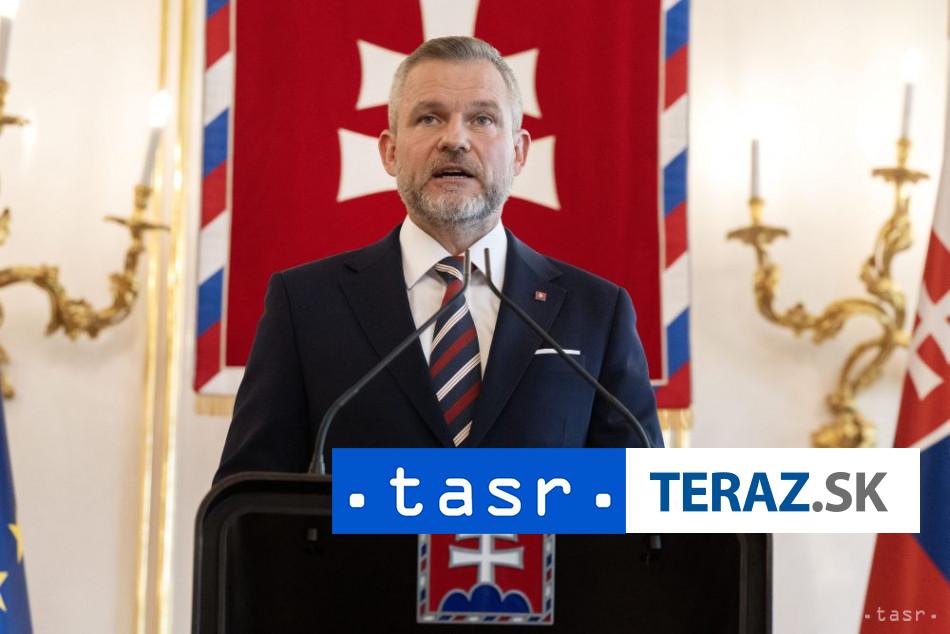
President Peter Pellegrini continues to evolve in his presidential role, according to recent political analysis. The assessment suggests that significant challenges lie ahead for Slovakia's head of state as he navigates his duties in office. Pellegrini, who took office as Slovakia's president earlier this year after winning the presidential election, represents a shift in the country's political leadership. The president serves as head of state in Slovakia's parliamentary system, with responsibilities including foreign policy representation and serving as commander-in-chief of the armed forces, while the prime minister heads the government.

|
Domestic Politics

Opposition MP Predicts 'Coalition Hell' During Budget Approval Process

Opposition lawmaker György Jakab warned that Slovakia faces a period of chaotic negotiations and political blackmail during the upcoming budget approval process. The MP from the opposition criticized what he described as dysfunction within the ruling coalition. Jakab also criticized the president's stance regarding the nominations of Kmec and Radačovský, though the specific context of these nominations was not detailed. Slovakia's parliament, the National Council, must approve the state budget annually, and the process often becomes a focal point for political tensions between the ruling coalition and opposition parties.

|
Domestic Politics

Key Witness in Judicial Corruption Cases Under Threat, Court Rules Access Disputed

A key witness known as 'Sklenka' in major judicial corruption cases is in danger, according to a court ruling that also questioned disputed access to the witness. The judge indicated in the decision that prosecutors should also bring charges against the witness himself. Sklenka has been a crucial figure in ongoing investigations into corruption within Slovakia's judicial system, but the court's ruling suggests complications in the prosecution's handling of witness protection and access protocols.

|
Domestic Politics

Slovakia's Ruling Coalition Considers Linking Budget Approval with Key Personnel Appointments

Slovakia's governing coalition is exploring the possibility of combining the confirmation of key personnel nominations with budget approval in a single legislative package. Interior Minister Matúš Šutaj Eštok expressed confidence that the appointments and budget could be successfully concluded together, indicating there is general agreement within the coalition on this approach. The strategy would link the confirmation of Peter Kažimír, a controversial nominee for a position requiring parliamentary approval, and appointments to fill vacancies on the Constitutional Court with the passage of the state budget. This bundling approach suggests the coalition is seeking to use budget negotiations as leverage to secure approval for contested personnel decisions that might otherwise face opposition in parliament.

|
Domestic Politics

Slovak Prime Minister Fico Attacks Coalition Partner Hlas Over Budget Pressure and Campaign Tactics

Slovak Prime Minister Robert Fico publicly criticized his coalition partner Hlas in a new video, accusing the party of "privatizing" political issues and using aggressive campaign tactics including billboards. Fico specifically attacked Hlas for claiming ownership of the 13th pension payment issue and for exerting pressure during budget negotiations. The public dispute between Fico's Smer-SD party, which leads Slovakia's ruling coalition, and Hlas reveals growing tensions within the government. Hlas, a center-left party that split from Smer in 2020, has been positioning itself as a key advocate for pensioner benefits, particularly the controversial 13th pension payment that has become a significant political issue in Slovak domestic policy.

|
Domestic Politics

Hlas Party Conditions State Budget Approval on Own Proposals, Says Fico

Slovakia's ruling coalition faces internal tensions as Prime Minister Robert Fico revealed that Hlas, a coalition partner, is conditioning its approval of the state budget on the inclusion of its own legislative proposals. Fico, who leads the dominant Smer-SD party in the three-party government, made the statement while also announcing that the process to restart aluminum production in Žiar nad Hronom is nearing completion. The budget negotiations highlight ongoing disagreements within Slovakia's coalition government, which includes Smer-SD, Hlas (Voice), and the Slovak National Party. Hlas's demands could complicate the budget approval process, as the government needs unified support from all coalition partners to pass the spending plan through parliament.

|
Domestic Politics

Slovak Parliament Sees Heated Exchange Between Ruling and Opposition Parties Over Nepotism Allegations

A sharp debate erupted in Slovakia's parliament between representatives of the ruling Smer-SD party and the opposition Progressive Slovakia over allegations of political nepotism. The confrontation centered on reports that Robert Fico's son receives a 5,000-euro salary from a party agency, sparking accusations of parasitism between Tibor Gašpar of Smer-SD and Martin Dubéci of Progressive Slovakia. The exchange saw both politicians trading accusations of political favoritism and improper financial arrangements within their respective parties. The heated parliamentary debate reflects ongoing tensions in Slovak politics over issues of transparency and the proper use of political positions for personal or family benefit.

|
Domestic Politics

Slovak President to Deliver State of the Republic Address in September

Slovak President Peter Pellegrini will deliver his annual state of the republic address to parliament in September. The president expressed curiosity about whether the government will achieve its ambitious goal of approving the draft budget as early as September, suggesting this timeline may be challenging to meet. The state of the republic address is a constitutional requirement where the president presents an assessment of the country's political, economic and social situation to the National Council, Slovakia's parliament.

|
Domestic Politics

Slovak President Delays Decision on Controversial Ambassador Appointment Despite Security Clearance

President Peter Pellegrini continues to withhold a decision on appointing Peter Radačovský as Slovakia's ambassador, despite the nominee having cleared all formal requirements including government approval and security screening. Pellegrini has expressed concerns about Radačovský's language and behavior, creating uncertainty around the diplomatic appointment. The president indicated he will announce his decision on Radačovský along with other diplomatic appointments next week, suggesting the controversial nomination remains under consideration despite meeting all procedural conditions.

|
Domestic Politics

Slovak President Calls Quality Education Nation's Most Important Investment

Slovak President Peter Pellegrini declared quality education the country's most crucial investment, emphasizing that Slovakia's greatest wealth lies in the knowledge and creativity of its people. The president's statement highlights the strategic importance of educational development for the nation's future prosperity. Pellegrini, who took office in June 2024 after winning the presidential election as a candidate backed by the ruling Smer-SD party, has made human capital development a key theme of his presidency as Slovakia faces economic challenges and seeks to strengthen its position within the European Union.

|
Domestic Politics

Slovak Intellectuals Warn Country's Western Orientation Remains Undecided

Two prominent Slovak intellectuals, František Mikloško and Peter Zajac, have warned that Slovakia's fundamental geopolitical orientation between East and West remains unresolved. The former dissident and academic made their comments in a discussion about Slovakia's identity and future direction, questioning where the country comes from, what it represents, and where it is headed. Their intervention comes amid ongoing debates about Slovakia's position within European and transatlantic structures, suggesting that despite nearly two decades of EU and NATO membership, the country's civilizational alignment is still contested. The warning reflects broader concerns about Slovakia's democratic development and its commitment to Western democratic values and institutions.

|
Domestic Politics

Slovak Political Analyst Warns of Uncertain Future Amid Democratic Decline

Slovak political analyst Michal Vašečka has warned that the country faces an unprecedented period of uncertainty that may never subside, lacking both strong political leadership and a unifying national narrative. Vašečka, writing in an Infosec report, argued that Slovakia must confront this uncertain future without any true statesmen and without a coherent national story to guide its direction. He compared liberal democracy to "an old house we decided not to maintain," suggesting that democratic institutions are crumbling due to neglect. The analysis reflects broader concerns about political instability and the erosion of democratic norms in Slovakia, where coalition governments have struggled with internal divisions and opposition parties have faced challenges in presenting unified alternatives.

|
Domestic Politics

New Book Examines Formation of Slovakia's Fourth Fico Government

A new book titled "Fico - Possessed by Revenge" has been released examining the behind-the-scenes negotiations that led to the formation of Robert Fico's fourth government in Slovakia. The publication explores the post-election bargaining process, including why Peter Pellegrini earned the nickname "sidekick" and what concessions were made to key figures from the Slovak National Party (SNS) candidate list. The book provides insight into the coalition-building process that brought Fico back to power as prime minister. Slovakia's current government is a coalition between Fico's Smer-SD party, Pellegrini's Hlas party, and the nationalist SNS party, formed after the September 2023 parliamentary elections.

|
Domestic Politics

Slovakia's Ruling Coalition Faces Unexpected Legal Consequences for Political Tactics

Slovakia's ruling coalition is beginning to face legal penalties from an unexpected direction, with some members now required to pay for actions they initially used to score political points. The development suggests that despite concerns about a weakened justice system, Slovakia's legal institutions retain some capacity to hold politicians accountable for their conduct.

|
Domestic Politics

Šimečka Strikes Back in Political Commentary

Opposition leader Michal Šimečka has responded to recent political attacks in what appears to be an escalating political exchange. The development comes as part of ongoing tensions between the opposition Progressive Slovakia party, led by Šimečka, and the ruling coalition government. Progressive Slovakia serves as the main liberal opposition party in the National Council, Slovakia's parliament, and has been critical of the current government's policies since taking office.

|
Domestic Politics

Opposition Leader Šimečka Responds to Political Attacks

Michal Šimečka, leader of the opposition Progressive Slovakia party, has responded to recent political criticism directed at him. The development appears to be part of ongoing political tensions between the ruling coalition and opposition parties in Slovakia's National Council, the country's parliament. Progressive Slovakia is the largest opposition party and has been a vocal critic of the current government led by Prime Minister Robert Fico's Smer-SD party.

|
Domestic Politics

Courts Rule in Favor of Regional Road Officials Dismissed for Disagreeing with Management

Courts are increasingly ruling in favor of regional road authority employees who were dismissed after disagreeing with their supervisors. The cases involving regional road management companies are gaining momentum, with judicial decisions vindicating workers who were previously considered troublesome by management. These developments suggest a pattern of wrongful dismissals within Slovakia's regional road maintenance sector, where employees faced retaliation for raising concerns or opposing management decisions.

|
Domestic Politics

Slovak Regional Road Authorities Face Legal Challenges Over Mass Dismissals

Slovak regional road maintenance authorities are facing mounting legal challenges from former employees who claim they were wrongfully dismissed. Courts are increasingly ruling in favor of workers who say they were fired for opposing their supervisors or management decisions. The cases involve regional road companies, known as krajskí cestári, which are responsible for maintaining local and regional road networks across Slovakia. These state-owned enterprises have faced criticism for politically motivated hiring and firing practices, particularly following changes in regional government leadership.

|
Domestic Politics

Regional Road Authority Loses First Court Case Over Dismissed Executives

Slovakia's regional road authority has lost its first court case related to the dismissal of senior executives, facing potential damages in the hundreds of thousands of euros. The authority reached an out-of-court settlement with one of the dismissed managers. The case stems from controversial dismissals of leading officials at the regional road maintenance organization, which is responsible for maintaining roads outside of major highways in Slovakia. The court ruling suggests the dismissals may have been legally problematic, potentially exposing the state-owned organization to significant financial liability as additional cases move through the judicial system.

|
Domestic Politics

Opposition leader pledges to abolish transaction tax among first post-election steps

Progressive Slovakia leader Michal Šimečka announced that abolishing the transaction tax would be among the first measures his party would implement if it comes to power after elections. Šimečka stated that the opposition is already presenting concrete proposals to address Slovakia's economic problems. Progressive Slovakia is the largest opposition party in the National Council, Slovakia's parliament, positioning itself as a liberal alternative to the current ruling coalition led by Smer-SD. The transaction tax, implemented by the government as a revenue measure, has been criticized by opposition parties as harmful to economic growth and competitiveness.

|