Dávka - Your daily dose of Slovak news
Last refreshed: 03/07/2026 17:43 · 77 articles added
Stories are refreshed at 05:30, 10:30, 15:30, and 21:30 UTC.

Domestic Politics

View all2885 stories
Domestic Politics

Slovakia to Tighten Rules for Cooperating Witnesses in Criminal Cases

Slovakia's Ministry of Justice is preparing to overhaul the legal framework governing cooperating witnesses, commonly known as "kajúcnici" or penitents, who provide testimony in exchange for reduced sentences. Justice Minister Viliam Susko announced that the proposed reforms will impose stricter requirements for verifying witness testimonies while reducing opportunities for abuse of the system. The changes represent a significant shift in Slovakia's approach to handling criminal informants, who have played controversial roles in major corruption and organized crime prosecutions. The current system has faced criticism for potentially allowing witnesses to fabricate or exaggerate claims in exchange for lenient treatment, leading to calls for reform to ensure the reliability of such testimony in criminal proceedings.

|
Domestic Politics

Interior Ministry Prepares Equipment Renewal for Police, Firefighters and Forest Guards

Slovakia's Interior Ministry is preparing a comprehensive equipment renewal program for law enforcement and emergency services personnel. The initiative will provide 208,000 pieces of new equipment for police officers, firefighters, and forest guards across the country. The Interior Ministry oversees Slovakia's police force, emergency response services, and coordinates with forestry officials on security matters in rural areas. The equipment renewal represents a significant investment in modernizing the gear and protective equipment used by these essential services personnel.

|
Domestic Politics

Progressive Slovakia Criticizes Mazurek's Bid for Prešov Regional Governor with Suggested Smer Support

Progressive Slovakia has criticized the candidacy of Mazurek for the position of Prešov regional governor, particularly objecting to the suggested support from Smer-SD, the ruling social-democratic party. The opposition party has outlined potential negative consequences of this political alignment. Regional governors in Slovakia oversee the administration of the country's eight self-governing regions, handling responsibilities including healthcare, education, and regional development. The criticism reflects broader tensions between Progressive Slovakia, a liberal opposition party, and the governing Smer-SD over political appointments and regional governance.

|
Domestic Politics

Supreme Court to Review Agricultural Subsidy Case Against Former MP Roškova in May

Slovakia's Supreme Court will review the agricultural subsidy fraud case against former parliamentarian Roškova in May, following appeals filed by both the defense attorney and prosecutor. The Supreme Court, the country's highest judicial authority, will examine the case after lower court proceedings concluded. The case involves allegations of fraudulent use of European Union agricultural subsidies, a significant issue in Slovakia where such funds represent a substantial portion of support for the farming sector.

|
Domestic Politics

Progressive Slovakia and Smer Both Return Above 20% Support as Voter Turnout Intentions Decline

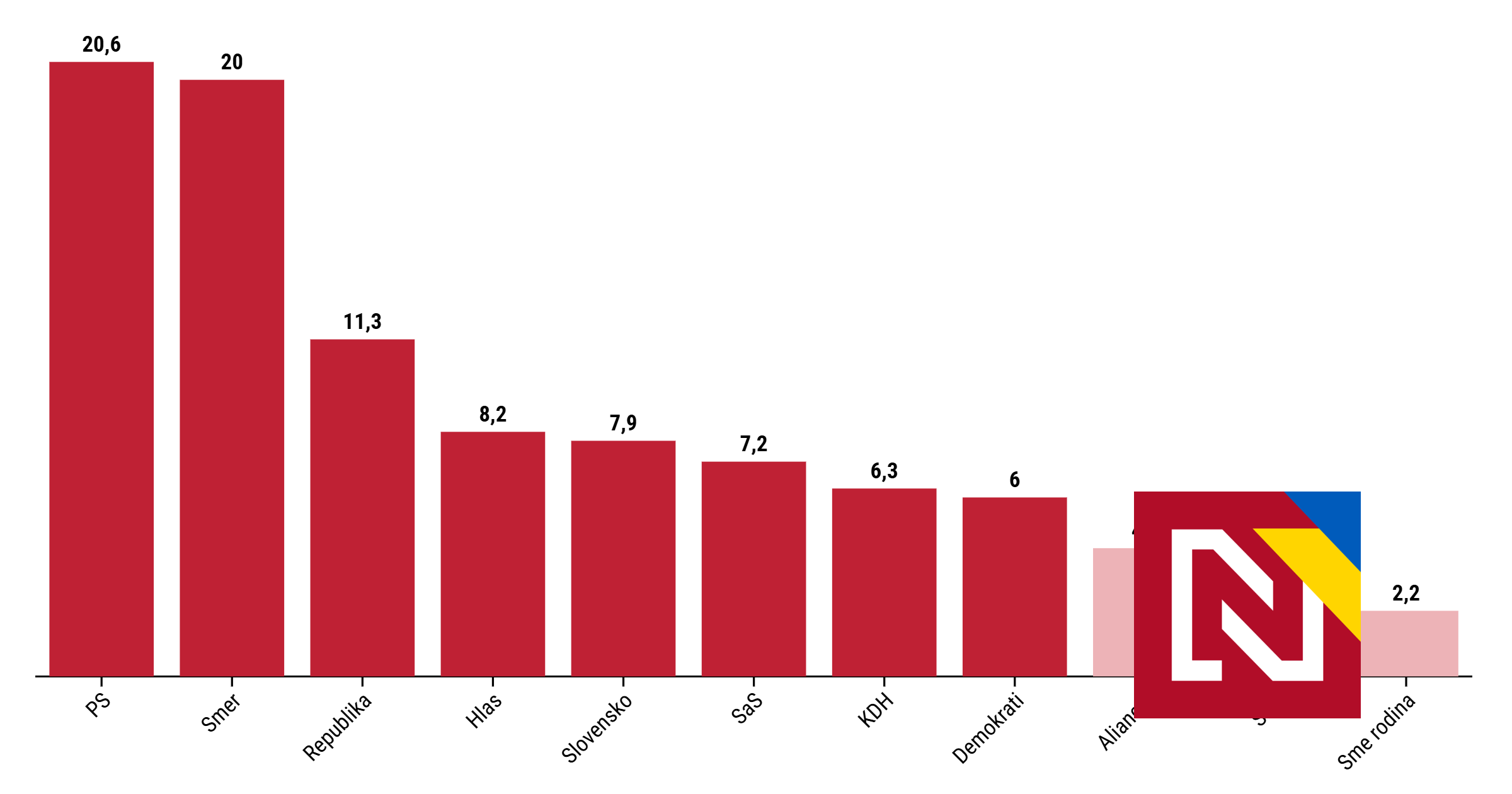
Slovakia's two leading political parties have returned to support levels above 20 percent, according to the latest polling by Ipsos agency for Denník N. Progressive Slovakia (PS), a liberal opposition party, and Smer-SD, the ruling social-democratic party led by Robert Fico, are now separated by just tenths of a percentage point, suggesting an extremely tight race if elections were held in March. Both parties have crossed the symbolic 20-percent support threshold after periods below it - PS following a brief dip in February, while Smer has been below this level for a longer period. The polling also indicates declining voter turnout intentions among the Slovak public, potentially affecting the dynamics of any future electoral contest.

|
Domestic Politics

Róbert Čibrik to Run for Mayor of Šaľa

Róbert Čibrik has announced his candidacy for mayor of Šaľa, a town in western Slovakia. His bid comes ahead of Slovakia's combined local and regional elections scheduled for October 24, which will see voters across the country choose mayors, municipal councils, and regional self-governing bodies simultaneously.

|
Domestic Politics

Opposition Party Claims Data Breach of Citizens Who Refused Energy Aid Information Collection

The opposition Freedom and Solidarity Party (SaS) has accused Interior Minister Denisa Saková of a data breach involving citizens' personal information. SaS claims to possess USB drives containing Excel files with the names and birth numbers of people who refused to allow the state to collect their data for evaluating eligibility for energy assistance programs. The party's allegations suggest that sensitive personal identification numbers were improperly handled or leaked despite citizens explicitly opting out of the government's data collection process. The controversy highlights concerns about data protection practices within Slovak government ministries, particularly regarding citizens who specifically declined to participate in state data gathering for social assistance programs.

|
Domestic Politics

Analysis: Populist Leaders Thrive on Voter Anger Rather Than Solutions

Political observers suggest that populist leaders like Czech Prime Minister Andrej Babiš and Slovak Prime Minister Robert Fico do not genuinely seek to improve conditions for their supporters, as doing so would diminish the voter anger that fuels their electoral success. This analysis points to a strategic approach where maintaining grievances and frustrations becomes more politically valuable than actually resolving the issues that originally mobilized their base. The phenomenon reflects a broader trend in Central European politics where populist movements have found electoral advantage in perpetuating rather than solving the problems they campaign against.

|
Domestic Politics

Slovak Christian Democrats Propose 'Lex Deepfake' Law to Combat AI Fraud and Cyberbullying

The Christian Democratic Movement (KDH) has announced plans to introduce legislation dubbed "Lex Deepfake" aimed at combating fraud and cyberbullying involving artificial intelligence technology. The opposition party argues that human dignity must not end where misused artificial intelligence begins, signaling concerns about the growing threat of AI-generated content being used for malicious purposes. The proposed legislation would establish legal frameworks to address crimes involving deepfake technology and other forms of AI manipulation. KDH, a conservative opposition party that has traditionally focused on family values and Christian principles, is positioning the measure as necessary protection for citizens in the digital age.

|
Domestic Politics

Bratislava Prosecutor's Office to Review Criminal Complaint Against Fico Over Ukraine Emergency Power Cutoff

Bratislava prosecutors will investigate a criminal complaint filed against Slovak Prime Minister Robert Fico regarding the disconnection of emergency electricity supplies to Ukraine. The complaint was submitted by Freedom and Solidarity (SaS), a liberal opposition party that frequently challenges the government's pro-Russian policies. The case centers on Slovakia's decision to halt emergency power exports to neighboring Ukraine, which has been struggling with energy infrastructure damage from Russian attacks. Fico's government has taken increasingly critical positions toward Western support for Ukraine, marking a shift from Slovakia's previous pro-Ukrainian stance under the previous administration.

|
Domestic Politics

Slovak MP Ján Ferenčák Faces Corruption Allegations Amid Claims of Political Persecution

Ján Ferenčák, a member of Slovakia's parliament, is under investigation for suspected corruption, though he maintains the charges are politically motivated revenge against him. Ferenčák, who has positioned himself as a rebel within Slovak politics, claims the corruption case represents a political hit job rather than legitimate criminal conduct. The allegations against the parliamentarian have raised questions about the motivations behind the investigation, with Ferenčák arguing that his political stance has made him a target for persecution. The case highlights ongoing tensions within Slovak politics, where corruption investigations frequently become entangled with claims of political weaponization of the justice system.

|
Domestic Politics

Opposition Leader Šimečka Develops New Strategy Against Prime Minister Fico

Michal Šimečka, leader of the opposition Progressive Slovakia party, has reportedly found an effective approach to counter Prime Minister Robert Fico's political messaging. The strategy focuses on combating populism through clear, understandable language and concrete policy solutions. Šimečka, who leads the largest opposition party in Slovakia's parliament, has been working to develop more effective communication methods to challenge Fico's Smer-SD party, which returned to power in 2023. The development suggests a shift in opposition tactics as Progressive Slovakia seeks to present alternative policies in accessible terms to counter the ruling party's populist rhetoric.

|
Domestic Politics

Slovak Sociologist Questions Whether Politics Has Lost Touch with Reality

A prominent Slovak sociologist has raised concerns about whether the country's political discourse has become disconnected from reality and lost its common sense. Sociologist Želinský questioned whether the problem lies with politicians who have become detached from everyday concerns, or with voters who increasingly tolerate such behavior. The academic also examined whether Slovak society can still find common ground on fundamental questions about national identity, shared goals, and the country's future direction. These concerns reflect broader debates about the state of political culture in Slovakia, where polarization and populist rhetoric have become increasingly prominent features of public discourse.

|
Domestic Politics

Slovakia's Public Broadcaster Dismisses Critics Following Audit

Slovakia's public television and radio broadcaster STVR has begun dismissing employees following an internal audit, with critics of the broadcaster among those being let go. The state-funded media organization is removing staff members who were considered advocates for public service broadcasting principles. The dismissals come as STVR, which serves as Slovakia's main public broadcaster funded by taxpayers, undergoes internal restructuring that appears to target employees who had been vocal about maintaining editorial independence and public service standards.

|
Domestic Politics

Five Eastern Slovak Municipalities Elect New Mayors

Five municipalities in eastern Slovakia held mayoral elections, with voters selecting new local leaders. In Vyšný Čaj, residents also elected new municipal council members alongside their mayor. The elections represent routine local democratic processes in Slovakia's eastern regions, where municipalities periodically hold votes to fill vacant mayoral positions or replace outgoing officials.

|
Domestic Politics

Slovak Government Faces Growing Cultural Controversies

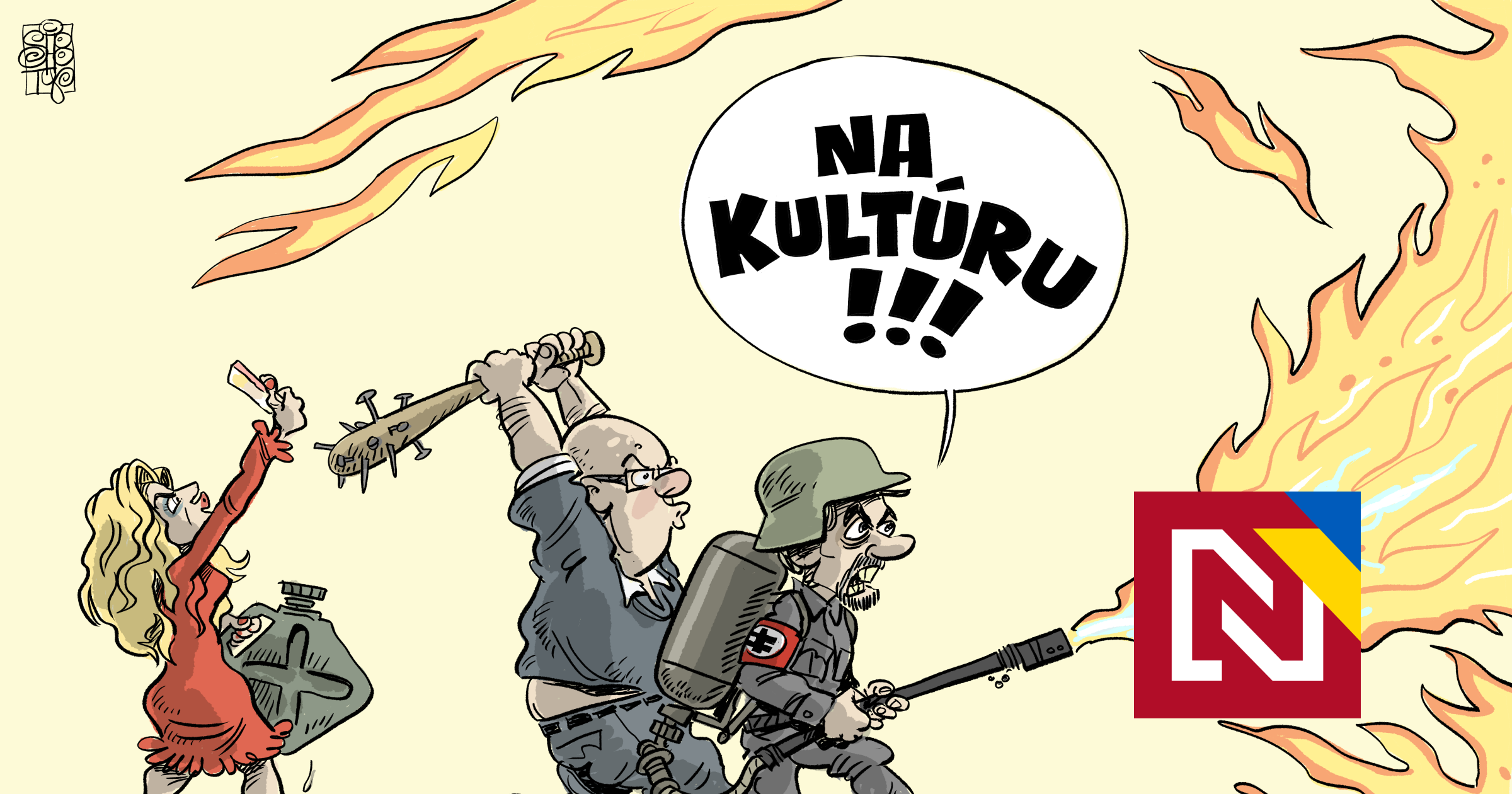
Slovakia's ruling coalition is encountering mounting criticism over its cultural policies, with concerns emerging even from within its own ranks about the direction of government initiatives. Prime Minister Robert Fico has been accused of neglecting the government's official program while simultaneously directing harsh rhetoric toward the European Union. The developments highlight growing tensions within the governing coalition led by Smer-SD, Fico's social-democratic party, as internal disagreements surface over cultural and political strategies that some coalition members now view as problematic.

|
Domestic Politics

Slovak Parliament Speaker's Comments on Website Shutdowns Draw Criticism Over Press Freedom

Slovak National Council Speaker Andrej Danko has made controversial statements about shutting down websites, sparking debate about press freedom and censorship in Slovakia. Danko's comments have been criticized for distorting the meaning of free speech principles. Political analysts and media experts warn that while there is a fundamental difference between content regulation and systematic state-controlled censorship, Danko's rhetoric revives concerning themes about restricting freedom of expression. The controversy highlights ongoing tensions over media freedom in Slovakia, where the ruling coalition has faced criticism from press freedom organizations for its approach to media regulation.

|
Domestic Politics

Education Minister Meets with Teachers' Unions on Automatic Pay Scale System

Slovakia's Education Minister Milan Drucker held negotiations with education trade unions regarding the implementation of an automatic pay scale system for teachers and other school staff. The discussions also covered plans to gradually transfer some of the education sector's original competencies from state administration to regional self-governing authorities. The automatic pay scale system would establish predetermined salary increases for educators based on factors such as experience and qualifications, potentially addressing long-standing demands for better teacher compensation and clearer career advancement pathways in Slovakia's education system.

|
Domestic Politics

Slovak National Party Proposes Extending Local Government Terms to Five Years

The Slovak National Party (SNS) announced it will submit a proposal to extend the electoral term for local governments from four to five years. Party chairman Andrej Danko revealed the initiative, which the party has previously advocated for in the past. The announcement comes as discussions also addressed candidacies for this year's municipal and regional elections scheduled to take place across Slovakia. SNS is a nationalist party that has been part of various government coalitions in Slovakia's recent political history. Local governments in Slovakia currently serve four-year terms, with mayors and regional governors elected directly by voters. The proposed change would align local government terms with those of the national parliament, which serves a four-year mandate, though the specific reasoning behind the five-year proposal was not detailed in the announcement.

|
Domestic Politics

Hlas Party Stabilizes After Expelling MP Ferenčák, Leader Says

The parliamentary caucus of Hlas-SD has stabilized following the expulsion of MP Radomír Ferenčák, party leader and Interior Minister Matúš Šutaj Eštok declared. The minister also defended his recent actions regarding the Whistleblower Protection Office, stating he stands behind his decisions. Hlas-SD is a social-democratic party that forms part of Slovakia's ruling coalition government alongside Smer-SD and the Slovak National Party. The party's parliamentary strength is crucial for maintaining the coalition's majority in the National Council, Slovakia's parliament. Ferenčák's expulsion from the party caucus represents a significant internal disciplinary action that could have implications for the ruling coalition's stability, as parliamentary majorities depend on maintaining party discipline among coalition MPs.

|