Dávka - Your daily dose of Slovak news
Last refreshed: 23/06/2026 05:39 · 33 articles added
Stories are refreshed at 05:30, 10:30, 15:30, and 21:30 UTC.

Culture

View all1620 stories
Culture

Justin Bieber Faces Criticism After First Concert in Years at Coachella Festival

Pop star Justin Bieber returned to the stage as a headliner at the Coachella music festival, marking his first concert performance in years. The Canadian singer faced widespread criticism from fans and media after reportedly playing old YouTube clips during his million-dollar performance instead of delivering a fully live show. The festival appearance represented Bieber's comeback to major live performances after an extended hiatus from touring.

|
Culture

Slovak Actress Táňa Pauhofová Opens Up About Career Struggles and Personal Challenges

Slovak actress Táňa Pauhofová, 42, has given a candid interview about her personal and professional journey, revealing intimate details about her relationship with her family, self-image struggles, and career pressures. The actress discussed how her grandfather influenced her life, her childhood insecurities about her appearance, and periods when she felt like she was operating mechanically rather than authentically. Pauhofová also spoke about experiencing fear and frequent crying after childbirth, as well as her departure from the Slovak National Theatre (SND), one of the country's premier cultural institutions. The interview touched on her desire to win awards partly to gain her mother's recognition of her professional achievements, though she acknowledged this validation never materialized as expected.

|
Culture

Slovak Author Petra Toth Champions Paper Books Over Digital Reading

Slovak author Petra Toth expressed her strong preference for traditional paper books over digital alternatives, citing their unique sensory qualities. Toth explained that physical books provide an irreplaceable atmosphere, distinctive scent, and tangible connection to time that digital formats cannot replicate. Her comments reflect ongoing debates about reading preferences in an increasingly digital world, as many readers continue to favor the tactile experience of traditional books despite the convenience and accessibility of e-readers and digital publications.

|
Culture

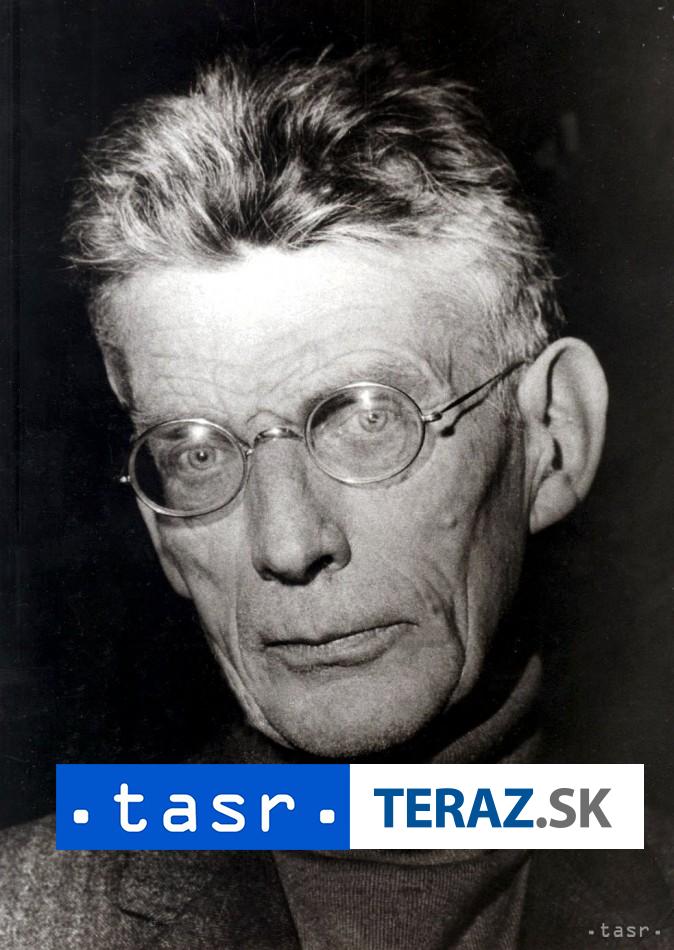
Samuel Beckett, author of 'Waiting for Godot,' born 120 years ago

Samuel Beckett, the renowned playwright behind the influential absurdist drama 'Waiting for Godot,' was born 120 years ago. The Irish-born writer, who later became a key figure in 20th-century literature, drew significant inspiration from the turbulent European atmosphere of the late 1930s as the continent moved toward World War II. Beckett's acute sense of the absurd found fertile ground in this period of mounting political tension and uncertainty, shaping his distinctive literary voice that would later revolutionize modern theater through works exploring themes of existential waiting, meaninglessness, and the human condition.

|
Culture

Slovakia's Lovestream Festival Changes Organizer Again Amid €1.4 Million Debt

The Lovestream music festival, one of Slovakia's largest music events, has changed its organizing company for the third time while carrying a debt of 1.4 million euros. The festival's new organizer was selected through a limited tender process, raising questions about transparency in the selection procedure. The ownership changes come as the festival faces significant financial obligations, highlighting ongoing management and financial challenges for what has become a major event in Slovakia's music calendar.

|
Culture

Daily Editorial Cartoon: On the Beautiful Blue Danube

Slovak daily newspaper SME published an editorial cartoon by illustrator Mikuláš Sliacky titled 'On the Beautiful Blue Danube.' The cartoon appears to reference the famous waltz by Johann Strauss II, though the specific content and commentary of the illustration were not detailed in the source material.

|
Culture

Radio Devin Music Editor Criticizes STVR Leadership On-Air

A music editor at Radio Devin, part of Slovakia's public broadcaster STVR, directly criticized the institution's leadership during a live broadcast. The editor, Markovský, targeted both current management figures Flašíková and Šimkovičová in his on-air critique. His public criticism follows a broader pattern of artistic boycotts against the public broadcaster, with actors Martin Mňahončák and Jana Majeská recently joining other prominent figures including Kronero, Bárta, and Geišberg in refusing to work with STVR. The developments reflect ongoing tensions between creative professionals and the leadership of Slovakia's public service media organization, which operates television and radio services funded by public money.

|
Culture

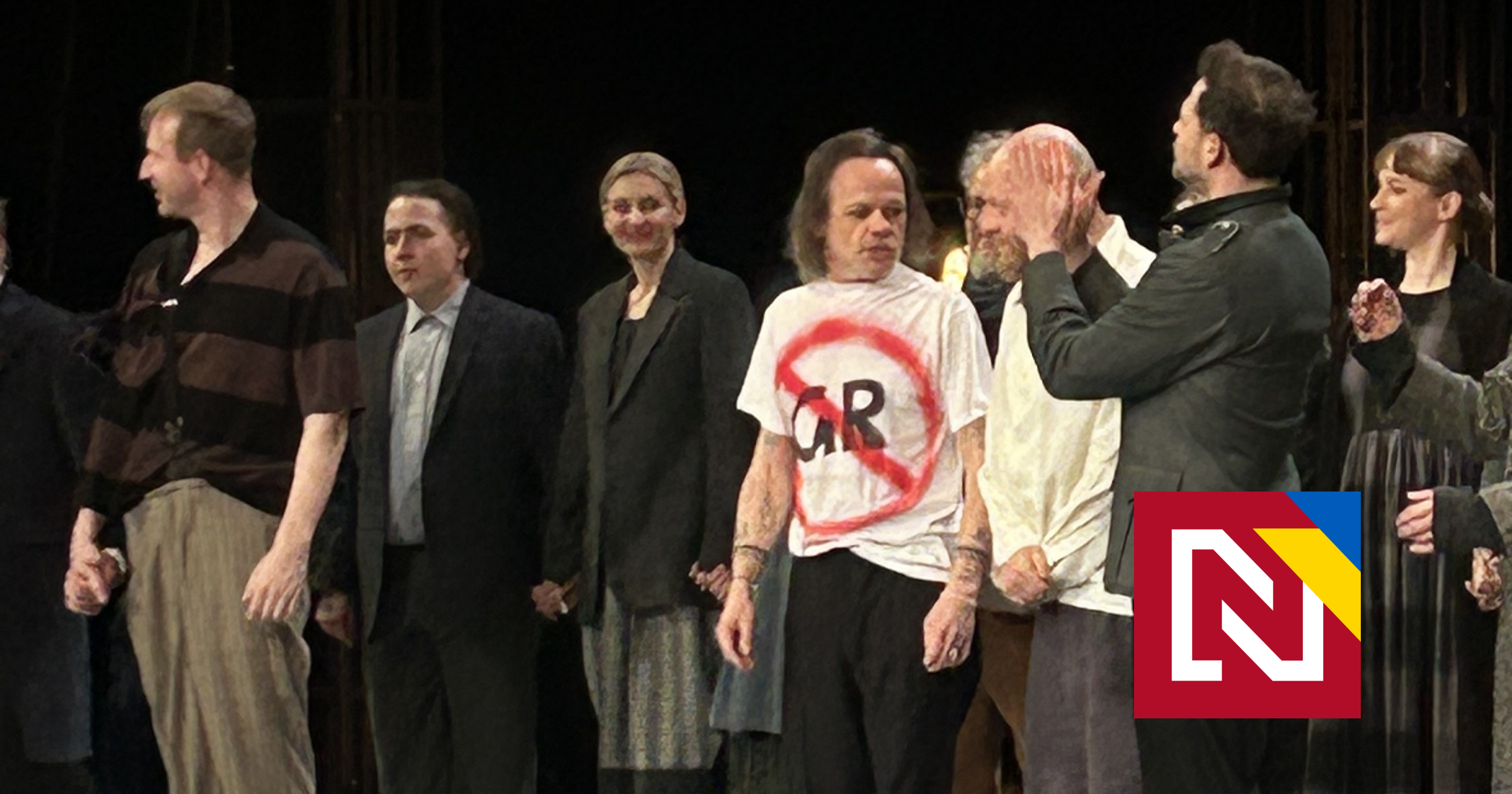
Actor Robert Roth Removed from Slovak National Theatre Video After Crossing Out Director's Name on Shirt

Robert Roth, an actor performing in a new historical drama at the Slovak National Theatre, was edited out of a promotional video after he crossed out the theatre director's name on his shirt during the production's premiere weekend. The incident occurred during the premiere of an elaborate historical drama about Galileo Galilei and the struggle for progress against those "intoxicated by power." The Slovak National Theatre, Slovakia's premier cultural institution, premiered the play which features actor Ľuboš Kostelný as Galileo Galilei, telling audiences that "looking does not mean seeing" as he attempts to convince his 17th-century contemporaries that human reason is humanity's greatest asset. The theatre's decision to remove Roth from the promotional material suggests tensions between some performers and the institution's leadership, though the specific nature of the dispute was not detailed.

|
Culture

New Slovak Podcast 'BrickMic' Launches with Vienna-Themed Content

A new Slovak podcast called 'BrickMic' has been launched, featuring content that spans from Easter Vienna to exhibitions and educational topics. The podcast appears to explore cultural and intellectual themes through what its creators describe as a 'Viennese domino effect,' suggesting interconnected topics that build upon each other across episodes.

|
Culture

Slovak Public Broadcaster Condemns Artist Boycott as 'Unfair'

The leadership of Slovak Television and Radio (STVR) has officially condemned mounting pressure from the artistic community to boycott the public broadcaster. General Director Martina Flašíková and Director Peter Begány issued a joint statement calling for calm and rejecting what they described as 'blacklisting' of creators who choose to continue working with the public media organization. The statement comes amid growing tensions between STVR and Slovakia's cultural sector, with artists increasingly calling for colleagues to refuse collaboration with the state broadcaster. STVR is Slovakia's public service media organization, funded by the state and tasked with providing news and cultural programming to the nation's citizens.

|
Culture

Memorial plaque honors Nazi-executed German theologian Bonhoeffer in Slovak village

A memorial plaque commemorating Dietrich Bonhoeffer, the German theologian executed by the Nazis, has been installed in the village of Nálepkovo in eastern Slovakia. The installation is accompanied by a commemorative event being held in the village. Bonhoeffer was a Lutheran pastor and anti-Nazi dissident who was executed in 1945 for his involvement in plots against Adolf Hitler. The memorial reflects Slovakia's efforts to honor figures who resisted fascism during World War II.

|
Culture

Annual pilgrimage follows route of Auschwitz escapees Vrba and Wetzler

Dozens of people now undertake an annual pilgrimage following the escape route taken by Rudolf Vrba and Alfréd Wetzler, two Slovak Jews who fled Auschwitz concentration camp in 1944. The two men initially struggled to convince the world about the horrors they witnessed at the Nazi death camp. Their testimony became known as the Vrba-Wetzler Report, one of the first detailed accounts of the systematic mass murder taking place at Auschwitz. The report was eventually distributed by Jewish organizations and Allied governments, helping to alert the international community to the Holocaust. Today, the commemorative journey retraces their dangerous escape route, serving as both a memorial to their courage and a reminder of their crucial role in documenting Nazi atrocities.

|
Culture

Slovak Historical Figure Featured as Jesuit Philosopher and Educator

A Slovak historical figure is being highlighted as a notable philosopher, educator, and polymath from the period of the Kingdom of Hungary. The individual served as both professor and rector at the Jesuit University of Trnava, demonstrating intellectual breadth that transcended the traditional boundaries of Catholic scholasticism of the era. The University of Trnava was a significant educational institution during the Habsburg period, serving as an important center of learning in what is now Slovakia.

|
Culture

Jesuit Scholar at Trnava University Transcended Catholic Scholasticism

A professor and rector at the Jesuit University of Trnava distinguished himself as a philosopher, educator and polymath who managed to move beyond the confines of traditional Catholic scholastic thought. The Jesuit-run University of Trnava, established in 1635, was a major center of higher education in the Kingdom of Hungary and played a significant role in the intellectual development of the region that includes present-day Slovakia. The institution operated for over 140 years before being moved to Buda in 1777, serving as an important bridge between medieval scholasticism and Enlightenment thinking in Central Europe.

|
Culture

Slovakia's First Automobile Built in 1914 by Local Craftsman in Hronský Beňadik

Michal Majer constructed Slovakia's first automobile, known as "Drndička," in the village of Hronský Beňadik before World War I began in 1914. The historic vehicle represents a milestone in Slovak automotive history, predating the war that would reshape Central Europe. Hronský Beňadik, located in central Slovakia, became the birthplace of the country's automotive development through this pioneering achievement by the local craftsman.

|
Culture

K-pop Superstars BTS Return to Top After Hiatus

South Korean boy band BTS has returned to prominence following a period of hiatus, marking their comeback in the global music scene. The group's return comes amid continued international interest in Korean culture, symbolized by traditional elements like the folk song "Arirang" - a melody known to every Korean from childhood despite its unknown origins and numerous variations over centuries. The band's resurgence reflects the ongoing global influence of K-pop music and Korean cultural exports.

|
Culture

Bratislava Region Author Promotes Reading as Gateway to Other Worlds

Slovak writer Lucia Lackovičová highlighted the transformative power of reading during a regional cultural event, describing books as vehicles for time and space travel from the comfort of home. The author, speaking at a program organized by the Bratislava Region, emphasized that reading is far from a passive hobby but rather an active engagement that allows readers to explore different worlds and experiences. Her remarks were part of the region's ongoing cultural programming aimed at promoting literature and reading among residents.

|
Culture

Slovak Author Lucia Lackovičová Promotes Reading as Mental Time Travel

Slovak writer and literature enthusiast Lucia Lackovičová emphasized the transformative power of reading during a regional program, describing it as more than passive entertainment. She characterized reading as an ability to travel through time and space without leaving home, highlighting how good books can transport readers to completely different worlds. The author participated in an event organized by the Bratislava Region to promote literature and reading among the public.

|
Culture

Mountain Architecture Landmark Helios Turns 50 in Tatras Region

A distinctive architectural structure called Helios in Slovakia's Tatra Mountains has reached its 50th anniversary, though only fragments of the original building remain today. The structure, described as being "open to the sun and hidden in the forest," was considered ahead of its time when constructed in the 1970s. Helios represented innovative mountain architecture that integrated with the natural forest environment while maximizing solar exposure, making it a notable example of progressive design in the High Tatras region during the communist era.

|