
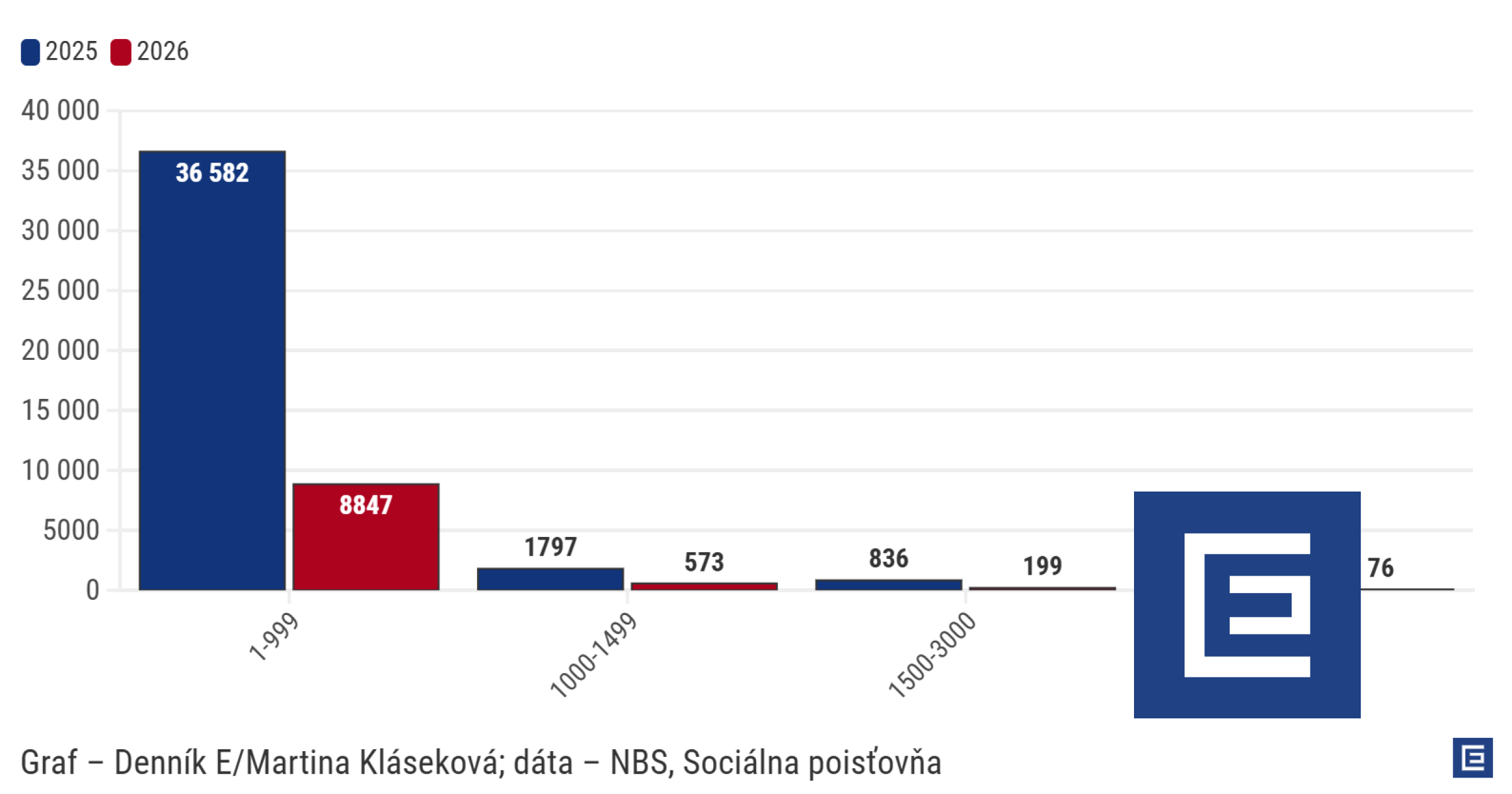
Nearly 50,000 Slovak Sole Traders Have Closed Since 2025, Many Disappearing from Labor Market
Close to 50,000 self-employed sole traders in Slovakia have ceased operating since the start of 2025, with the closures concentrated among lower-income earners. About one in five has since found formal employment, but an equal share has vanished entirely from the labor market — a pattern analysts link to movement into the shadow economy or emigration abroad. The wave of closures coincides with three successive austerity packages introduced by the Slovak government in an effort to stabilize public finances and rein in the country's growing national debt. While the measures have failed to bring the debt fully under control, they have had a measurable impact on the country's smallest economic operators — self-employed tradespeople and freelancers who operate under a sole-trader license, a common form of self-employment in Slovakia. The trend raises concerns about the health of Slovakia's informal labor sector and the effectiveness of fiscal consolidation measures that appear to disproportionately burden low-income workers. The disappearance of a significant number of former sole traders from official records suggests that austerity-driven cost increases — such as higher social and health insurance contributions — may be pushing vulnerable workers out of the regulated economy rather than into stable employment.